


NATO Under Fire: Powerless Alliance
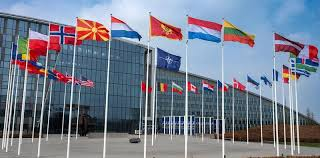
The latest war in West Asia has once again exposed the uncomfortable contradictions within NATO. U.S. President Donald Trump’s sharp outburst—calling NATO members “cowards” for refusing to join the U.S.-Israel military campaign against Iran—has triggered a deeper question: is NATO truly a powerful military alliance, or does its strength exist only when the United States leads?
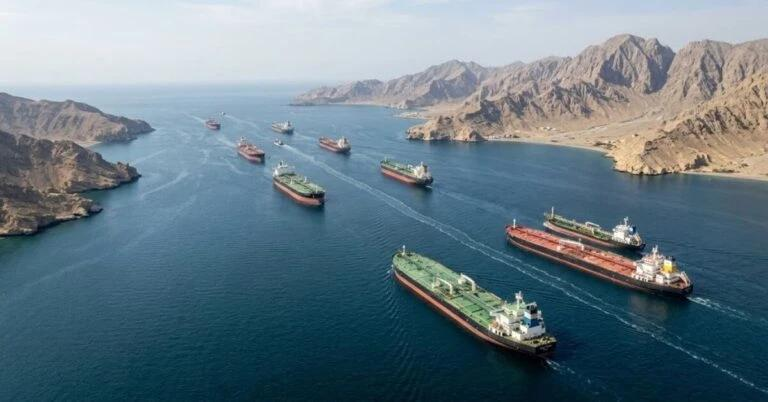
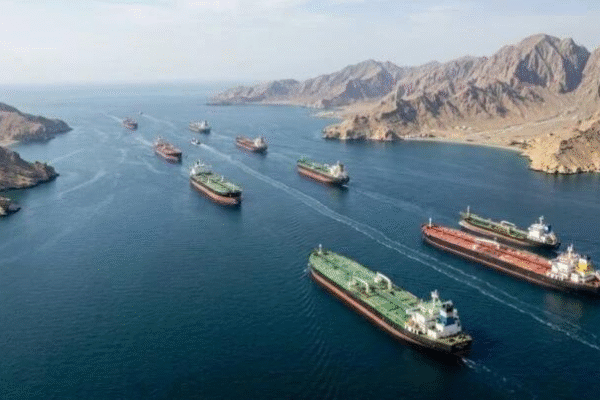
Trump’s frustration stems from a simple expectation—burden sharing. The United States has historically been NATO’s backbone, contributing the largest share of military spending and operational capability. Yet when Washington sought support to secure the Strait of Hormuz, a critical oil route disrupted by the conflict, key NATO allies hesitated.
European nations, including France and Germany, made it clear that their support would be conditional on de-escalation rather than participation in active warfare. Emmanuel Macron emphasized diplomacy and international law, signaling that Europe is increasingly unwilling to follow the U.S. into another prolonged conflict.
This divergence is not new—it reflects a structural limitation within NATO itself.
Why NATO Struggles to Act in Modern Wars
NATO was designed during the Cold War as a collective defense alliance, not as an offensive military coalition. Its foundational principle—Article 5—commits members to defend one another if attacked. But the Iran conflict does not fall under this clause. Iran did not attack a NATO member; rather, the U.S. and Israel initiated military action. This distinction is crucial.
Without a direct attack on a member state, NATO lacks both legal and political consensus to act collectively. That is why, even as tensions escalated, NATO chose to relocate personnel from Iraq and avoid direct engagement instead of mobilizing forces.
Moreover, domestic political pressures in Europe cannot be ignored. Public opinion across many NATO countries remains deeply skeptical of military interventions following the legacy of Iraq and Afghanistan. Governments today face electorates that are wary of wars perceived as unilateral or lacking international legitimacy.
There is also an economic dimension. European economies are already strained by energy shocks and inflation. Entering a conflict that risks further destabilizing oil markets—especially when Brent crude has surged above $100 per barrel—would carry severe domestic consequences.
A “Paper Tiger” Without the U.S.?
Trump’s claim that NATO is a “paper tiger” without American leadership may sound provocative, but it highlights an uncomfortable reality: NATO’s military capabilities are unevenly distributed. The U.S. provides the majority of strategic assets—airlift, intelligence, missile defense, and naval power.
When Washington acts alone, NATO appears fragmented. When Washington leads, NATO appears unified. This asymmetry fuels recurring tensions, particularly when U.S. administrations demand greater commitment from allies.
However, calling NATO “powerless” may oversimplify the situation. What appears as weakness may actually be restraint. European countries are increasingly asserting strategic autonomy, choosing when—and whether—to align with U.S. military objectives. This is less about cowardice and more about recalibrating geopolitical priorities.
The Larger Question: Power or Legitimacy?
The Iran war reveals a deeper shift in global power dynamics. NATO’s challenge is not just military—it is political legitimacy. In a multipolar world, alliances are no longer automatically mobilized by a single leader’s call to action.
Trump’s anger reflects frustration with this new reality: influence does not always translate into compliance.
If NATO refuses to engage in conflicts that lack broad consensus, it may weaken its image as a rapid-response military bloc. But at the same time, it may preserve its relevance as a rules-based alliance rather than an instrument of unilateral intervention.
The real question, therefore, is not whether NATO has the power to stop wars—but whether it still has the unity to decide which wars are worth fighting.

Prabha Gupta is a veteran journalist and civic thinker dedicated to the constitutional ideals of dignity and institutional ethics. With over thirty years of experience in public communication, her work serves as a bridge between India’s civil society and its democratic institutions. She is a prominent voice on the evolution of Indian citizenship, advocating for a national discourse rooted in integrity and the empowerment of the common citizen