


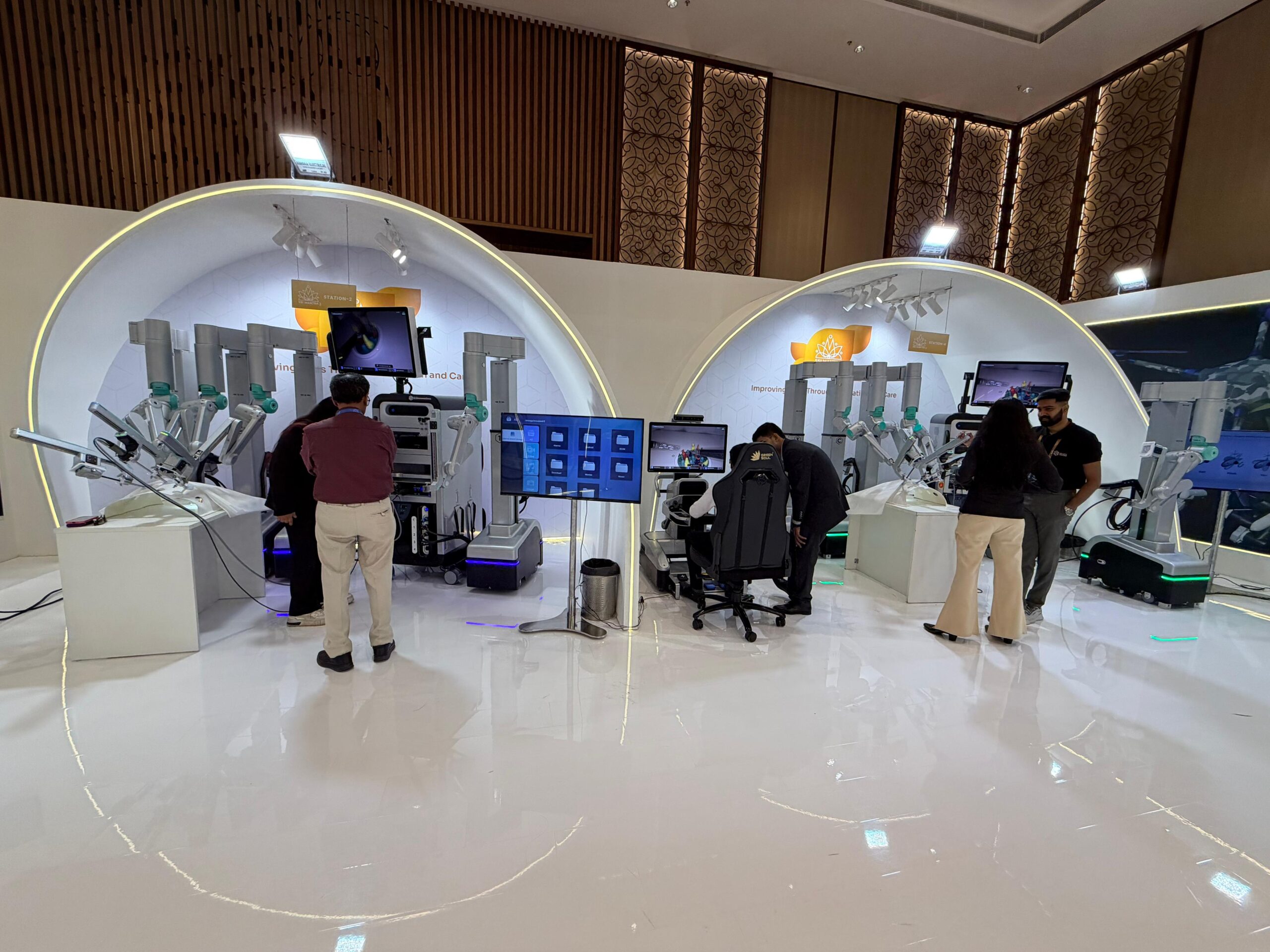
India’s healthcare sector is witnessing a technological leap with the unveiling of futuristic surgical innovations like Project Vimana and Project Operion at the Global Robotic MedTech Conference (SMRSC) 2026 in New Delhi. Developed by SS Innovations International, these technologies signal a bold shift—taking surgery beyond hospital walls into battlefields, disaster zones, and remote geographies.
Project Vimana, a drone-deployed robotic surgical unit, and Project Operion, a fully mobile operating room ecosystem, represent cutting-edge advancements in emergency and remote care. Alongside these, the introduction of humanoid robotic systems like SSI KAYA suggests a future where machines augment human capabilities across healthcare and beyond. The presence of global pioneers like Dr. Frederic Moll reflects India’s growing ambition to become a hub for robotic surgery.
Importantly, industry leaders see this as more than just technological progress. Dr. Sudhir Srivastava emphasized the broader vision behind these innovations, stating, “SMRSC 2026 underlines our commitment to advancing surgical innovation from India to the global stage, while marking a significant milestone in our mission to make world-class surgical care more accessible to all.”
From Scalpel to Robotics: A Brief Evolution
Surgery in India has evolved significantly—from traditional open procedures to minimally invasive laparoscopic techniques in the 1990s, and now to robotic-assisted systems. The early 2000s saw the introduction of robotic surgery globally, with India gradually adopting the technology in high-end hospitals.
Initially constrained by high costs and limited expertise, robotic surgery remained niche. However, with indigenous innovations like SSI Mantra, accessibility is slowly improving. India is no longer just a consumer of medical technology but is emerging as a developer, contributing to the global surgical robotics ecosystem.
Rising Surgical Burden: A Growing Healthcare Reality
India’s increasing reliance on surgical interventions reflects a larger epidemiological shift. Cardiovascular diseases alone account for nearly 25–28% of total deaths, significantly driving demand for cardiac procedures.
In the early 2000s, India performed approximately 80,000–100,000 heart surgeries annually. Today, estimates suggest that this number has risen to over 300,000–350,000 surgeries each year, with demand continuing to grow across specialties such as oncology, orthopedics, and organ transplantation.
This surge is fueled by:
- Lifestyle-related diseases
- Aging population
- Delayed diagnosis
- Expanded access to tertiary healthcare
The result is mounting pressure on surgical infrastructure and specialists—making advanced technologies increasingly relevant.
Why India Needs Robotic Surgery
Robotic surgery enhances precision, reduces complications, and shortens recovery time. More crucially, it allows surgeons to perform complex procedures with greater consistency and less fatigue.
With technologies like telesurgery, expert doctors can operate remotely, potentially transforming access to healthcare in rural and underserved areas. Innovations like Project Vimana could also redefine emergency response by delivering immediate surgical care in critical situations.
In this sense, robotic surgery is not merely about innovation—it is about scaling surgical capacity in a country with limited medical resources.
The Prevention Paradox: Are We Addressing the Root Cause?
Despite these advancements, a deeper issue persists. A large number of surgeries in India are linked to preventable conditions—heart disease due to lifestyle factors, cancers detected late, and complications from unmanaged chronic illnesses.
This raises a fundamental question:
Are we focusing more on treatment than prevention?
While robotic systems improve surgical outcomes, they do not reduce the inflow of patients requiring surgery. Without stronger emphasis on preventive healthcare—early screening, public awareness, and primary care—India risks perpetuating a cycle of rising disease and intervention.
Striking the Right Balance
India’s healthcare future depends on balancing cutting-edge innovation with grassroots prevention. Robotic surgery can bridge gaps in access and efficiency, but long-term sustainability lies in reducing the need for surgical intervention itself.
SMRSC 2026 showcases India’s growing leadership in medical technology. The real test, however, will be whether this innovation is matched by equal investment in preventive healthcare.

Prabha Gupta is a veteran journalist and civic thinker dedicated to the constitutional ideals of dignity and institutional ethics. With over thirty years of experience in public communication, her work serves as a bridge between India’s civil society and its democratic institutions. She is a prominent voice on the evolution of Indian citizenship, advocating for a national discourse rooted in integrity and the empowerment of the common citizen