

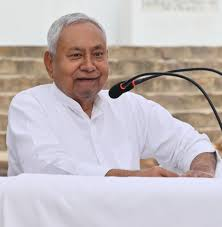



The sudden resignation of Nitish Kumar has once again stirred political speculation in Bihar, a state known for its shifting alliances and strategic recalibrations. While official explanations often frame such moves as routine or procedural, the timing and context of this resignation have raised critical questions: Is this a calculated step toward a Rajya Sabha entry, or does it a deeper political churn?
Nitish Kumar, one of India’s longest-serving regional leaders, has built a reputation for adaptability. Over the years, he has switched alliances between the Bharatiya Janata Party (BJP) and opposition blocs, often justifying these decisions as being in the state’s interest. However, critics argue that such shifts reflect political pragmatism aimed at retaining relevance in a rapidly evolving national landscape.
A Strategic Exit for Rajya Sabha?
One of the strongest theories emerging from political circles is that the resignation may be linked to a potential move to the Rajya Sabha. In Indian politics, it is not uncommon for senior leaders to transition from state roles to parliamentary positions, especially when they seek to play a larger national role or ensure continuity in public life without the pressures of executive governance.
If this speculation holds, Nitish Kumar’s resignation could be a carefully planned maneuver. A Rajya Sabha berth would allow him to remain politically active while stepping away from the day-to-day administrative responsibilities of the chief minister’s office. It may also provide him with a platform to influence national policy debates, particularly at a time when opposition unity is being discussed ahead of future general elections.
However, there has been no official confirmation of such a move. The absence of clarity has only fueled further conjecture.
Signals of Internal Political Realignment
Beyond the Rajya Sabha angle, some analysts believe that the resignation could indicate deeper political negotiations within Bihar’s ruling framework. The state’s coalition dynamics have often been fragile, with competing interests among alliance partners.
A leadership reshuffle could be part of an effort to rebalance power equations, accommodate emerging leaders, or pre-empt internal dissent. In such scenarios, a resignation is less an end and more a tactical pause—allowing for recalibration without triggering a full-blown political crisis.
There is also speculation that the move could be linked to broader national strategies. With general elections always on the horizon, regional leaders often reposition themselves to maximize their bargaining power. Nitish Kumar, known for his political timing, may be preparing for a larger role in opposition politics or seeking leverage in alliance negotiations.
Governance vs Political Calculations
While political maneuvering is a constant in Indian democracy, such developments inevitably raise concerns about governance. Bihar continues to face challenges related to infrastructure, employment, and social development. Frequent political shifts can create uncertainty within the प्रशासनिक machinery, potentially affecting policy continuity and implementation.
For the जनता, the key question is whether such strategic decisions serve long-term developmental goals or primarily address political survival. Nitish Kumar has, in the past, been credited with improving governance indicators in Bihar, particularly in areas like roads and law and order. However, repeated राजनीतिक realignments have also led to criticism regarding stability and consistency.
What Lies Ahead?
At this stage, the resignation remains open to interpretation. Whether it is a step toward the Rajya Sabha, a signal of internal adjustments, or part of a larger national strategy, the coming weeks will be crucial in determining its true intent.
What is clear, however, is that Bihar’s political landscape remains as dynamic as ever. Nitish Kumar’s next move will not only shape the state’s immediate governance but could also have implications for broader political alignments in India.
Until then, the resignation stands as yet another reminder that in politics, especially in Bihar, every move carries layers of meaning—some visible, others still unfolding behind the scenes.

NewsHasghag operates a 24/7 news bureau that tracks the real-time, social media-driven stories from India and around the world, keeping you ahead of the day’s key talking points. Our digital-first approach transforms storytelling through the seamless integration of data, interactive charts, video, and audio into every narrative