

From Democracy to Deals: Why Modi’s Netherlands Visit Matters
Prime Minister Narendra Modi’s visit to the Netherlands is not merely another ceremonial foreign tour filled with handshakes, diaspora applause, and investment pitches. It comes at a time when India is trying to project itself as a global economic engine, a democratic success story, and a technological superpower. Yet behind the confident messaging lies a deeper question: how much of the narrative reflects reality, and how much is political branding aimed at international audiences?
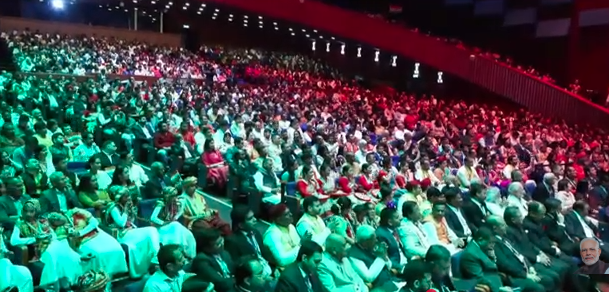
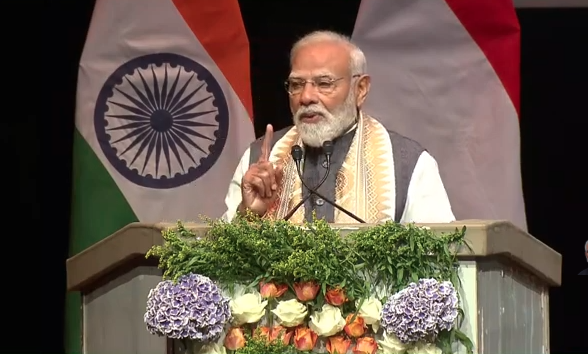
During his address, Modi painted a picture of a rapidly transforming India — a country of booming startups, semiconductor ambitions, record democratic participation, and groundbreaking space achievements. He also invited Dutch investors to see India as a stable and profitable destination, assuring them of strong returns and long-term growth. The speech was strategically designed. The Netherlands is one of Europe’s key trade and logistics hubs, and India wants to position itself as a trusted economic partner at a time when global supply chains are shifting away from excessive dependence on China.
One of Modi’s strongest claims revolved around India’s startup ecosystem. He highlighted India’s growing unicorn culture and the rise of innovation-led entrepreneurship. While India indeed has one of the world’s largest startup ecosystems, boasting over 100 unicorns rather than “one crore unicorns,” the bigger issue is sustainability. Many Indian startups are still dependent on foreign venture capital, struggle with profitability, and face regulatory uncertainty. Layoffs across tech companies over the last few years have exposed vulnerabilities in the so-called startup revolution. India’s digital economy is expanding, but the benefits remain concentrated in urban pockets rather than translating into widespread employment security.
Similarly, Modi’s emphasis on India becoming a semiconductor manufacturing hub reflects an ambitious strategic shift. India has announced multiple semiconductor projects and incentive schemes, especially after global chip shortages exposed supply chain weaknesses. However, the semiconductor industry requires massive investments, technological expertise, water resources, and long-term policy stability. Countries like Taiwan, South Korea, and the United States built these ecosystems over decades. India is still at the beginning stage. The ambition is real, but the road ahead is far more difficult than political speeches often suggest.
On space achievements, Modi highlighted India’s Moon mission success, referring to landing in a region where no country had reached before. This is one area where India’s claims hold significant weight. Indian Space Research Organisation successfully positioned India among elite space powers with cost-effective missions. Such achievements have boosted India’s scientific image globally and strengthened its soft power. Yet critics argue that technological prestige alone cannot hide pressing domestic issues such as unemployment, agrarian distress, and widening inequality.
The Prime Minister also stressed high voter participation, especially among women in states like West Bengal, Kerala, and Tamil Nadu, presenting it as evidence of India’s vibrant democracy. Higher women’s participation in elections is indeed a positive democratic development. However, the opposition has raised serious concerns over voter list revisions and the implementation of SIR-related processes, alleging that genuine voters are being excluded. This creates a contradiction in the government’s narrative. On one side, India celebrates democratic participation internationally; on the other, domestic political debates increasingly revolve around electoral transparency, institutional independence, and shrinking space for dissent.
Modi also warned that the world is entering a “decade of disasters,” arguing that without cooperation the global economy could face stagnation and “growthlessness.” This statement reflects a broader geopolitical reality. Europe is facing energy insecurity, wars, inflation, and industrial slowdown, while Asia is emerging as the next growth center. India wants to convince countries like the Netherlands that partnering with New Delhi is not just economically beneficial but strategically necessary.
The India–Netherlands relationship is becoming increasingly important because of trade, clean energy cooperation, water management, logistics, and technology partnerships. The Netherlands could act as India’s gateway into Europe, while India offers Dutch businesses access to one of the world’s largest consumer markets. Modi’s pitch for a “techno-superpower partnership” is therefore rooted in economic pragmatism.
Yet the success of this vision depends on whether India can convert grand announcements into structural reforms. Foreign investors look beyond speeches. They examine legal stability, job creation, infrastructure quality, judicial efficiency, and social harmony. Modi’s Netherlands visit matters more than diplomacy because it is ultimately about credibility. India is no longer just selling its image abroad; it is asking the world to invest in its future. The challenge now is proving that the promise matches the reality.

Prabha Gupta is a veteran journalist and civic thinker dedicated to the constitutional ideals of dignity and institutional ethics. With over thirty years of experience in public communication, her work serves as a bridge between India’s civil society and its democratic institutions. She is a prominent voice on the evolution of Indian citizenship, advocating for a national discourse rooted in integrity and the empowerment of the common citizen