





₹590 Crore Fraud Rekindles Old Scars in India’s Banking Sector
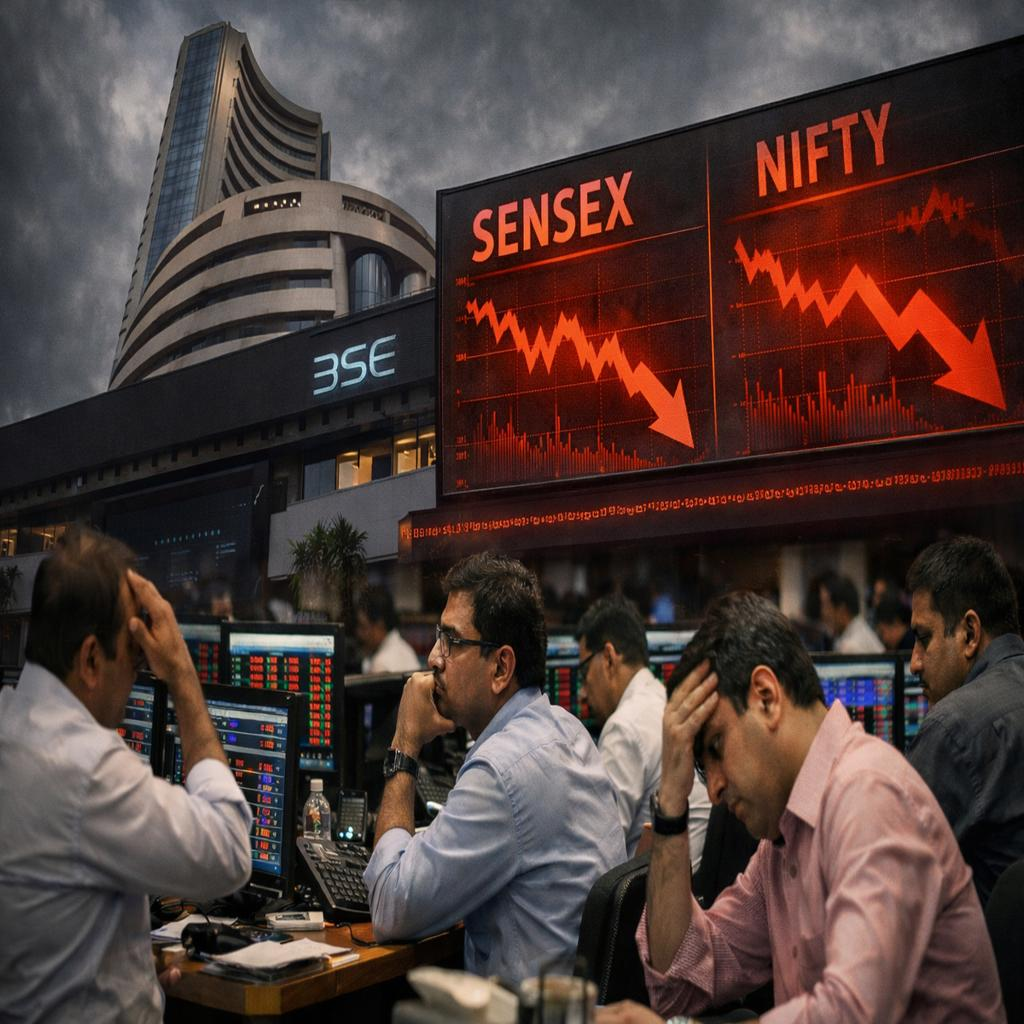
₹590 Crore Fraud Rekindles Old Scars in India’s Banking Sector. The revelation of a ₹590 crore fraud linked to government accounts at IDFC First Bank in Haryana has once again reopened an uncomfortable question that has followed India’s banking system through the last decade: why do large financial frauds continue to surface despite repeated promises of reform, digitisation and tighter oversight during the tenure of Prime Minister Narendra Modi.
The Haryana case, which reportedly came to light after discrepancies were found between bank balances and government records, is significant not merely because of the amount involved, but because it concerns public money parked in private banking channels. The alleged manipulation of balances, possible collusion of bank staff, and weak reconciliation mechanisms underline a deeper structural vulnerability. Even as the bank has suspended employees and ordered forensic audits, the episode exposes how easily systemic safeguards can be bypassed when internal controls fail or oversight becomes routine rather than rigorous.
This is not an isolated aberration. Since 2014, India has witnessed a steady stream of banking frauds—some spectacular in scale, others smaller but equally corrosive to public trust. The most infamous among them remains the Punjab National Bank scam involving diamond merchants Nirav Modi and Mehul Choksi, which surfaced in 2018 and left Punjab National Bank nursing losses running into thousands of crores. That case shattered the myth that public sector banks were protected by institutional caution, revealing instead how basic banking instruments like Letters of Undertaking were abused for years without detection.
What followed was a series of revelations that blurred the line between fraud, cronyism and regulatory inertia. High-profile defaults by corporate borrowers, including cases linked to Vijay Mallya and others later designated as fugitive economic offenders, exposed how banks extended massive loans with inadequate due diligence. While the government frequently argues that many of these loans were sanctioned before 2014, fraud detection, recovery and accountability largely unfolded during the Modi years, making it impossible to treat the period as disconnected from outcomes.
The official narrative since then has emphasised corrective action. The Insolvency and Bankruptcy Code, tighter reporting norms and improved surveillance mechanisms have been showcased as evidence of reform. The Reserve Bank of India, for its part, has claimed that faster detection explains the apparent rise in reported fraud numbers. Yet the persistence of fresh cases—particularly those involving internal collusion rather than external borrowers-suggests that while detection may have improved, prevention remains fragile.
The IDFC First Bank episode highlights another worrying trend: the growing exposure of government funds to operational risks in private banks. State departments increasingly park funds outside traditional treasury systems, often in the name of flexibility or higher returns. This creates grey zones of accountability where neither the bank nor the government department exercises full ownership of oversight. When fraud occurs, responsibility becomes diffused, investigations prolonged and public confidence eroded.
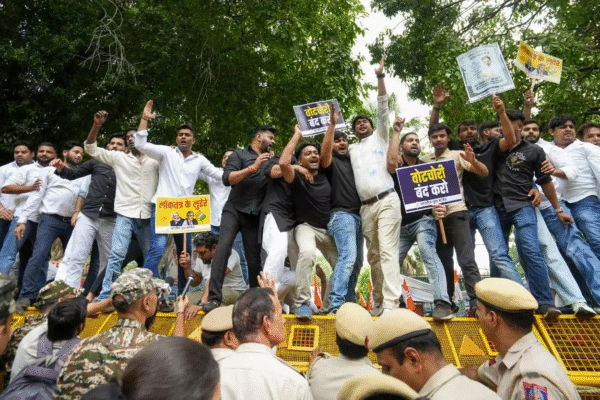
Politically, each such disclosure triggers a predictable exchange. The opposition frames these frauds as proof that the Modi government’s promise of “minimum government, maximum governance” has not translated into institutional integrity. The government counters by citing recoveries, extradition efforts and legal action against offenders. Both arguments hold partial truth, but neither addresses the core issue: banking fraud in India is not merely a legacy problem or a law-and-order challenge; it is a governance failure rooted in incentives, oversight fatigue and concentration of financial power.
What makes the Haryana fraud particularly unsettling is its mundanity. Unlike flamboyant billionaires or offshore shell companies, this case allegedly involves routine accounts, mid-level officials and quiet manipulation over time. Such frauds do not grab headlines for years, but they hollow out institutions from within. They suggest that despite reforms, India’s banking ecosystem still relies too heavily on trust and too little on continuous verification.
A decade into the Modi regime, the pattern is clear. Mega scams may have become less frequent, but medium-scale frauds continue to surface with disturbing regularity. Each one chips away at the credibility of banks, regulators and governments alike. Until accountability moves beyond damage control and towards structural transparency, banking fraud will remain not an exception, but a recurring feature of India’s financial story.

Prabha Gupta is a veteran journalist and civic thinker dedicated to the constitutional ideals of dignity and institutional ethics. With over thirty years of experience in public communication, her work serves as a bridge between India’s civil society and its democratic institutions. She is a prominent voice on the evolution of Indian citizenship, advocating for a national discourse rooted in integrity and the empowerment of the common citizen