


Women’s Reservation and Delimitation: Reform Delayed or Politics Redesigned?
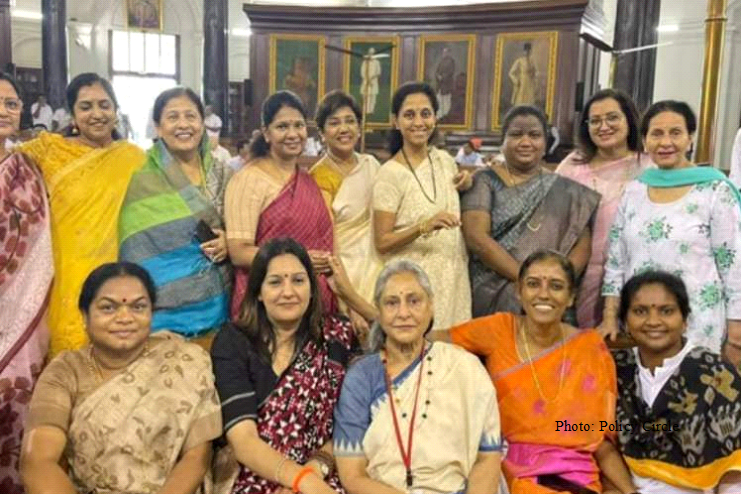
The debate around women’s reservation in India has once again taken centre stage, but this time it is not just about empowerment—it is about timing, intent, and political consequences. The recent statements and press briefings by the Indian National Congress have sharpened the discourse, raising critical questions on the linkage between women’s quota and delimitation.
At the heart of the issue lies a paradox. While there is near-unanimous political consensus on granting 33% reservation to women in legislatures, the road to its implementation remains contested. Congress has made its position clear: it supports the idea of reservation but strongly opposes the conditions attached to it.
Support with a Caveat: Congress Backs Quota, Questions Process
Leaders of the Indian National Congress have reiterated that women’s reservation is long overdue and essential for inclusive democracy. However, they argue that the current framework delays its actual implementation by linking it to future processes such as census and delimitation.
Senior leaders, including Mallikarjun Kharge, have called for greater transparency and consultation, demanding an all-party discussion to clarify timelines and intent. The concern is simple yet significant: if the law is passed now but implemented years later, does it truly serve the purpose of immediate empowerment?
This “support with caution” approach allows Congress to align itself with the principle of gender justice while questioning the political mechanics behind it.
Delimitation: The Hidden Political Faultline
The more contentious aspect of the debate is delimitation—the redrawing of parliamentary constituencies based on population data. Congress leaders fear that linking women’s reservation to delimitation could fundamentally alter India’s political balance.
Delimitation, expected after the next census, could increase the number of seats in northern states with higher population growth, potentially reducing the relative influence of southern states. By tying reservation to this process, the government is, according to critics, introducing a structural shift in electoral representation.
Prominent Congress voice Sonia Gandhi has termed the approach “deeply flawed,” suggesting that the reform risks becoming an instrument of electoral engineering rather than pure social justice. The argument is that women’s empowerment should not be contingent upon a complex and politically sensitive exercise like delimitation.
Delay or Design? The Politics of Timing
Another layer of the debate revolves around timing. The government’s push for women’s reservation, coupled with discussions on delimitation, has raised suspicions within opposition ranks about electoral motives.
Congress leaders argue that by linking the quota to future exercises, its implementation could be pushed to 2029 or beyond. This delay, they say, undermines the urgency of women’s representation while allowing the ruling establishment to claim credit for a reform that may not materialize in the immediate future.
The question being asked is whether this is a genuine structural reform or a politically calibrated move designed to reshape the electoral landscape over time.
Beyond Politics: The Real Stakes
At a broader level, the issue goes beyond party lines. It touches upon fundamental questions of democratic representation, federal balance, and gender equity. Women’s reservation has the potential to transform India’s political landscape by bringing more voices into decision-making. However, its impact depends heavily on when and how it is implemented.
By raising concerns over delimitation, Congress has shifted the conversation from symbolic reform to structural implications. It is no longer just about reserving seats—it is about who those seats will represent and under what framework.
The Road Ahead
As the debate unfolds, one thing is clear: India stands at a critical juncture where progressive reform intersects with political strategy. A consensus on women’s reservation exists, but consensus on its execution does not.
For any reform of this magnitude to succeed, it must inspire trust across political divides. That would require clarity on timelines, transparency in process, and a willingness to separate social justice from electoral calculations.
Until then, the question will persist—
Is women’s reservation being delayed, or is India’s political map quietly being redesigned?

NewsHasghag operates a 24/7 news bureau that tracks the real-time, social media-driven stories from India and around the world, keeping you ahead of the day’s key talking points. Our digital-first approach transforms storytelling through the seamless integration of data, interactive charts, video, and audio into every narrative