

Are Hindu American facing More hate crimes? A look at recent attacks in the US
Reports of rising attacks on Hindus in the United States have triggered concern. A recent remark by US Vice-President JD Vance about hoping his Hindu wife converts to Christianity reopened a debate on religious identity and belonging. It sparked a key question: is America becoming unsafe for minorities under Donald Trump’s renewed influence? Another question followed — if Indian-Americans demand protection abroad, why do many remain silent when minorities in India face discrimination?
MAGA Politics and a New Target: Hindu Immigrants
The political environment in the US has shifted sharply. Donald Trump’s “Make America Great Again” slogan once sounded like patriotism. Today, many immigrants hear exclusion in it. Anti-immigrant anger that earlier targeted Muslims and Black Americans has now reached Hindu communities too.
This became visible on 29 October 2025 at the University of Mississippi. During a Turning Point USA event, an Indian-origin student questioned JD Vance. She asked why his Hindu wife must convert to prove patriotism. She also demanded answers on anti-immigrant rhetoric. Her message was clear: immigrant families came legally, worked hard, and contributed to America. Now, they feel pushed aside.
Vance himself has faced trolling because his wife Usha is Hindu. Right-wing groups online call him a “fake Christian.” They say America should not have a Hindu First Lady. Even Diwali celebrations at the White House trigger backlash from extremist Christian groups who label Hindu worship “pagan” and “un-American.”
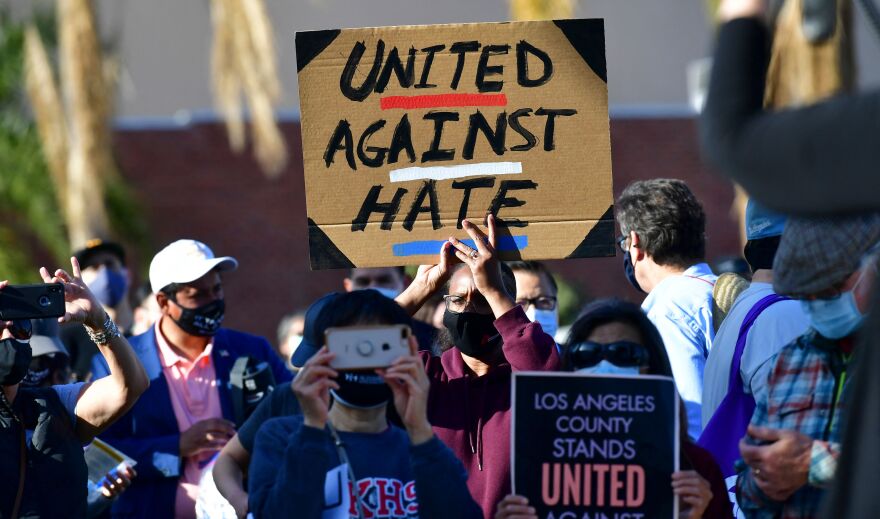
The hate has not remained online. Hindu temples have been vandalised in several states. Slogans like “Jesus is the only God” have appeared on temple walls. Police data and community reports show an increase in hate-related incidents in the past five years. Although Hindus face far fewer attacks compared to Muslims, Jews or Black Americans, the rise is significant and alarming.
A Mirror for Hindu-Americans: Justice Must Be Universal
This situation raises a difficult moral question. When Muslims or Jews suffer hate-crimes in the US, how many Hindu-Americans stand with them? And when minorities in India are attacked or targeted, why do many Indian-Americans remain silent — or even celebrate aggression?
A striking moment came in New Jersey in 2022. A parade organised by groups linked to Indian political circles displayed a bulldozer — seen in India as a symbol of demolishing Muslim homes. After backlash, organisers apologised. Still, the message was clear: political polarisation can travel across borders.
International institutions have noticed this trend. Since 2020, the US Commission on International Religious Freedom has recommended putting India on a watchlist. It cites rising religious tensions and shrinking space for minorities. As US–India ties face strain over human-rights concerns, the debate on intolerance has gone global.
The message is simple. Hate is contagious. Once it starts, it rarely stops with one community. Today, Hindus in America feel the heat. Tomorrow, silence in one country cannot guarantee safety in another. Values must be consistent. You cannot demand respect abroad while ignoring injustice at home.
The student who questioned JD Vance did more than raise a political issue. She defended a principle: belonging cannot depend on religion. Her voice represents a generation asking for equal dignity in every country, not only the one they live in.
If Hindu-Americans want solidarity in times of fear, they must also stand with others in their time of need. Justice is strongest when it is universal. In the end, silence is not neutrality — it is a choice. And every community pays for the choices it makes.

Prerna Varshney is a journalist and social commentator with over five years of experience in health, gender, and policy reporting. Her work reflects a deep commitment to truth and empathy, simplifying complex issues for everyday readers.