



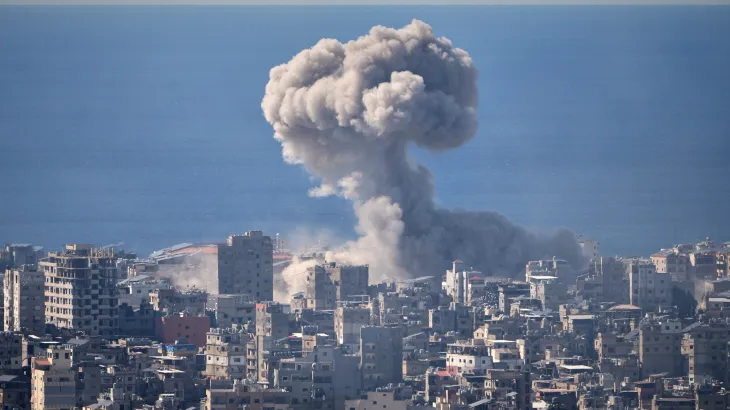
Is the Iran–US–Israel Conflict Turning into an Economic War?
Is the Iran–US–Israel Conflict Turning into an Economic War- The ongoing confrontation involving Iran, the United States, and Israel is no longer confined to military exchanges or regional security concerns. Increasingly, the conflict appears to be spilling into the economic domain, particularly through energy trade and currency politics. At the center of this shift lies a crucial global chokepoint—the Strait of Hormuz—and a provocative question: what happens if oil trade begins to move away from the US dollar?
The Strait of Hormuz: Geography and Strategic Control
The Strait of Hormuz is one of the most critical maritime routes in the world. At its narrowest point, it is approximately 33 kilometers wide, with shipping lanes in each direction only about 3 kilometers wide, separated by a buffer zone. While the strait is bordered by both Iran to the north and Oman to the south, Iran exerts significant strategic influence over the northern coastline, allowing it to potentially monitor or disrupt maritime traffic.
Roughly 20 to 21 million barrels of oil per day—nearly 20% of global oil consumption—passes through this narrow waterway. This includes crude exports from major producers such as Saudi Arabia, Iraq, the UAE, Kuwait, and Iran itself. Any disruption here has immediate global consequences, particularly for oil-importing economies.
Why Oil Is Traditionally Traded in Dollars
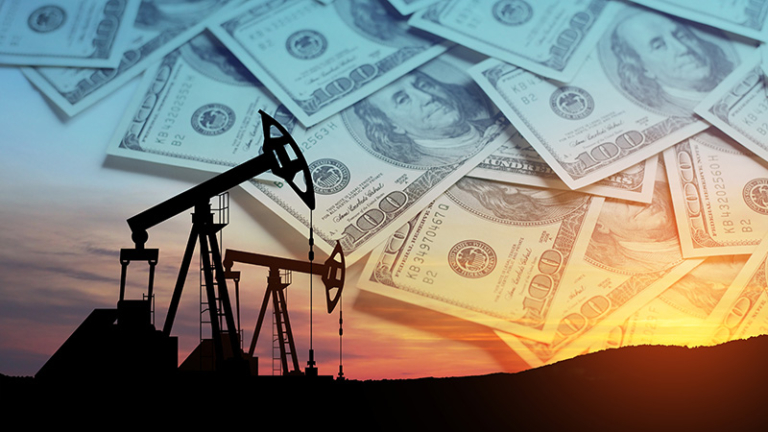
For decades, oil has been priced and traded in US dollars, a system often referred to as the “petrodollar” arrangement. This dates back to the 1970s when the United States reached an understanding with major oil producers, particularly Saudi Arabia, to price oil exclusively in dollars in exchange for security guarantees.
The dollar’s dominance in oil trade serves multiple purposes. It ensures global demand for the US currency, stabilizes exchange risks for producers and buyers, and reinforces the United States’ financial influence. Countries importing oil maintain dollar reserves, which strengthens the dollar’s position as the world’s primary reserve currency.
Iran’s Yuan Shift: Strategy or Signal?
Amid escalating tensions, reports and speculation suggest that Iran may push for oil payments in Chinese yuan rather than US dollars, particularly for shipments passing through the Strait of Hormuz. While not yet fully institutionalized across all shipments, such a move would represent a strategic attempt to bypass US financial systems and sanctions.
Iran has long been subject to US sanctions that restrict its access to the global banking network, particularly systems that operate in dollars. By shifting to yuan—China’s currency—Iran can conduct trade outside the US-controlled financial infrastructure. China, already Iran’s largest oil buyer, becomes a natural partner in this arrangement.
This shift is not merely transactional; it is geopolitical. By encouraging yuan-based oil trade, Iran aligns itself with broader efforts by China and other countries to reduce dependence on the dollar, a process often described as “de-dollarization.”
The Global Math: Who Depends on This Route?
The economies most dependent on oil flowing through the Strait of Hormuz are in Asia. China imports roughly 10–11 million barrels per day, a significant portion of which transits through the strait. India imports around 5 million barrels per day, with a large share also passing through this route. Other major importers include Japan and South Korea, both heavily reliant on Middle Eastern crude.
Europe’s dependence has decreased somewhat due to diversification, but it still remains vulnerable to price shocks originating from disruptions in the region.
If Iran were to selectively allow oil shipments based on currency preferences, it could reshape trade flows. Countries willing to transact in yuan might receive preferential access, while others could face delays, higher costs, or political pressure.
Economic War in the Making?
While no formal policy has yet been universally enforced by Iran to mandate yuan payments for all oil shipments through Hormuz, the idea itself signals a shift in strategy. The battlefield is expanding—from missiles and military alliances to currencies, trade routes, and financial systems.
For the United States, the dominance of the dollar is a pillar of global influence. Any erosion of that dominance—especially in energy trade—poses long-term strategic challenges. For Iran, moving away from the dollar is both a necessity under sanctions and an opportunity to challenge the existing order.
The Iran–US–Israel conflict may not yet be a full-fledged economic war, but the contours are clearly emerging. Control over energy routes, currency choices, and trade partnerships are becoming as important as military positioning. If oil begins to flow not just through strategic chokepoints but through alternative financial systems, the implications will extend far beyond the Middle East—reshaping the global economic balance itself.

Prabha Gupta is a veteran journalist and civic thinker dedicated to the constitutional ideals of dignity and institutional ethics. With over thirty years of experience in public communication, her work serves as a bridge between India’s civil society and its democratic institutions. She is a prominent voice on the evolution of Indian citizenship, advocating for a national discourse rooted in integrity and the empowerment of the common citizen