



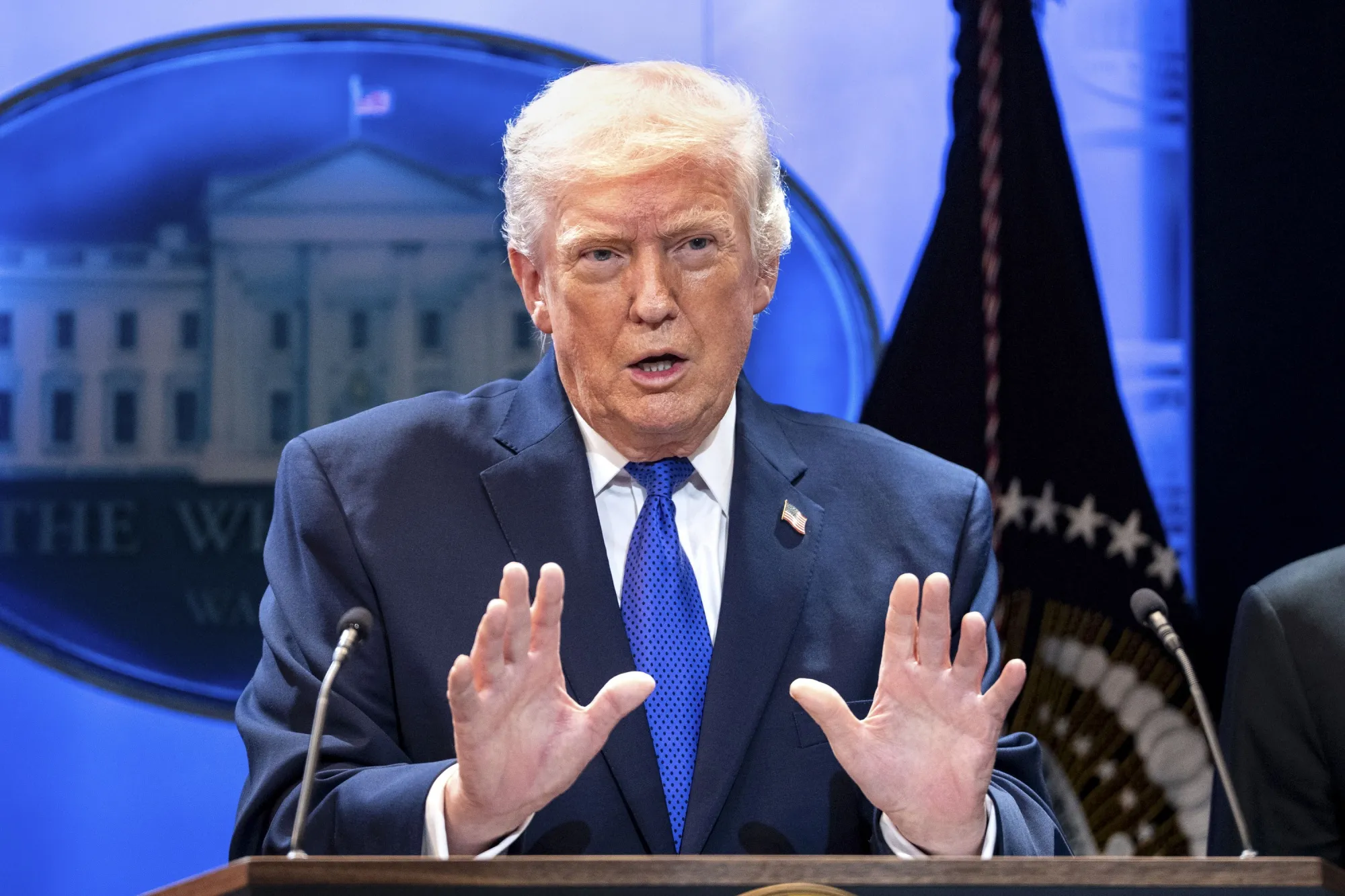
Judicial Fortitude in Washington Vs. New Delhi
The global political landscape of 2026 is increasingly dominated by “strongman” narratives, where leaders lean on their massive electoral mandates to bypass traditional institutional checks. However, a historic week in the judiciary has flipped the script. While the US Supreme Court’s 6–3 decision to strike down President Trump’s global tariffs has grabbed headlines, it invites a deeper, more inquisitive comparison: Does the Indian Supreme Court possess the same “constitutional steel” to stand up to its own dominant political leadership?
The Washington Precedent: Principle Over Patronage
The US verdict was not just a legal defeat for the President; it was a psychological blow to the idea of executive omnipotence. The analytical heart of the story lies in the “betrayal” by Trump’s own appointees—Justices Neil Gorsuch and Amy Coney Barrett. By joining the majority, they signaled that their loyalty lies with Article I of the Constitution (which gives Congress the power to tax), rather than the man who gave them their robes.
This sends a clear message to the world: In America, the “fear factor” of a strong leader has a boundary, and that boundary is the courtroom door. The Court proved it is not a political tool, but a structural “breakwater” against executive overreach.
The Indian Context: The Watchdog’s Dilemma
In India, the Supreme Court is often described as the “most powerful court in the world” due to its wide-ranging powers of Judicial Review and Suo Moto (self-initiated) actions. However, the influence of political leaders in New Delhi works through a more subtle “pressure cooker” environment.
- The Collegium vs. The Executive: Unlike the US, where the President picks judges, India uses the Collegium System, where judges appoint judges. While this is meant to ensure independence, the 2025–26 period has seen intense friction, with the government often sitting on files for months to “nudge” the judiciary toward more favorable candidates.
- Recent Judicial Pushback: Just as the US court struck down tariffs, the Indian Supreme Court has shown flashes of extreme strictness. In late 2025, the Court stayed controversial provisions of the Waqf (Amendment) Act and sternly rebuked state governments for using “Bulldozer Justice” as a substitute for due process. It effectively told the executive that a “mandate from the people” does not grant a “license to bypass the law.”
Analytical Comparison: Strictness vs. Strategy
There is a fundamental difference in how these two courts exert their influence:
- The US Model (Strict Constitutionalism): The US Court relies on a rigid interpretation of the law. They don’t care if a policy is “good” or “popular”; if it isn’t in the Constitution, it’s out. This makes them a predictable, albeit slow, guardrail.
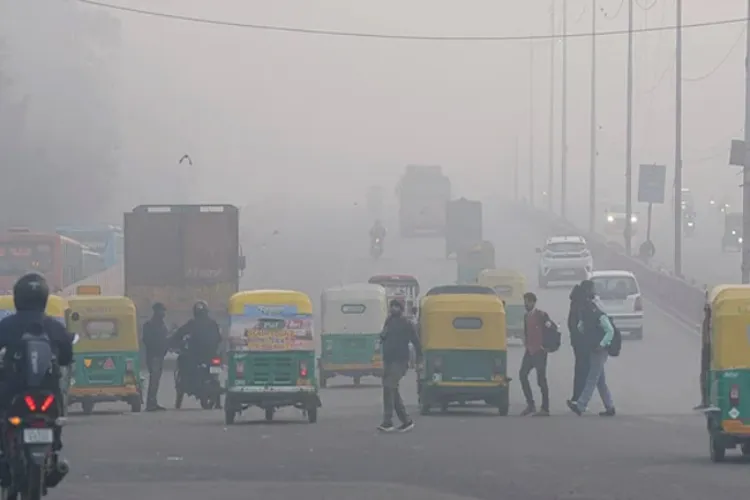
- The Indian Model (Social Sentinel): The Indian Supreme Court often acts as a “Social Guardian.” It doesn’t just check the law; it intervenes in governance—from pollution in Delhi to the rights of transgender citizens (as seen in the October 2025 compensation ruling). While this makes it “stricter” in day-to-day life, it also makes it more vulnerable to political accusations of “Judicial Activism.”
The Credibility War
The fear of a strong leader often silences opposition in the Parliament, but as the US Tariff ruling proves, the judiciary is the only place where a leader’s “fear” carries no weight. In India, the Supreme Court’s recent trend of quashing FIRs against opposition leaders (like the Imran Pratapgadhi case in early 2025) suggests that it is trying to reclaim the “Neutral Ground.”
The Verdict
The world is watching to see if the Indian judiciary can match the institutional independence shown in Washington. If the US Supreme Court can tell a defiant Trump that his “national emergency” is illegal, can the Indian Supreme Court tell a dominant New Delhi that its “administrative efficiency” cannot override “individual liberty”?
As of February 2026, both courts are proving the same point: A leader’s strength is temporary, but the strength of a constitutional institution must be permanent. The “fear” of the leader is real, but the “power of the pen” in the hands of a judge remains the ultimate checkmate.
In a landmark decision that has sent shockwaves from the Oval Office to the stock exchanges of Mumbai and Tokyo, the United States Supreme Court delivered a stunning rebuke to President Donald Trump on February 20, 2026. By a 6–3 majority, the Court ruled that the President overstepped his constitutional authority by imposing sweeping global tariffs under the guise of “national emergency” powers.
The verdict serves as a historic analytical pivot: while the world had seemingly bowed to the “fear of Trump,” the highest court in the United States has reminded the world that even the most powerful leader is subordinate to the Constitution.
The Genesis of the Ruling
The case centered on the International Emergency Economic Powers Act (IEEPA) of 1977, which President Trump used to justify tariffs ranging from 10% to 50% on nearly all trading partners, including India, Canada, and China. Trump’s legal team argued that these tariffs were necessary to combat “economic threats” to national security.
However, Chief Justice John Roberts, writing for the majority, dismantled this logic. The Court held that the power to tax—which includes tariffs—belongs exclusively to Congress under Article I of the Constitution. The majority opinion was clear: “The law does not grant the President a blank check to reshape the global economy through two words: ‘regulate’ and ‘importation.'”
The Institutional Break: When Loyalty Ends
Perhaps the most significant analytical takeaway is the cross-ideological nature of the ruling. Two of Trump’s own appointees, Justice Neil Gorsuch and Justice Amy Coney Barrett, joined the liberal bloc and Chief Justice Roberts. Their decision emphasized that the “Major Questions Doctrine” requires explicit Congressional approval for policies with such vast economic consequences.
For these justices, the commitment to Originalism—the idea that the Constitution must be followed as written—proved stronger than any political allegiance. It sent a clear message: the strength of the American Republic lies not in a “Strongman” leader, but in the “Strong Document” that limits him.
A World Silenced by Fear
The international reaction to this ruling has been one of “muted relief.” For over a year, nations across the globe had suffered under these tariffs, yet few dared to launch a direct trade war. The fear of Trump’s unpredictable retaliation had created a global paralysis.
Even in New Delhi, the Ministry of Commerce responded cautiously, stating they are “studying the implications.” This silence highlights a disturbing trend in 2026 geopolitics: many democratic nations were waiting for the US judiciary to do the heavy lifting of standing up to executive overreach, rather than confronting it through diplomatic or retaliatory channels themselves.
The Economic Aftermath
While the ruling is a victory for the rule of law, the economic “fear factor” remains. Within hours of the verdict, a defiant President Trump labeled the justices a “disgrace” and immediately signed a new executive order for a 10% global tariff under a different law (Section 122 of the Trade Act of 1974).
However, this new move is significantly weaker. Section 122 tariffs are limited to 150 days and can be easily challenged or blocked by Congress. The Supreme Court has effectively stripped the President of his “infinite tariff” weapon, forcing him back into the slow, bureaucratic machinery of the legislature.
The Supreme Court’s decision on February 20, 2026, will be remembered as the moment the American judiciary reasserted its role as the final arbiter of power. It has proved that while a leader can dominate the headlines and intimidate the world, they cannot—yet—overrule the fundamental separation of powers. For global investors and democratic allies, the message is clear: the American constitutional architecture is still standing, even if the facade is under immense pressure.

Prabha Gupta is a veteran journalist and civic thinker dedicated to the constitutional ideals of dignity and institutional ethics. With over thirty years of experience in public communication, her work serves as a bridge between India’s civil society and its democratic institutions. She is a prominent voice on the evolution of Indian citizenship, advocating for a national discourse rooted in integrity and the empowerment of the common citizen