




As Nitish Kumar Eyes 10th Term: Longest-Serving CMs
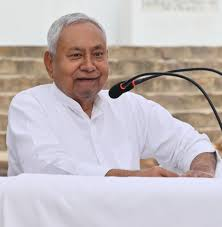
As Nitish Kumar eyes his 10th term, the debate around India’s longest-serving Chief Ministers has resurfaced with renewed intensity. Bihar’s political landscape has once again put the spotlight on leaders who have stayed in power for decades, shaping governance styles, development models and regional politics. Nitish Kumar, who has already served nine terms, is now set to join the league of political veterans whose longevity reflects both administrative adaptability and electoral strategy.
Why Do Some Chief Ministers Stay in Power for Decades?
Long-serving chief ministers often combine three factors:
strong personal credibility, welfare-driven governance, and political adaptability. Their ability to maintain grassroots trust and manage alliances allows them to survive shifting coalitions, party splits, and electoral waves.
Nitish Kumar is a classic example. He built his longevity on good governance branding, improved roads, welfare schemes for women, and a reputation for administrative discipline. Moreover, he has shown remarkable political flexibility, switching alliances when needed to safeguard stability in Bihar.
Across India, the longest-serving CMs stayed in power because they created predictable governance, cultivated loyal support bases, and kept opposition fragmented. Their dominance was not only political but also emotional, as many voters saw them as problem-solvers who brought continuity.
India’s Longest-Serving Chief Ministers
Pawan Kumar Chamling, Sikkim — 24 years (1994–2019)
Chamling tops the list. He ruled Sikkim for nearly 25 years and won five straight elections. His long run came from political stability, strong rural outreach, and an image of a calm, consistent administrator.
Naveen Patnaik, Odisha — 24 years (2000–2024)
Naveen Patnaik led Odisha for over two decades. His clean image, social schemes, and disaster-management leadership made him one of India’s most trusted leaders. He lost power only in the 2024 election when the BJP swept 78 of 147 seats.
Jyoti Basu, West Bengal — 23 years (1977–2000)
A towering figure in Indian politics, Basu served for 23 years. His disciplined party machinery and stable governance model helped him dominate Bengal’s politics for generations. He even declined the chance to become India’s Prime Minister.
Gegong Apang, Arunachal Pradesh — 22 years (1980–1999; 2003–2007)
Apang served two long stints, becoming one of Northeast India’s most influential leaders. His long presence came from coalition management and deep local connect across ethnic groups.
Lal Thanhawla, Mizoram — 22 years (1984–2018)
Thanhawla held office across three different phases. His focus on improving infrastructure, healthcare, and education helped him maintain strong public trust over many years.
Virbhadra Singh, Himachal Pradesh — 21 years (1983–2017)
A Congress veteran, Singh led Himachal Pradesh across multiple terms. His mass appeal, especially in rural areas, made him the state’s most enduring political figure.
Manik Sarkar, Tripura — 19 years (1998–2018)
Known as one of India’s “poorest” but cleanest politicians, Sarkar served four consecutive terms. His simplicity and discipline made him extremely popular.
Nitish Kumar, Bihar — 19 years (2000–Present)
Nitish remains Bihar’s longest-serving CM. His governance cycle, focus on women’s empowerment, and ability to manoeuvre alliances kept him at the centre of Bihar’s politics for nearly 20 years.
M. Karunanidhi, Tamil Nadu — 18 years (1969–2011)
Karunanidhi ruled Tamil Nadu across five terms. His oratory, welfare-driven politics, and strong hold over the DMK enabled him to stay relevant for decades.
Parkash Singh Badal, Punjab — 18 years (1970–2017)
Badal served several non-continuous terms. Known for his deep rural connect, he was once the youngest chief minister in India.

NewsHasghag operates a 24/7 news bureau that tracks the real-time, social media-driven stories from India and around the world, keeping you ahead of the day’s key talking points. Our digital-first approach transforms storytelling through the seamless integration of data, interactive charts, video, and audio into every narrative