




How Ganga Ram Hospital Performed Historic Robotic Telesurgery- NEW DELHI — In a historic milestone for Indian medical science, Sir Ganga Ram Hospital has successfully completed a series of complex robotic telesurgeries across a staggering distance of 1,200 kilometers. This achievement, announced on February 11, 2026, marks a transformative shift in how surgical expertise can be delivered to patients in remote and underserved regions, effectively proving that geography is no longer a barrier to life-saving care.
The procedures utilized the state-of-the-art Mizzo Endo 4000 robotic surgical system, allowing a team of expert surgeons based in Vapi, Gujarat, to treat patients located at Sir Ganga Ram Hospital in the National Capital. By leveraging high-speed digital connectivity with ultra-low latency, the medical team performed four intricate surgeries within urology and general surgery in a single 24-hour window. The operation demonstrated exceptional real-time precision and uncompromised safety, mirroring the conditions of a traditional operating theater despite the vast physical distance between the doctor and the patient.
A Collaborative Triumph of Technology and Expertise
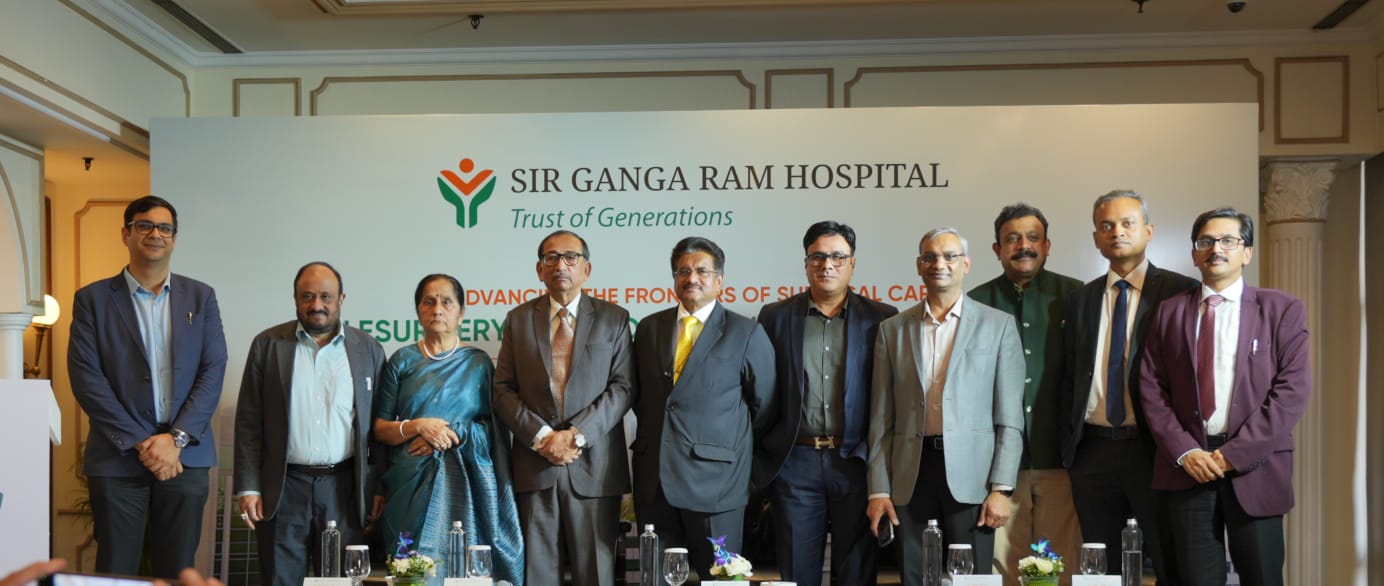
The success of this mission rested on a multi-disciplinary team of veteran consultants. Senior Consultant Dr. Vipin Tyagi served as the Robotic Coordinator, working alongside Dr. Ajay Sharma, Director of Robotics. The broader surgical team included Dr. Tarun Mittal, Dr. Anmol Ahuja, Dr. Ashish Dey, Dr. Mukund Khaitan, and Dr. Suviraj John, all representing various specialized departments within the institution.
“Telesurgery allows us to deliver the same precision and surgical confidence across distances as we would in the operating room,” noted Dr. Vipin Tyagi. This sentiment was echoed by hospital leadership, who viewed the event as a fulfillment of their unwavering commitment to combining medical excellence with advanced technology. Dr. Ajay Swaroop, Chairman of the Board of Management, emphasized that this breakthrough reflects a broader goal: making high-quality healthcare universally accessible.
Implications for the Future of Indian Medicine
The integration of robotics and digital connectivity is seen as a major step forward in surgical science. As Dr. Jayasree Sood, Vice Chairperson, pointed out, this model provides high-quality treatment to patients who normally struggle to access specialized medical care. Furthermore, Dr. (Prof.) A.K. Bhalla highlighted that the ongoing development of these technologies will create more opportunities to connect premier treatment facilities with rural populations.
Beyond the technical feat of the 1,200-kilometer reach, robotic surgery itself offers proven clinical benefits, including smaller incisions, reduced blood loss, and faster recovery times for the patient. By extending these benefits through telesurgery, Sir Ganga Ram Hospital is setting a new standard for surgical collaboration in India.
A Legacy of Trust and Innovation
For over seven decades, Sir Ganga Ram Hospital has operated as a premier, multi-disciplinary institution synonymous with ethical practices and clinical excellence. Guided by the philosophy of “Trust of Generations,” the hospital continues to drive innovation through its three core pillars: healthcare delivery, academic training, and medical research. With a new visual identity reflecting its 70-year legacy, the institution remains at the forefront of the nation’s healthcare evolution, now bridging the physical divide to bring expert care to every corner of the country.
Addressing the Critical Gap: Affordability and Risks
However, the path to making this a “common man’s” reality is fraught with challenges. The primary “side effect” of such high-end technology is the potential for technical failure; even with ultra-low latency, a sudden drop in connectivity could lead to critical delays or surgical complications that require an immediate, on-site manual intervention. From an affordability perspective, the Mizzo Endo 4000 system and the required high-speed dedicated network lines represent a massive capital investment. For the average Indian citizen, the cost of a robotic procedure remains significantly higher than traditional surgery, raising concerns that this digital revolution might remain restricted to those with premium insurance or deep pockets unless significant government subsidies are introduced.
Cost Comparison
Costs of common procedures across three primary surgical methods in India.
| Feature / Surgery Type | Open (Traditional) | Laparoscopic (Keyhole) | Robotic-Assisted |
| Typical Cost Range | ₹1.2 Lakh – ₹2.5 Lakh | ₹1.8 Lakh – ₹3.5 Lakh | ₹4 Lakh – ₹10 Lakh |
| Urological (Prostate) | ₹1.6 Lakh – ₹2 Lakh | ₹2.3 Lakh – ₹3 Lakh | ₹4 Lakh – ₹7.5 Lakh |
| Gynaecological | ₹1.3 Lakh – ₹1.8 Lakh | ₹2.1 Lakh – ₹2.8 Lakh | ₹4 Lakh – ₹6 Lakh |
| Average Hospital Stay | 5 – 8 Days | 3 – 5 Days | 1 – 3 Days |
| Insurance Coverage | Standard Coverage | Standard Coverage | Varies (Often has sub-limits) |
The Affordability Paradox
For a layman, the choice isn’t just about the “best” technology; it’s a financial calculation.
- Telesurgery requires dedicated, ultra-high-speed leased lines to ensure zero lag. These infrastructure costs are often passed down to the patient, making a “remote” surgery even more expensive than a standard robotic one performed in person.
- Insurance Gaps: While the IRDAI (Insurance Regulatory and Development Authority of India) has mandated that robotic surgeries be covered, many policies have “modern treatment” sub-limits. A policy of ₹10 Lakh might only cover up to ₹1 Lakh or ₹2 Lakh for robotic assistance, leaving the patient to pay the remaining several lakhs out-of-pocket.
- Maintenance & Consumables: Robotic systems use specialized instruments that have a “limited life” (often only 10 uses). Each surgery consumes thousands of rupees in proprietary tools that traditional surgery simply doesn’t require.
Is the Cost Justified?
For complex surgeries where precision is non-negotiable (like nerve-sparing prostate surgery), the higher cost may be offset by the faster recovery and reduced risk of long-term disability. However, for a layman seeking routine procedures, the “premium” for robotic telesurgery remains a significant hurdle in 2026.
Potential “Side Effects” of the Tech Gap
The most critical side effect isn’t biological—it’s systemic reliability.
- The “Conversion” Risk: In any surgery, complications can arise. In a telesurgery setup, if the robot malfunctions or the patient experiences sudden bleeding, the success of the operation depends entirely on having a backup team of equal caliber physically present at the patient’s site.
- Haptic Feedback: Unlike traditional surgery where a surgeon can “feel” the tissue, robotic surgeons rely entirely on visual cues. This requires a much higher level of specialized training to avoid accidental tissue trauma.

Prabha Gupta is a veteran journalist and civic thinker dedicated to the constitutional ideals of dignity and institutional ethics. With over thirty years of experience in public communication, her work serves as a bridge between India’s civil society and its democratic institutions. She is a prominent voice on the evolution of Indian citizenship, advocating for a national discourse rooted in integrity and the empowerment of the common citizen