






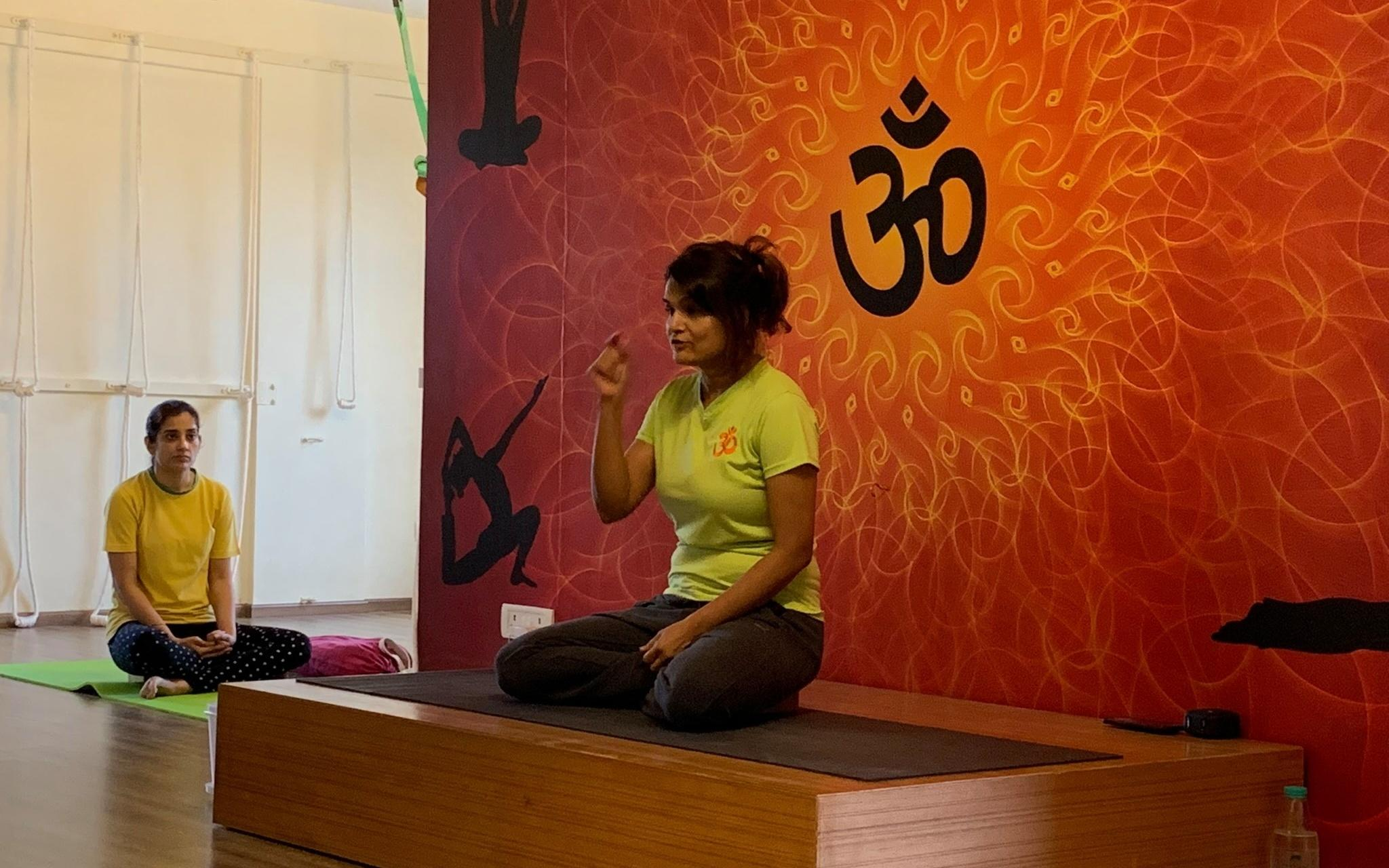
What happens when you chant ‘Om’ daily
What happens when you chant ‘Om’ daily – In a world dominated by constant digital noise, endless notifications and chronic mental fatigue, it might seem almost naive to suggest that a single syllable could meaningfully shift your inner state. Yet Om arguably- the most ancient sound in human spiritual history has endured precisely because its effects appear to be anything but trivial. Rooted deeply in Indian philosophy, yogic tradition and Vedic scripture, Om is regarded as the primordial vibration underlying all of existence, the sound from which the universe itself is said to have originated.
What was once confined to temples, ashrams and meditation halls has steadily found its way into modern wellness studios, psychotherapy rooms and everyday mindfulness routines across the globe. This migration from the sacred to the secular is not accidental. People are searching, often urgently, for tools that genuinely quiet the nervous system without requiring medication, expensive equipment or hours of free time. Chanting Om asks for almost nothing — a few minutes, a comfortable posture and a willingness to sit with the sound.
The 21-day framework matters more than it might initially appear. In both ancient tradition and contemporary habit science, 21 days represents a meaningful threshold – long enough for a practice to move from conscious effort to something approaching routine, yet short enough to feel achievable rather than daunting. Practitioners who commit to daily Om chanting across this window frequently describe their experiences not as sudden revelation but as something quieter and more sustainable: a gradual unwinding.
During the first few days, most people simply notice the physical sensation of the sound itself – the vibration resonating through the chest, throat and skull, the natural slowing of the breath that chanting demands. This alone carries measurable value. Controlled, rhythmic breathing activates the parasympathetic nervous system, signaling to the body that it is safe to release tension. Heart rate steadies, muscles soften, and the mental chatter that defines modern waking life begins, even briefly, to recede.
By the second week, something subtler tends to emerge. Regular practitioners often report sleeping more soundly, feeling less reactive during moments of stress and noticing an improved capacity to concentrate. These are not mystical claims they align with findings from neurological and physiological research suggesting that sustained chanting influences brainwave activity, potentially increasing alpha wave production associated with relaxed alertness. The vibration of Om, particularly when sustained and resonant, is also thought to stimulate the vagus nerve, a key regulator of the body’s stress response.
By the third week, the shift is frequently described in emotional terms. A kind of internal spaciousness develops not the absence of difficulty, but a changed relationship to it. Anxiety does not necessarily disappear, but it feels less consuming. Emotional reactivity tends to soften. Some practitioners describe a growing sense of groundedness, as though the daily practice has quietly installed a steadier foundation beneath ordinary life.
The right way to chant Om is worth understanding before beginning. Posture matters sitting upright with a relaxed but alert spine allows the breath to move freely. The sound itself is traditionally divided into three parts: the open A sound rising from the abdomen, the round U sound moving through the chest, and the closed M sound vibrating through the lips and skull, followed by a moment of complete silence. That silence is considered as significant as the sound itself. Five to fifteen minutes daily is generally sufficient, ideally at the same time each morning before the day’s demands take hold.

NewsHasghag operates a 24/7 news bureau that tracks the real-time, social media-driven stories from India and around the world, keeping you ahead of the day’s key talking points. Our digital-first approach transforms storytelling through the seamless integration of data, interactive charts, video, and audio into every narrative