



Running on Water?’: PM Modi’s Austerity Appeal Collides With Political Spectacle Amid Iran War Anxiety
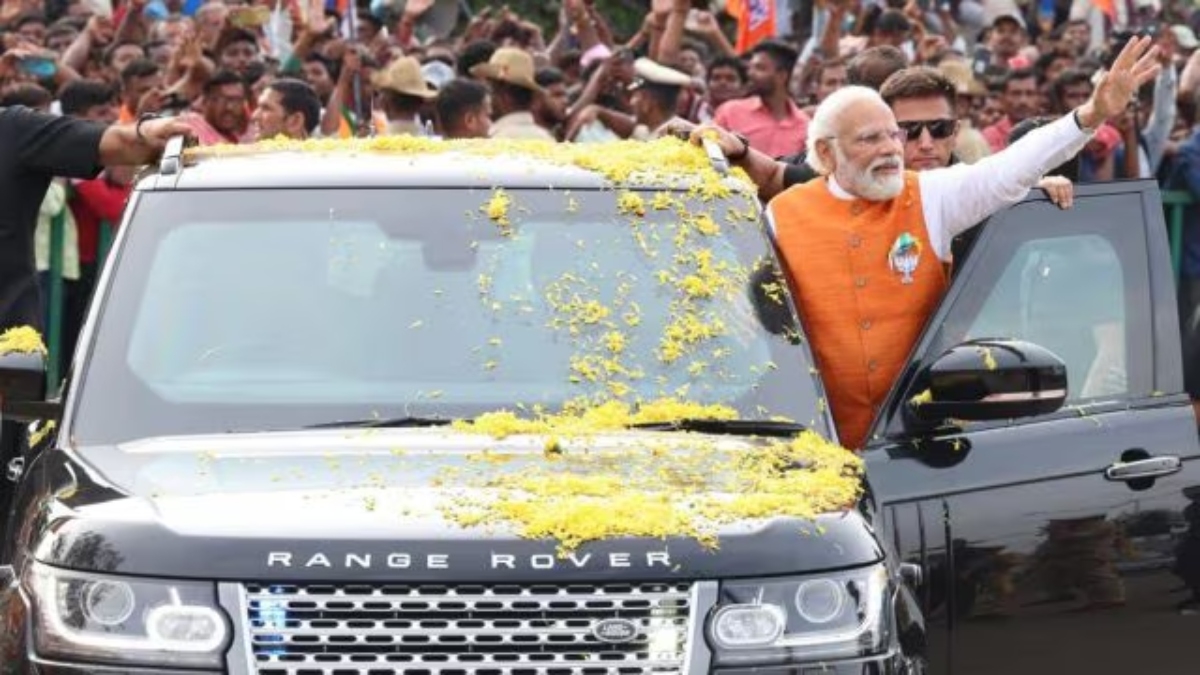
Prime Minister Narendra Modi’s appeal to Indians to “save petrol, diesel and gas,” avoid foreign travel, postpone gold purchases, and even revive work-from-home culture was meant to project economic caution during a volatile global crisis. But within hours, images of massive political roadshows, VIP convoys, and celebratory public events triggered sharp public backlash, exposing what critics call a widening gap between government messaging and political conduct.
At the heart of the controversy lies a difficult question: can a government ask citizens to tighten their belts while continuing high-energy political optics that appear to contradict its own warnings?
Addressing a rally in Hyderabad amid the escalating US-Iran conflict and growing instability in West Asia, Modi framed austerity as an act of patriotism. He warned that disruptions in the Strait of Hormuz — one of the world’s most critical oil transit routes — could severely impact India’s economy, foreign exchange reserves, and fuel security.
The Prime Minister’s seven-point appeal went beyond fuel conservation. Citizens were urged to reduce gold consumption, avoid unnecessary foreign travel, shift to public transport, embrace carpooling, and rely more on online meetings and remote work.
Economically, the concerns are real. India imports nearly 85% of its crude oil needs, making it highly vulnerable to geopolitical shocks. As crude prices surged beyond $104 per barrel following tensions involving Iran and the United States, Indian markets reacted nervously. The Sensex and Nifty fell sharply, while the rupee hit record lows against the dollar.
Yet the political timing of Modi’s appeal quickly overshadowed its economic rationale.
Soon after urging restraint, the Prime Minister participated in elaborate roadshows and large-scale public outreach events in Gujarat and other states. Social media users sarcastically remarked that perhaps official convoys were “running on water.” The criticism was not merely partisan trolling; it reflected growing frustration over what many viewed as selective austerity.
For many middle-class Indians already battling inflation, stagnant wages, rising EMIs, and high fuel taxes, the message felt familiar: ordinary citizens must sacrifice while political power continues unaffected. The optics became particularly damaging because the government framed the situation as serious enough to justify behavioral changes resembling pandemic-era restrictions.
Critics argued that if fuel conservation is truly a national emergency, then political roadshows, massive rallies, and non-essential state events should also be minimized. India already demonstrated during the Covid-19 pandemic that virtual campaigning and digital governance are possible. Instead, the government appeared to ask citizens to embrace restraint while continuing fuel-intensive political mobilization.
This contradiction risks undermining the credibility of the larger economic message.
Historically, austerity campaigns succeed only when leaders visibly participate in the sacrifice. During wartime economies or financial crises, symbolism matters as much as policy. Citizens tend to cooperate when they believe the burden is being shared equally. When political leadership appears exempt, public trust weakens rapidly.
The anxiety is not limited to optics alone. Financial markets interpreted Modi’s unusually direct remarks as a sign that the government anticipates a prolonged economic shock. Investors fear the possibility of fuel price hikes, increased import duties on gold, tighter forex controls, or other emergency measures if the Iran conflict deepens further.
Several sectors — including aviation, tourism, oil marketing, and jewellery — witnessed immediate selling pressure. Analysts warned that India’s consumption-driven economy could suffer if prolonged austerity messaging begins affecting public sentiment and discretionary spending.
Meanwhile, online discussions revealed deeper public unease. Daily wage workers, small business owners, delivery workers, and commuters questioned how work-from-home advice applies to millions surviving on physical labor and daily mobility.
The government insists there is no immediate fuel shortage and maintains that India’s energy supplies remain stable. Officials say the appeal is precautionary, aimed at reducing pressure on foreign exchange reserves and preparing citizens for uncertain global conditions.
But politically, the episode reveals a larger challenge confronting the Modi government: balancing nationalist economic messaging with a political culture built around spectacle, mass mobilization, and high-visibility leadership.
The issue is no longer simply about petrol consumption. It is about public perception of fairness. When leaders ask citizens to sacrifice during crisis, symbolism becomes policy. And in an age of instant social media scrutiny, even a convoy can become a political statement.

Prabha Gupta is a veteran journalist and civic thinker dedicated to the constitutional ideals of dignity and institutional ethics. With over thirty years of experience in public communication, her work serves as a bridge between India’s civil society and its democratic institutions. She is a prominent voice on the evolution of Indian citizenship, advocating for a national discourse rooted in integrity and the empowerment of the common citizen