





US Violates International Law: Venezuela and Australia
The global community recently witnessed a dramatic shift in international relations. The Trump administration seized Venezuelan President Nicolás Maduro and his wife in a high-stakes “snatch and grab” operation. While Washington attempts to justify this move, legal scholars are clear: the US violates international law in Venezuela through this action. As a close ally, Australia now faces a difficult diplomatic crossroads. If the “rules-based order” is to survive, the Albanese government cannot remain silent.
A Gross Breach of the UN Charter
The foundation of modern global peace is the United Nations Charter. This document explicitly mandates that all members refrain from the “use of force” against the territorial integrity or political independence of any state. The recent US actions—including the violation of Venezuelan airspace, targeted airstrikes in Caracas, and the forced removal of a sitting president—shatter these principles.
Legal experts, including Geoffrey Robertson KC, describe these events as an act of naked aggression. To justify such force, a nation must prove it acted in self-defense. However, Venezuela never launched an armed attack against the United States. Furthermore, no evidence suggests that such an attack was imminent. By bypassing these legal requirements, the US has set a dangerous precedent that mirrors the very actions it condemned during the Russian invasion of Ukraine.
The “Goldilocks” Fallacy and Australia’s Response
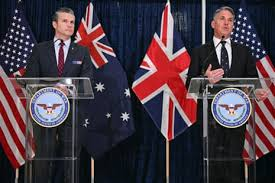
While Australia was quick to condemn Russian aggression, its response to the situation in Venezuela remains notably muted. This “selective” application of international law creates a credibility gap for the Albanese government. For years, Australia has championed a “rules-based order” in the Indo-Pacific. If our primary ally can ignore these rules at will, the foundation of our regional strategy begins to crumble.
The Trump administration justifies its intervention by linking the Maduro regime to drug cartels. While these allegations are serious, they do not provide a legal basis for invading a sovereign nation and kidnapping its leader. Currently, the US claims it “will run” Venezuela, though Republican leaders have started to distance themselves from such absolute statements. Without ground troops, it remains unclear how the US intends to govern or stabilize the region.
Serious Implications for ANZUS and AUKUS
The most pressing concern for Australia lies in the future of our defense alliances. The Trump presidency appears increasingly assertive. This shift suggests that the US may prioritize unilateral action over collective security frameworks. For Australia, this raises uncomfortable questions about ANZUS and AUKUS:
- Reliability: Can Australia rely on the US to follow international law in the Indo-Pacific if it ignores it in South America?
- Sovereignty: Does our close tie to the US through AUKUS make us complicit in future violations of international norms?
- Regional Strategy: How can Australia push back against Chinese or Russian aggression if we ignore the aggressive actions of our closest partner?
The Path Forward: Asking the Hard Questions
The Labor government wants the US to “set out the facts” before passing a final judgment. However, as the evidence of international law violations mounts, “waiting for facts” looks increasingly like diplomatic avoidance. Australia must decide if it stands for the principle of sovereignty or merely for the interests of its allies.
The next three years will likely see the US conduct become even more assertive. If Australia does not establish clear boundaries now, it risks being dragged into a global landscape where power, not law, dictates the rules. True friendship in an alliance involves speaking truth to power. For the sake of the Indo-Pacific and the global order, Australia must start asking those hard questions today.

NewsHasghag operates a 24/7 news bureau that tracks the real-time, social media-driven stories from India and around the world, keeping you ahead of the day’s key talking points. Our digital-first approach transforms storytelling through the seamless integration of data, interactive charts, video, and audio into every narrative