




Venezuela done, Cuba next? Report says Trump team seeks govt insiders to cut a deal and oust Communist regime
In Davos today, January 21, 2026, the Trump administration signaled that Cuba is its next strategic focus following the capture of Nicolás Maduro in Venezuela. According to reports, U.S. officials believe the Communist regime in Havana is more vulnerable than at any point in decades. Consequently, the Trump team is searching for government insiders to broker a deal for a political transition.
Background and History: A Century of Tension
The relationship between the United States and Cuba has been defined by over 60 years of hostility since the 1959 Cuban Revolution. Following Fidel Castro’s ouster of the U.S.-backed Batista regime, the U.S. imposed a comprehensive trade embargo in 1960. This remains the longest-standing embargo in modern history. Throughout the Cold War, the island survived primarily on massive subsidies from the Soviet Union. However, when the USSR collapsed in 1991, Cuba entered the “Special Period”—a decade of extreme poverty and food shortages.
The Venezuelan Lifeline
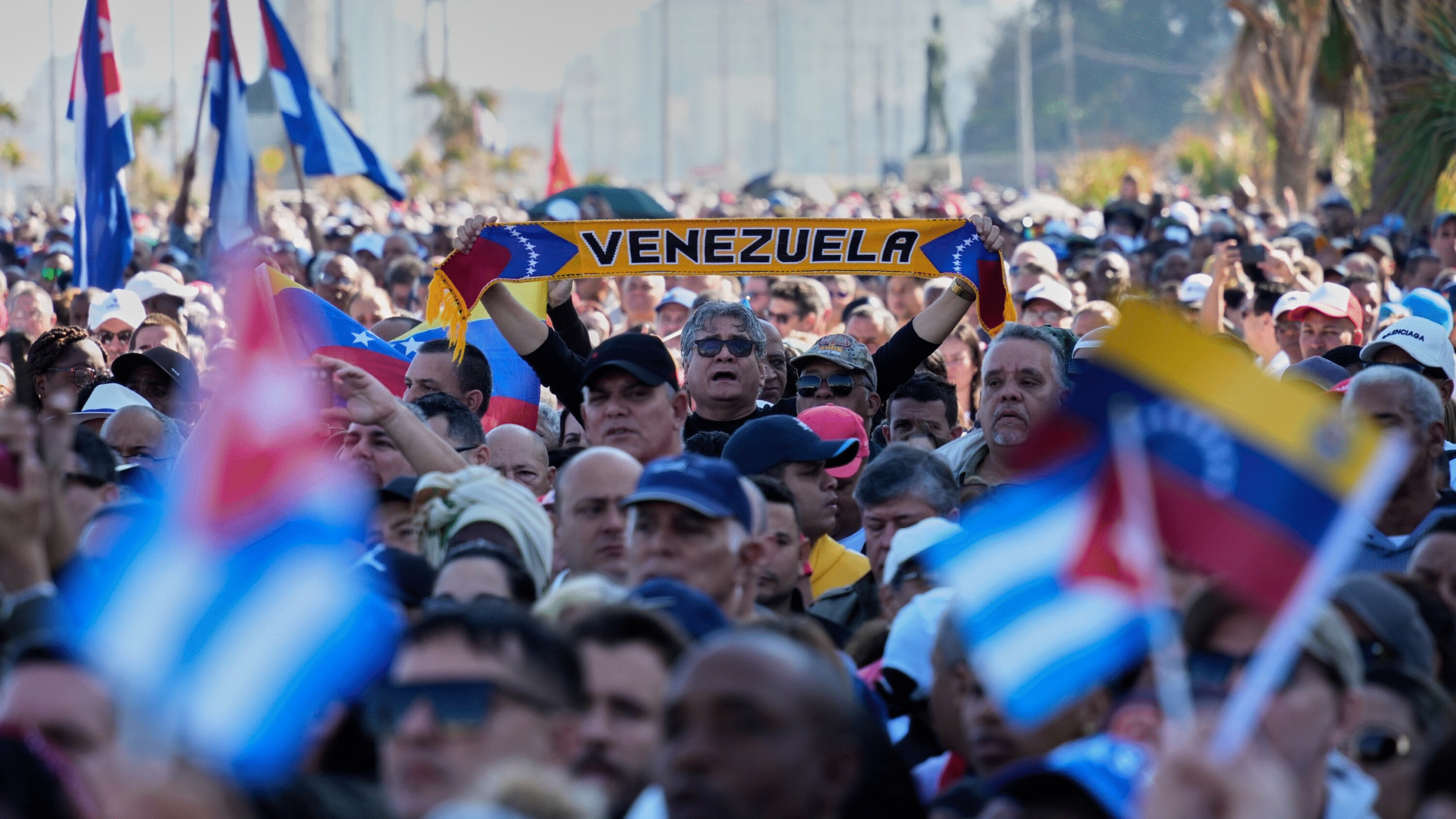
Cuba was saved from total collapse in the early 2000s by the rise of Hugo Chávez in Venezuela. Through a “doctors-for-oil” swap, Venezuela began sending nearly 100,000 barrels of oil daily at subsidized rates. In return, Cuba provided medical and military advisors. This partnership effectively made Venezuela Cuba’s new “Soviet Union,” accounting for nearly 50% of the island’s total trade. However, as Venezuela’s economy crumbled under Nicolás Maduro, shipments declined significantly. With Maduro now ousted by U.S. forces in early 2026, Cuba has lost its final major benefactor.
Seeking a Deal from Within
Instead of a traditional regime-change strategy, the administration is focusing on reform-minded figures within the Cuban government. U.S. officials have met with exile groups in Miami to pinpoint insiders who might “see the writing on the wall.” The goal is to negotiate a transfer of power rather than risk a chaotic collapse. The January 3 operation in Venezuela, which succeeded with the help of an inner-circle asset, serves as the model for this approach.
A Multidimensional Economic Crisis
The assessment of Cuba’s economy is dire. Experts report that GDP is significantly smaller than in 2018, and basic services are breaking down. President Trump emphasized this on social media, warning on his Truth Social platform: “THERE WILL BE NO MORE OIL OR MONEY GOING TO CUBA – ZERO! I strongly suggest they make a deal, BEFORE IT IS TOO LATE.” Without the ability to purchase oil on the international market, Havana faces its worst crisis since the fall of the Soviet Union. While Mexico and Russia have offered limited support, Washington’s “maximum pressure” makes it difficult for Cuba to find alternative patrons.
Havana’s Defiant Response
In response to these threats, Cuban President Miguel Díaz-Canel has remained defiant. Speaking in military fatigues, he stated there would be “no surrender or capitulation” based on coercion. While the regime remains adept at suppressing internal dissent, the combination of mass emigration and systemic economic failure is creating a “ship adrift” scenario. The coming months will determine if the Trump team can leverage this fragility into a fundamental political shift.
You can learn more about the geopolitical shift in the Caribbean by watching this news report on the U.S. warning to Cuba. This video provides context on the recent collapse of Venezuelan oil support to the island.

Prabha Gupta is a veteran journalist and civic thinker dedicated to the constitutional ideals of dignity and institutional ethics. With over thirty years of experience in public communication, her work serves as a bridge between India’s civil society and its democratic institutions. She is a prominent voice on the evolution of Indian citizenship, advocating for a national discourse rooted in integrity and the empowerment of the common citizen