




BJP Exposed As Arvind Kejriwal Got Clean Chit From the Court
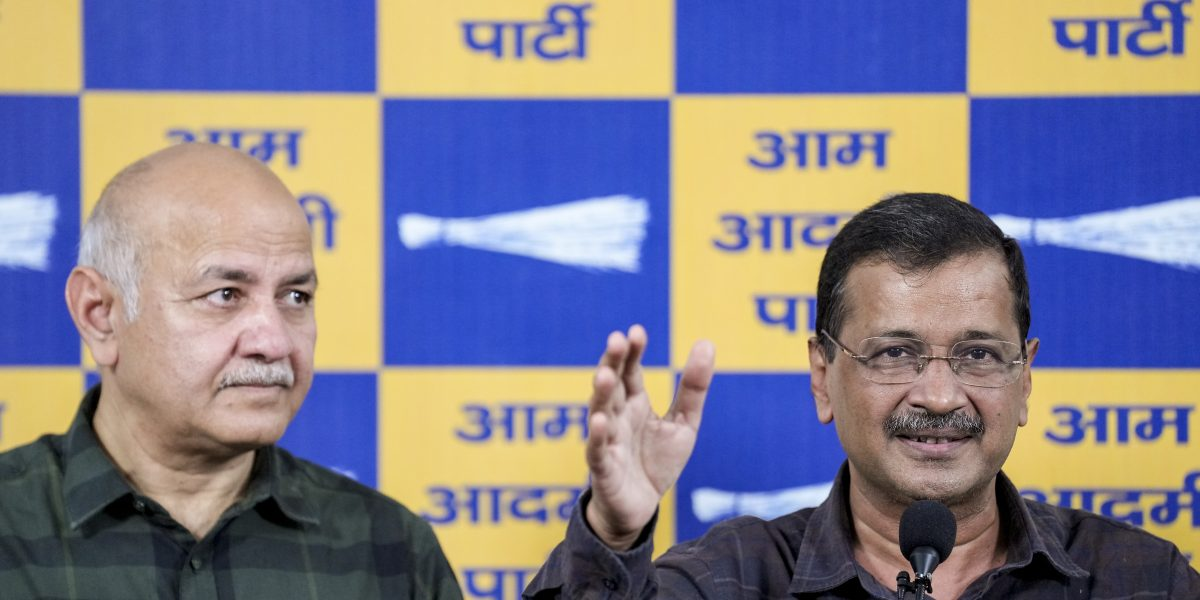
The acquittal of Arvind Kejriwal and Manish Sisodia in the much-publicized Delhi excise policy case marks a pivotal moment in India’s charged political climate. After months of arrests, televised accusations, and relentless political sparring, the court’s finding that no conclusive evidence could be established against the two senior leaders raises significant questions—not only about the strength of the prosecution’s case but also about the broader use of investigative agencies in political battles.
The alleged “liquor scam” revolved around the Delhi government’s 2021–22 excise policy, which the opposition claimed was designed to benefit select private players in exchange for kickbacks. The Central Bureau of Investigation (CBI) and the Enforcement Directorate launched parallel investigations, leading to high-profile arrests and raids. The Bharatiya Janata Party (BJP) repeatedly described the case as one of the biggest corruption scandals in Delhi’s governance history.
Collapse of the Prosecution’s Case
The court’s decision to acquit Kejriwal and Sisodia due to lack of admissible and substantive evidence shifts the narrative considerably. Judicial scrutiny emphasized the principle that allegations, no matter how politically resonant, cannot substitute for legally sustainable proof. In a democracy governed by rule of law, the burden lies squarely on investigative agencies to present credible, corroborated material. The absence of such proof has not only weakened the case but has also emboldened the accused leaders to claim political vindication.
For the Aam Aadmi Party (AAP), the acquittal is more than legal relief; it is political ammunition. The party has consistently argued that the case was an attempt to destabilize an elected government and tarnish its anti-corruption image. Kejriwal, who built his political career on the promise of clean governance, now positions the verdict as evidence that the allegations were politically motivated. Sisodia, who spent months under investigation and legal scrutiny, has similarly framed the outcome as a testament to institutional fairness despite intense pressure.
Political Repercussions and Institutional Questions
The implications extend beyond party politics. Over the past decade, opposition leaders across states have frequently alleged that central agencies are deployed selectively. While the CBI maintains that its investigations are evidence-driven and independent, perceptions of bias often intensify when cases coincide with electoral cycles or major political confrontations. This acquittal, therefore, may amplify calls for reforms that insulate investigative bodies from political influence and ensure greater transparency in their functioning.
At the same time, it is essential to distinguish between political rhetoric and judicial findings. An acquittal does not necessarily imply that policy decisions were flawless or that administrative lapses never occurred. Rather, it establishes that the prosecution failed to meet the threshold required for criminal conviction. In the adversarial legal system, that distinction is crucial.
For the BJP, the verdict presents a strategic challenge. Having foregrounded the alleged scam in public discourse, the collapse of the case’s evidentiary foundation may require recalibration. Political narratives often thrive on accusation; legal outcomes demand substantiation. The dissonance between the two can influence voter perceptions, particularly among undecided constituencies sensitive to issues of governance and fairness.
Looking ahead, the focus may return to policy design and accountability mechanisms in excise reforms. Liquor policy remains a contentious arena, intersecting revenue generation, public health, and regulatory oversight. Regardless of political affiliations, transparent tendering processes and rigorous compliance audits are necessary to prevent similar controversies.
Ultimately, the acquittal of Arvind Kejriwal and Manish Sisodia underscores a fundamental democratic principle: institutions must operate on evidence, not presumption. In a polarized political environment, the judiciary’s insistence on proof serves as a stabilizing force. Whether this episode becomes a cautionary tale about overreach or a catalyst for institutional reform will depend on how political actors and investigative agencies respond in its aftermath.
Is this conversation helpful so far?

NewsHasghag operates a 24/7 news bureau that tracks the real-time, social media-driven stories from India and around the world, keeping you ahead of the day’s key talking points. Our digital-first approach transforms storytelling through the seamless integration of data, interactive charts, video, and audio into every narrative