



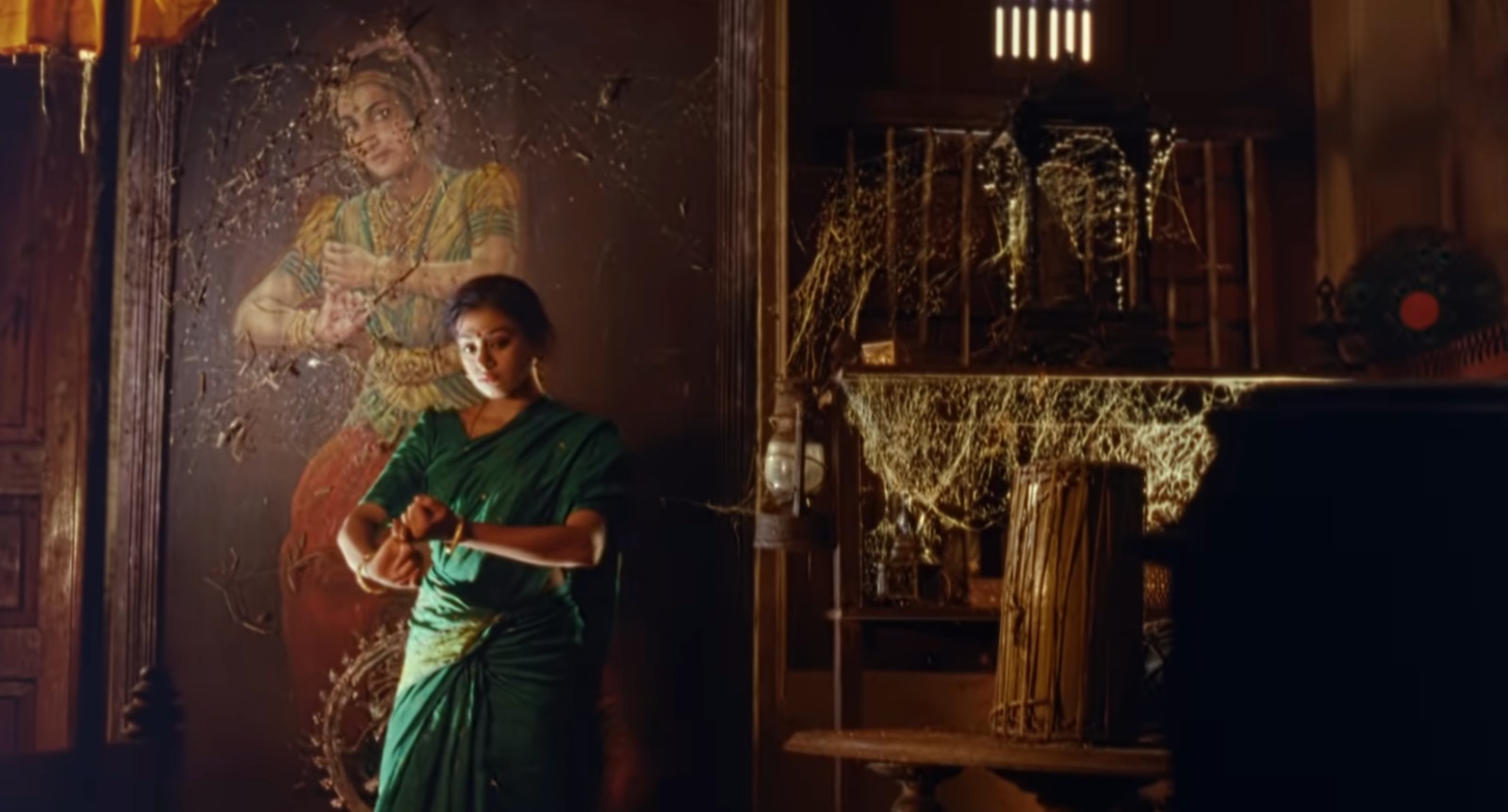
The question of originality in cinema often sparks debate, especially when a successful film is revealed to be a remake of an earlier work. The Hindi film Bhool Bhulaiyaa (2007), widely celebrated for its blend of comedy and psychological horror, is a prime example. While many viewers regard it as a unique Bollywood classic, its core narrative is adapted from the 1993 Malayalam psychological thriller Manichitrathazhu, a film still considered one of India’s finest and most authentic explorations of horror rooted in psychology.
Bhool Bhulaiyaa, directed by Priyadarshan, follows the story of a couple who return to their ancestral haveli, only to encounter mysterious occurrences linked to a supposed haunting. As fear spreads, a psychiatrist steps in to unravel the truth, leading to a climax that blends science with superstition. The film gained immense popularity for its engaging screenplay, memorable performances—especially by Vidya Balan—and its ability to balance humor with suspense.
However, the essence of this story was first masterfully crafted in Manichitrathazhu. Released in 1993, the Malayalam original delved deeply into the human mind, presenting a narrative that was less about ghosts and more about dissociative identity and psychological trauma. Unlike typical horror films that rely on jump scares or supernatural elements, Manichitrathazhu built tension through character development, cultural context, and a gradual revelation of the protagonist’s mental state. Its grounded approach made it not just frightening, but intellectually compelling.
The originality of Manichitrathazhu lies in its nuanced storytelling. It challenged conventional horror tropes in Indian cinema by replacing the idea of possession with psychological explanation. This was a bold move at a time when horror films in India were largely formulaic. The film’s protagonist, a woman suffering from a split personality disorder, becomes the center of a narrative that intertwines folklore with mental health. The audience is led to believe in a supernatural cause, only to be confronted with a scientific reality, making the experience both unsettling and enlightening.
In contrast, Bhool Bhulaiyaa adapts this storyline but alters its tone and presentation to suit mainstream Hindi cinema audiences. The psychological depth of the original is somewhat simplified, and greater emphasis is placed on entertainment, comedy, and dramatic flair. While the Hindi version retains the central twist and basic plot, it leans more heavily on spectacle and star power. This makes it more accessible but arguably less profound than its predecessor.
This raises the broader question: where does originality truly lie? Is it in the first telling of a story, or in how that story is retold for a new audience? Bhool Bhulaiyaa demonstrates that remakes can achieve their own identity and success, even if they are not entirely original in concept. At the same time, it highlights the importance of acknowledging source material, especially when the original work set a high standard in storytelling.
Ultimately, Manichitrathazhu remains a benchmark in Indian cinema for psychological horror. Its influence extends beyond Bhool Bhulaiyaa, inspiring multiple remakes in different languages. While the Hindi adaptation introduced the story to a wider audience, the originality, depth, and innovation belong to the Malayalam classic. Recognizing this lineage enriches our appreciation of both films and reminds us that true originality often begins with a powerful idea—one that can transcend languages and generations.

Prerna Varshney is a journalist and social commentator with over five years of experience in health, gender, and policy reporting. Her work reflects a deep commitment to truth and empathy, simplifying complex issues for everyday readers.