




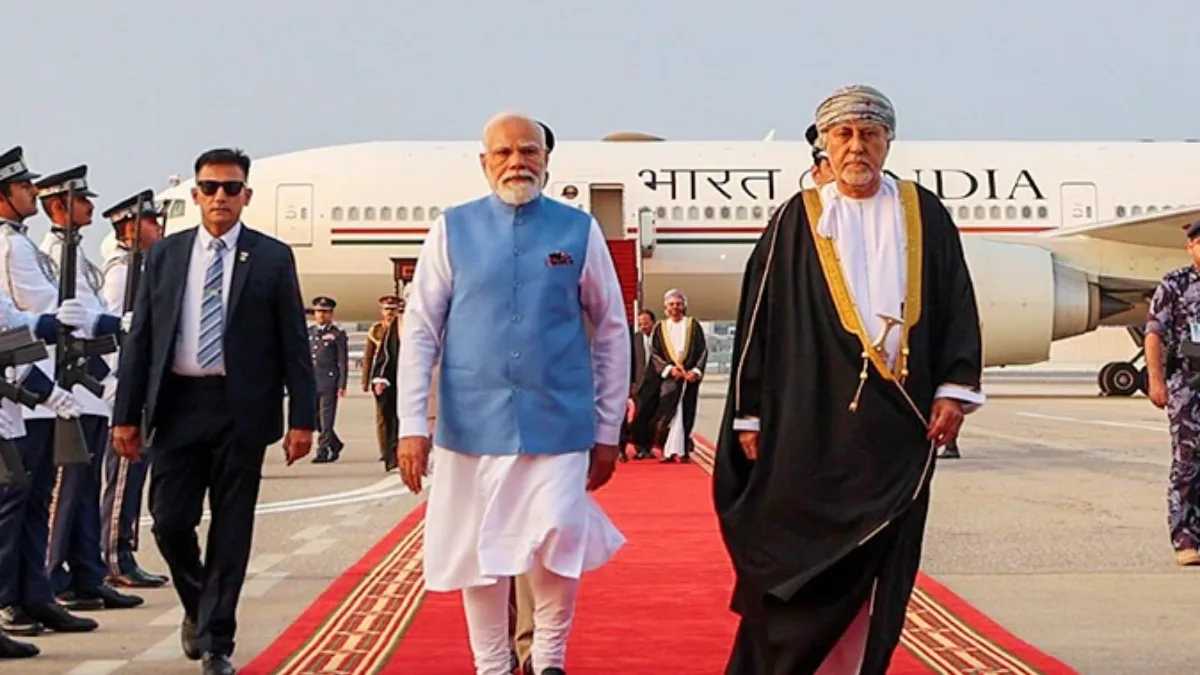
As India and Oman move closer to finalizing a comprehensive Free Trade Agreement (FTA), the proposed pact is being viewed as much more than a trade deal. At a time when geopolitical tensions continue to threaten maritime commerce through the Strait of Hormuz, deeper economic integration with Oman could provide India with a strategic alternative route to the Gulf region while strengthening energy security and supply-chain resilience.
The development comes amid growing concerns over disruptions in the Middle East, where conflicts and military tensions periodically raise fears about the safety of one of the world’s most important shipping lanes.
Why Oman Matters in India’s Gulf Strategy
The Strait of Hormuz, situated between Oman and Iran, is one of the world’s most critical maritime chokepoints, carrying nearly 20 percent of global oil trade. Any disruption in the narrow passage can send shockwaves through international energy markets and affect countries heavily dependent on Gulf imports, including India.
Oman offers a unique geographical advantage in this context. The country’s major ports, including Duqm, Salalah, and Sohar, provide direct access to the Arabian Sea and are less dependent on transit through Hormuz. This makes Oman an attractive logistics and trade partner for India as it seeks to diversify its maritime routes.
The proposed trade pact is expected to reduce tariffs, improve market access, encourage investments, and facilitate smoother movement of goods and services. More importantly, it could strengthen India’s presence in strategically located Omani ports.
Among these, Duqm Port has emerged as a key asset. India has already secured access to the port for commercial and strategic purposes. Located on Oman’s southeastern coast, Duqm offers direct connectivity to global shipping lanes without requiring vessels to pass through potentially vulnerable areas near Hormuz.
The port is increasingly being seen as a future hub for Indian businesses, logistics operators, and energy companies looking to expand their footprint in the Gulf and beyond.
Economic Gains and Strategic Security
Beyond trade, the agreement carries significant geopolitical implications. India has been working to build resilient supply chains and reduce dependence on vulnerable trade routes. The India-Oman FTA aligns with this broader objective by creating alternative commercial pathways linking South Asia, the Gulf, East Africa, and Europe.
The agreement could encourage Indian firms to establish manufacturing, warehousing, and distribution facilities in Oman. Such investments would not only boost bilateral trade but also help Indian companies access wider Gulf Cooperation Council (GCC) markets more efficiently.
Energy security is another important consideration. As one of the world’s largest energy importers, India remains vulnerable to supply disruptions in the Gulf. Closer cooperation with Oman could facilitate strategic storage, energy partnerships, and more flexible supply arrangements during periods of regional instability.
The timing is particularly significant. Recent tensions involving Iran, Israel, and other regional actors have highlighted the risks associated with maritime chokepoints. By strengthening economic and infrastructure ties with Oman, India is effectively creating a buffer against future disruptions.
The trade pact also complements India’s broader Indo-Pacific vision and its efforts to establish reliable economic corridors connecting Asia, the Middle East, and Europe. In an increasingly uncertain global environment, countries are prioritizing strategic partnerships that combine economic opportunity with geopolitical stability.
While negotiations may still face challenges related to tariffs, investments, and market access, the larger strategic logic remains compelling. The India-Oman trade pact is not merely a bilateral economic agreement; it is part of India’s long-term effort to secure alternative trade routes, strengthen energy security, and enhance its influence in the Indian Ocean region.
In that sense, Oman may emerge as India’s most important gateway to the Gulf beyond the Strait of Hormuz.

Prabha Gupta is a veteran journalist and civic thinker dedicated to the constitutional ideals of dignity and institutional ethics. With over thirty years of experience in public communication, her work serves as a bridge between India’s civil society and its democratic institutions. She is a prominent voice on the evolution of Indian citizenship, advocating for a national discourse rooted in integrity and the empowerment of the common citizen