






Summary
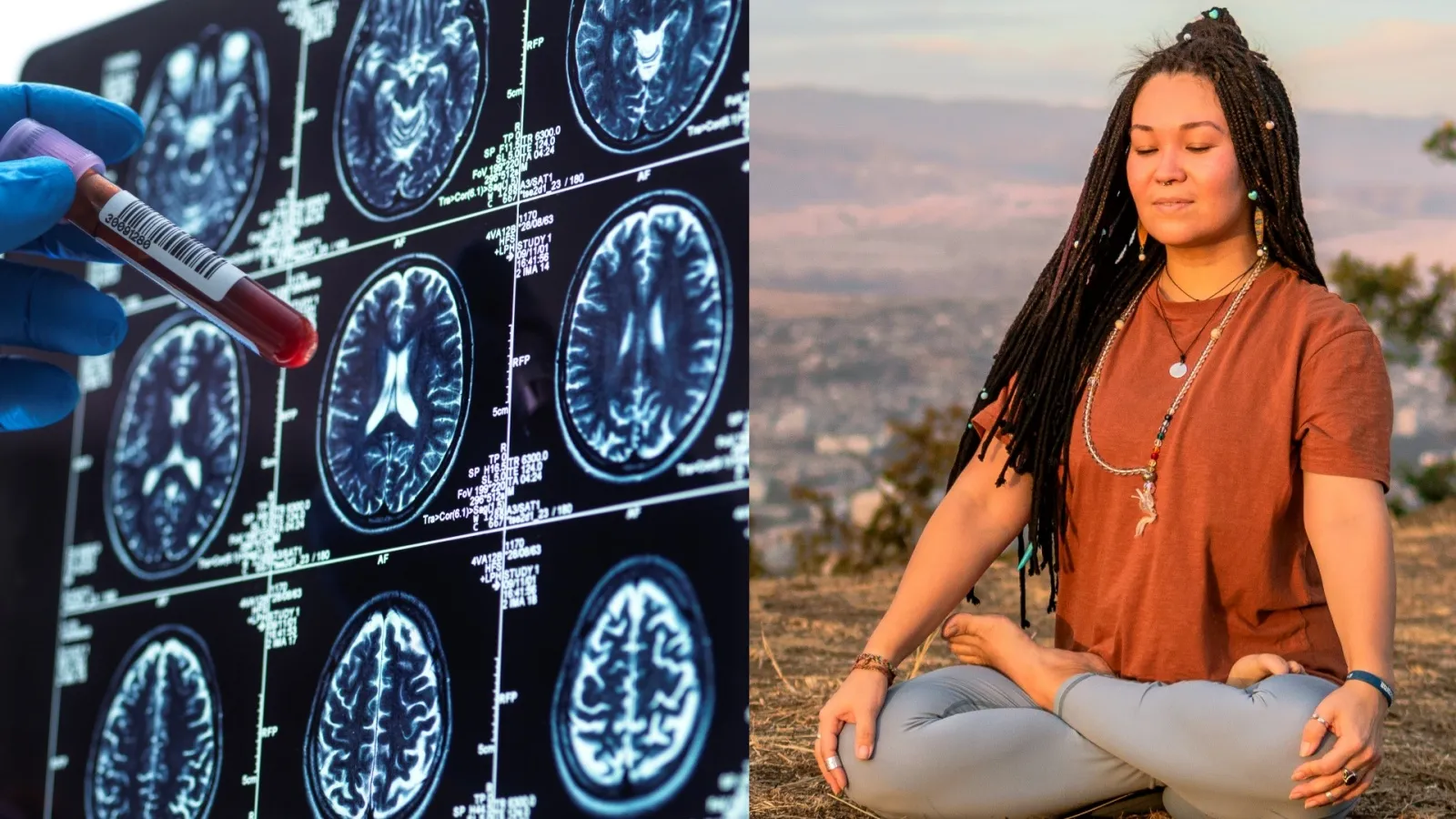
- Modern neuroscience shows that much of human behaviour is driven by automatic mental processes.
- Vipassana meditation teaches practitioners to observe bodily sensations rather than react to them.
- The technique aims to weaken conditioned patterns of craving and aversion.
- Ancient Buddhist wisdom and modern psychology converge on the importance of awareness in transforming behaviour.
The human mind is often compared to an iceberg. What we consciously think, speak and decide represents only the visible tip. Beneath the surface lies a vast network of memories, habits, emotional conditioning and automatic reactions that silently influence our behaviour every moment.
This hidden dimension of the mind explains why people often react with anger even when they know they should remain calm, or experience anxiety despite understanding there is no immediate danger. Modern psychology describes these as unconscious or nonconscious processes, while Vipassana meditation, as taught in the tradition of S. N. Goenka, focuses on transforming these deeply rooted patterns through direct observation.
Although the terminology differs, both science and Vipassana acknowledge that much of human behaviour originates beyond ordinary conscious awareness.
Conscious Mind: The Thinker Within
The conscious mind is the part we experience every waking moment. It allows us to read, analyse, plan, speak, solve problems and make deliberate decisions.
For example, while reading this article, your conscious mind is processing words, evaluating ideas and comparing them with your own understanding.
However, psychologists believe that conscious thought represents only a small fraction of total mental activity. Beneath it operate countless automatic processes that regulate emotions, habits and bodily responses without requiring deliberate effort.
Imagine someone suddenly criticises you.
Before you consciously decide how to respond, your heartbeat may increase, your chest may tighten, your face may become warm and unpleasant emotions begin to arise. These reactions occur almost instantly, often before rational thinking fully engages.
This is where the unconscious mind reveals its influence.
The Unconscious Mind and the Science of Reaction
Modern neuroscience shows that emotional responses often begin automatically. Various brain networks rapidly assess situations for potential threat or reward, triggering physiological changes before conscious reasoning has completed its analysis.
Vipassana describes this process through a practical chain:
Contact → Recognition → Sensation → Reaction
According to the Buddha’s teaching, every sensory experience gives rise to a bodily sensation (vedanā). Pleasant sensations tend to generate craving, while unpleasant sensations trigger aversion. Over years and decades, these repeated reactions become deeply conditioned mental habits, known as saṅkhāras.
The remarkable insight of Vipassana is that we are not reacting directly to external events—we are reacting to the sensations those events produce within our own bodies.
If someone insults us, the words themselves disappear almost immediately. Yet the unpleasant sensations remain for some time, and it is our habitual reaction to those sensations that fuels anger, resentment or fear.
Vipassana trains practitioners to interrupt this automatic cycle.
Rather than suppressing emotions or analysing them intellectually, meditators observe bodily sensations with calm awareness and equanimity. Whether the sensation is pleasant or unpleasant, it is simply observed as an impermanent phenomenon that continuously arises and passes away.
Gradually, the unconscious habit of reacting begins to weaken.
This explains why experienced practitioners often become less impulsive, more emotionally balanced and better able to respond thoughtfully during conflict.
The goal of Vipassana is not emotional suppression or indifference. Instead, it develops the capacity to experience life’s inevitable ups and downs without becoming enslaved by automatic reactions.
In today’s fast-paced world, where stress, conflict and emotional overload have become increasingly common, the dialogue between ancient contemplative traditions and modern neuroscience is attracting growing attention.
While science continues to explore the mechanisms of the brain, Vipassana offers a practical method for observing the mind directly. Together, they suggest a powerful possibility: lasting change may begin not by changing the world outside us, but by transforming the unconscious habits within.

Prabha Gupta is a veteran journalist and civic thinker dedicated to the constitutional ideals of dignity and institutional ethics. With over thirty years of experience in public communication, her work serves as a bridge between India’s civil society and its democratic institutions. She is a prominent voice on the evolution of Indian citizenship, advocating for a national discourse rooted in integrity and the empowerment of the common citizen