



RSS at 100 — Part 4: RSS and BJP — Who Influences Whom?
Two-Line Summary
The RSS and BJP are formally separate organisations, but their relationship goes far beyond ordinary ideological affinity. Their shared history, overlapping personnel, organisational networks and periodic coordination have made their relationship one of the most consequential in Indian politics.
Why This Relationship Matters
The RSS does not contest elections. The BJP does. The RSS does not hold constitutional office. The BJP forms governments when it wins elections. Yet the two organisations have shared a close relationship for decades.
So the question is not simply whether the RSS and BJP are connected. They clearly are. The more important question is: Where does RSS influence end—and BJP institutional independence begin?
That question has generated two very different narratives. Critics often describe the BJP as the political arm of the RSS. The RSS and BJP, on the other hand, maintain that they are separate organisations and that the BJP has its own independent political and organisational structure.
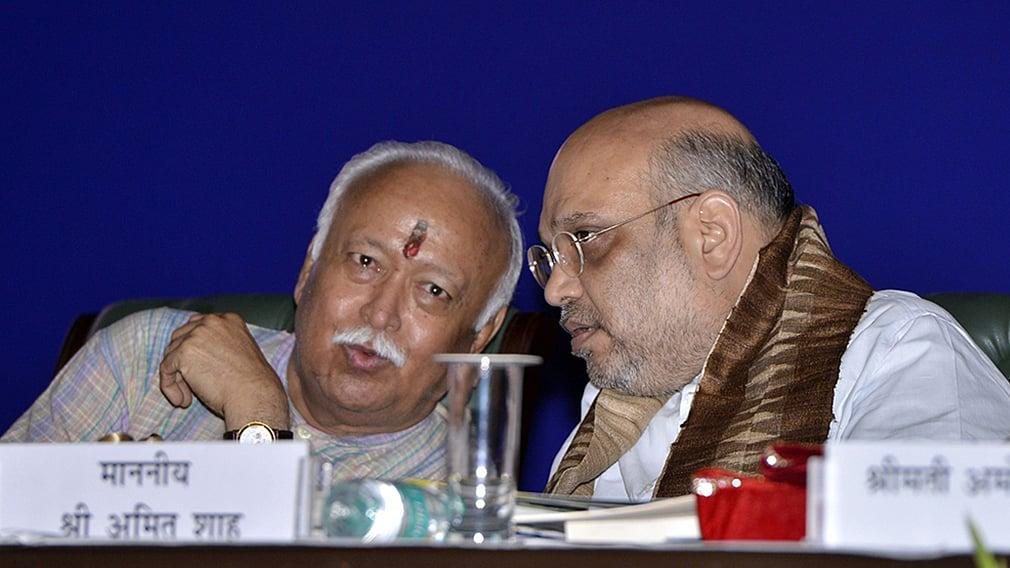
The historical record suggests a more complicated reality. There is formal separation, but also deep ideological, organisational and personnel links. Understanding that distinction is essential to understanding the RSS’s role in Indian public life.
The Short Answer
The RSS and BJP are not the same organisation. The BJP is a political party with its own constitution, leadership, election machinery and political responsibilities. The RSS is a socio-cultural organisation that does not contest elections.
But their relationship is unusually close. It has been shaped by a shared history, common ideological traditions, movement of personnel between the organisations and regular interaction between their senior leadership.
There is evidence of influence and coordination. But influence is not the same as formal control. That distinction is central to this investigation.
The Story Begins Before the BJP
To understand the relationship, we have to go back to 1951. The RSS had been founded in Nagpur in 1925. The BJP did not yet exist.
In 1951, the Bharatiya Jana Sangh was established under the leadership of Shyama Prasad Mukherjee. RSS workers played an important role in building the new political organisation.
This created an arrangement that would shape Indian politics for decades. The RSS would remain outside electoral politics, while its volunteers could enter politics through a separate political organisation.
The RSS did not become a political party. Instead, a political organisation emerged alongside it. This distinction continues today.
From Jana Sangh to BJP
The next major turning point came after the Emergency. In 1977, the Bharatiya Jana Sangh merged with other opposition parties to form the Janata Party.
But a dispute soon emerged over the continuing association of some Janata Party leaders with the RSS. The controversy became known as the dual membership issue.
Could politicians belonging to the Janata Party also maintain their association with the RSS? The dispute contributed to the eventual collapse of the Janata Party experiment.
In 1980, former Jana Sangh leaders established the Bharatiya Janata Party. The BJP therefore emerged from the political tradition represented by the Jana Sangh, but it remained a separate political party. The RSS continued to operate outside electoral politics.
Two Organisations, Two Roles
The institutional distinction is important. The BJP contests elections. It selects candidates, campaigns for votes, forms governments and is ultimately accountable to the electorate.
The RSS does none of these things. Its work centres on shakhas, volunteer development, social activities, organisational training and ideological-cultural work.
Therefore, the RSS does not have constitutional authority to make government decisions. But this does not mean it has no political influence.
An organisation does not have to hold office to influence political thinking. This is where the RSS-BJP relationship becomes interesting.
The Personnel Connection
One of the strongest links between the RSS and BJP has been the movement of people.
Several prominent BJP leaders began their organisational careers in the RSS. The RSS’s system of full-time workers, known as pracharaks, has played an important role in developing organisational cadres. Some of these workers later entered politics.
This created a distinctive leadership pipeline: RSS → organisational training → political work → BJP.
But there is an important distinction. A politician having an RSS background does not automatically prove that every political decision taken by that person is dictated by the RSS.
The person’s institutional role changes when he or she enters electoral politics. That is why personnel overlap is evidence of a strong connection—but not, by itself, proof of organisational control.
The Wider Sangh Network
The RSS-BJP relationship also has to be viewed within the larger network commonly described as the Sangh Parivar.
Over several decades, organisations associated with this broader ideological tradition developed in areas such as education, labour, students’ affairs, tribal welfare, social service and religious-cultural activities.
The BJP occupies the electoral-political space within this wider network. But these organisations should not simply be described as departments of the RSS. Many have their own leadership structures and organisational identities.
This creates an unusual model. Instead of one organisation directly controlling every area of public activity, different organisations operate in different fields while sharing broad ideological traditions.
The important question therefore becomes: How much influence does the RSS exercise over these organisations—and over the BJP in particular? The answer is not as simple as either complete control or complete independence.
Does the RSS Control the BJP?
This is where political debate often becomes more heated than the evidence allows.
The RSS has consistently maintained that the BJP is an autonomous political organisation. RSS chief Mohan Bhagwat has also stated that the BJP has its own organisational structure and that the RSS does not appoint BJP leaders.
That is consistent with the formal institutional arrangement. The BJP has its own president, parliamentary leadership, party constitution and election machinery. The RSS cannot formally appoint the Prime Minister, nominate a candidate for Parliament on behalf of the BJP or appear on the ballot.
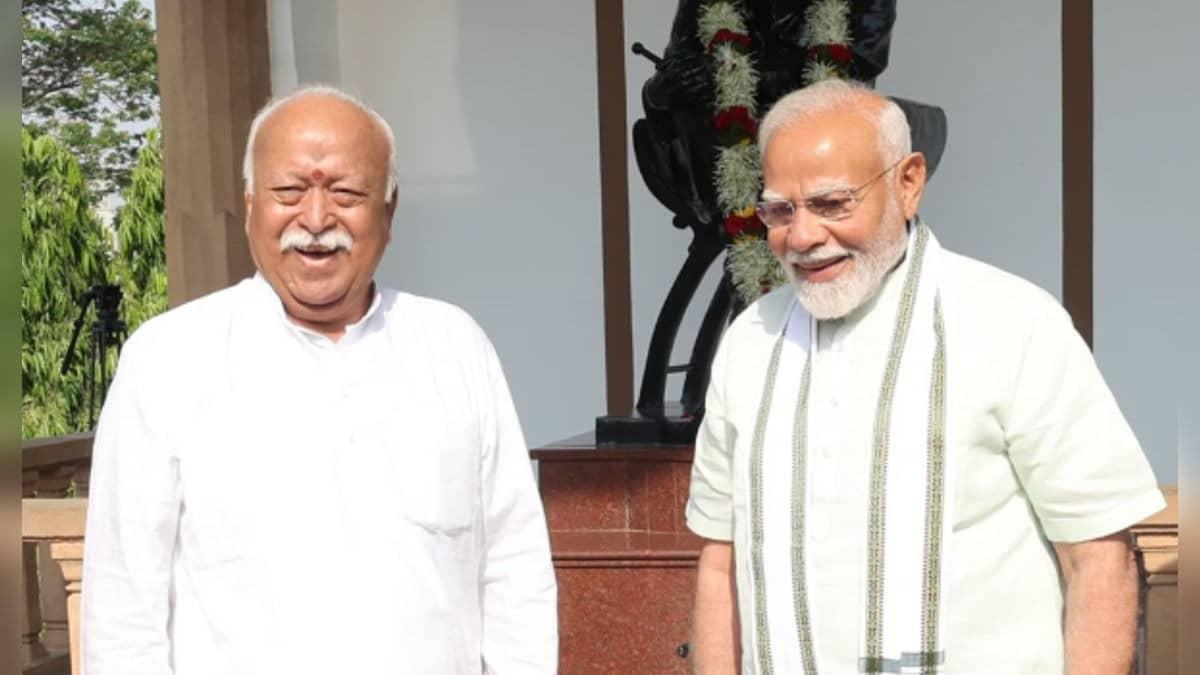
But there is another side to the story. The two organisations do communicate. Senior RSS and BJP leaders meet. Issues of common concern are discussed. Organisational coordination takes place.
Therefore, saying that the two organisations are completely unrelated would also be misleading. The evidence points towards interaction and influence—but not necessarily command and control.
When the RSS and BJP Disagree
Perhaps the best way to understand their institutional relationship is to look at moments of disagreement.
There have been occasions when RSS leaders have publicly expressed concerns about the functioning or direction of the BJP. There have also been periods when the two organisations have sought better coordination.
That tells us something important. If the RSS completely controlled the BJP, disagreement would be difficult to explain. But if the two organisations were completely independent, there would be little reason for their disagreements to generate so much attention.
The reality appears to lie somewhere in between. They share broad ideological objectives and strong organisational links, but they also have different institutional priorities.
The RSS can take a long-term organisational and ideological view. The BJP has to deal with elections, governance, coalition politics and public opinion. Those priorities can sometimes produce tension.
The BJP Has Changed
The relationship has also changed as the BJP itself has grown.
The BJP of the 1980s was a relatively small political party. The BJP of today possesses a huge electoral organisation, extensive political resources and sophisticated campaign machinery.
This inevitably changes the balance between the two organisations.
The BJP is no longer dependent on outside political structures in the way a smaller party might be. At the same time, the RSS continues to possess something that a political party cannot easily create overnight—a nationwide network of volunteers and organisational workers.
This creates a relationship of mutual importance. The BJP has electoral power. The RSS has a deep grassroots and ideological network. That is one reason their relationship continues to matter.
2014 Changed the Equation
The BJP’s decisive victory in the 2014 Lok Sabha election marked a major transformation. The party had become a dominant national political force. Its campaign machinery, leadership structure and communication systems had expanded enormously.
This naturally raised a question: Did the BJP still need the RSS in the same way?
The answer appears to be more complicated than a simple yes or no. The BJP developed its own organisational strength, but the RSS’s grassroots network remained significant.
The relationship therefore evolved from one in which the BJP was heavily dependent on an established volunteer network into one involving two powerful organisations with different forms of organisational strength.
2024 Brought the Relationship Back Into Focus
The 2024 Lok Sabha election again generated discussion about the RSS-BJP relationship.
The BJP remained the largest party but fell short of a majority on its own and formed the government with coalition partners. Following the election, questions were raised about organisational coordination between the BJP and RSS.
Reports suggested that communication between the two had weakened during the preceding years and that there was a renewed emphasis on strengthening coordination.
The election result cannot, of course, be attributed simply to the RSS. Indian elections are shaped by many factors—leadership, local politics, economic issues, alliances, candidates and voter preferences.
But the renewed focus on RSS-BJP coordination demonstrated that the relationship remains politically important.
Influence Is Not Control
This distinction should remain at the centre of any serious investigation.
There is substantial evidence of shared history, ideological affinity, personnel overlap, organisational networks and regular communication and coordination.
But these facts do not establish that the RSS formally controls every BJP decision.
At the same time, the BJP’s formal independence does not mean that RSS influence is insignificant.
A more accurate description is:
The RSS and BJP are institutionally separate but deeply interconnected.
That is a more defensible conclusion than either extreme.
So Where Does Institutional Independence End?
The answer depends on what we mean by “independence.”
Legally and organisationally, the distinction is clear. The BJP has its own structure. The RSS has its own structure. The BJP participates in elections. The RSS does not. The BJP forms governments. The RSS does not.
But political influence operates outside formal organisational charts. Ideas travel through people. Networks create relationships. Organisations communicate. Political leaders listen to social and ideological organisations.
Therefore, the real question is not whether the RSS has formal authority over the BJP. It does not.
The more important question is: How much informal influence can an organisation exercise over a political party without possessing formal political authority?
That is much harder to measure. And it is precisely where serious journalism needs to distinguish between documented evidence and political interpretation.
The Democratic Question
There is nothing inherently undemocratic about a social or ideological organisation influencing political debate. Trade unions, business organisations, religious groups, civil society organisations and social movements all attempt to influence political parties.
The democratic concern arises when such influence becomes opaque.
If an unelected organisation has substantial influence over a political party that forms the government, citizens are entitled to ask: How does that influence operate? How frequently do the organisations coordinate? What issues are discussed? How are disagreements resolved? And where does political decision-making ultimately take place?
These are legitimate questions in any democracy.
What the Evidence Tells Us
The history establishes a close relationship between the RSS and the political tradition from which the BJP emerged.
RSS workers played an important role in the Bharatiya Jana Sangh. The BJP emerged from that political tradition in 1980. Many BJP leaders have RSS backgrounds. The organisations share ideological traditions and maintain channels of communication.
At the same time, the BJP remains a separate political party. The RSS does not formally contest elections or hold government office.
The evidence therefore does not justify the simple statement that “the RSS runs the BJP.”
But neither does it support the claim that the two are merely unrelated organisations.
The more accurate conclusion is:
The RSS influences a political ecosystem in which the BJP is the principal electoral organisation, while the BJP retains its own formal political and organisational authority.
The exact extent of that influence remains an important subject for investigation.
Questions That Remain
How much weight does RSS feedback carry in major BJP decisions?
How are disagreements between the two organisations resolved?
How important are RSS volunteers to the BJP’s grassroots mobilisation?
Has the BJP’s growing organisational strength reduced its dependence on the RSS?
What happens when the political interests of the BJP and the ideological priorities of the RSS diverge?
And ultimately:
Can an unelected organisation exercise substantial political influence while remaining outside direct electoral accountability?
These questions are more difficult—and more important—than simply asking whether the RSS controls the BJP.
The RSS and BJP are not the same organisation. But their relationship is not ordinary either.
It has been built over decades through shared history, ideology, personnel and organisational networks. The RSS operates outside electoral politics. The BJP operates within it. The two organisations sometimes coordinate and, at times, disagree.
The BJP has developed considerable independent political strength, while the RSS continues to possess a vast grassroots and ideological network.
The result is a relationship that is neither complete control nor complete independence. It is a relationship of influence, interaction and institutional separation.
And that leaves one question that deserves closer examination:
When an unelected organisation has substantial influence within the ecosystem of a ruling political party, how transparent should that relationship be to the public?
What Comes Next?
The RSS’s relationship with the BJP explains only one dimension of its influence.
Another question concerns the security provided to its chief, Mohan Bhagwat.
Why does he receive high-level government security? Who decides his security category? What is the basis for that assessment? And is the widely circulated claim that ₹20 crore is spent annually on his security actually supported by government records?
Part 5 will examine the security system, the Z+ claim, the basis for protection and the question of public expenditure.

Prabha Gupta is a veteran journalist and civic thinker dedicated to the constitutional ideals of dignity and institutional ethics. With over thirty years of experience in public communication, her work serves as a bridge between India’s civil society and its democratic institutions. She is a prominent voice on the evolution of Indian citizenship, advocating for a national discourse rooted in integrity and the empowerment of the common citizen