





Refined or Cold-Pressed? Which Cooking Oil Is Better for Daily Consumption?
Sunflower, peanut or yellow mustard oil—which one deserves a place in your everyday kitchen? And is cold-pressed oil really a better choice than the refined oils that dominate supermarket shelves?
For many Indian households, cooking oil is an everyday staple. Yet the choice is increasingly complicated. Shelves are filled with refined sunflower, soybean, rice-bran and other oils, while cold-pressed or “wood-pressed” oils are being promoted as more traditional alternatives.
The debate, however, deserves more nuance than simply labelling refined oil as “bad” and cold-pressed oil as “good.”
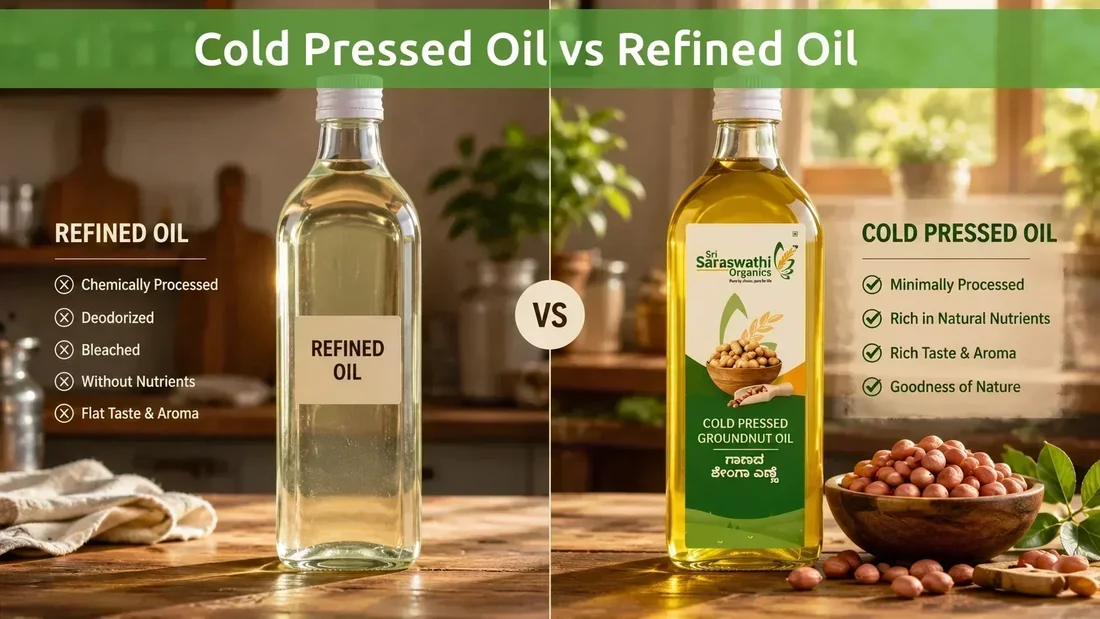
What Happens When Oil Is Refined?
Refining is designed to remove impurities, odours, colours and other compounds and to produce an oil with a consistent taste and longer shelf life. Depending on the oil and manufacturing process, refining can involve steps such as filtration, neutralisation, bleaching and deodorisation.
This processing can reduce some naturally occurring compounds. At the same time, it does not mean that every refined oil is inherently toxic or harmful. The nutritional value of an oil depends substantially on its fatty-acid composition, the degree and type of processing, the quantity consumed and how the oil is heated.
That distinction is important because consumers deserve facts rather than fear.
Why Are Cold-Pressed Oils Getting Attention?
Cold-pressed oils are produced mechanically, with considerably less processing than many conventional refined oils. Because they undergo less intensive processing, they can retain more of the oil’s naturally occurring minor compounds, depending on the seed, extraction method and storage conditions.
They also tend to retain more of their characteristic colour, aroma and flavour.
For consumers, that makes cold-pressed oils an appealing option—particularly when the oil comes from a trustworthy producer and is properly packaged and stored.
But “cold-pressed” is not a magic health label. A cold-pressed oil is still a concentrated source of fat and calories. Excessive consumption remains excessive consumption, regardless of how the oil was extracted.
Sunflower Oil: Refined Convenience vs Cold-Pressed Alternative
Refined sunflower oil is popular because of its neutral flavour and versatility. It is relatively high in polyunsaturated linoleic acid, an essential omega-6 fatty acid.
Cold-pressed sunflower oil may retain more naturally occurring compounds because of its less intensive processing. However, the underlying fatty-acid profile remains important. Simply switching from refined to cold-pressed sunflower oil does not transform it into a completely different type of fat.
Peanut Oil: A Practical Everyday Choice
Peanut oil contains substantial monounsaturated fat along with polyunsaturated fat and is widely used in Indian cooking.
Cold-pressed peanut oil offers the additional attraction of a more pronounced natural flavour and less intensive processing. It can work particularly well for sautéing and traditional preparations.
Again, the key is moderation. Peanut oil may be a sensible option, but it should not be consumed in unlimited quantities simply because it is cold-pressed.
Yellow Mustard Oil: Tradition Meets Nutrition
Yellow mustard oil has been used traditionally across several parts of India and is valued for its distinctive pungency.
It contains significant monounsaturated fat and also provides alpha-linolenic acid, a plant-based omega-3 fatty acid. Cold-pressed mustard oil is particularly attractive to consumers seeking minimally processed, traditionally extracted oils.
However, consumers should always purchase edible-grade mustard oil that complies with applicable food regulations and check the label carefully.
Is Cold-Pressed Always Better?
Not necessarily.
The strongest case for cold-pressed oils is that they generally undergo less intensive processing and can retain more of the oil’s natural minor components. But this should not become a blanket claim that refined oils are poisonous or that cold-pressed oils prevent disease.
For daily cooking, the more important questions are: What is the oil’s fatty-acid profile? How much are you using? How are you cooking with it? And are you repeatedly reheating it?
Deep-frying frequently and repeatedly reusing oil can generate undesirable oxidation products, making cooking practices an important part of the health equation.
The Smarter Kitchen Strategy
Instead of searching for one “miracle” oil, consumers can focus on moderation, variety and minimally processed choices where practical.
Cold-pressed peanut, mustard or sunflower oil can be incorporated into a balanced diet, provided the oil is genuine, properly stored and used sensibly. Keeping oils away from excessive heat, light and moisture and avoiding repeated reheating are also important.
The bigger lesson is simple: don’t choose an oil solely because its label says “refined” or “cold-pressed.” Look at the entire picture.
Cold-pressed oils can offer a less intensively processed alternative and preserve more of the natural characteristics of the seed. But they are not automatically healthier in every respect.
Ultimately, the best kitchen may not be one with the most expensive bottle—it may be one where good-quality oil is used in moderation, cooking practices are sensible, and the overall diet is balanced.

Prerna Varshney is a journalist and social commentator with over five years of experience in health, gender, and policy reporting. Her work reflects a deep commitment to truth and empathy, simplifying complex issues for everyday readers.