






Maggots in Eggs? Mangaluru Blinkit Complaint Raises Fresh Questions Over Food Safety
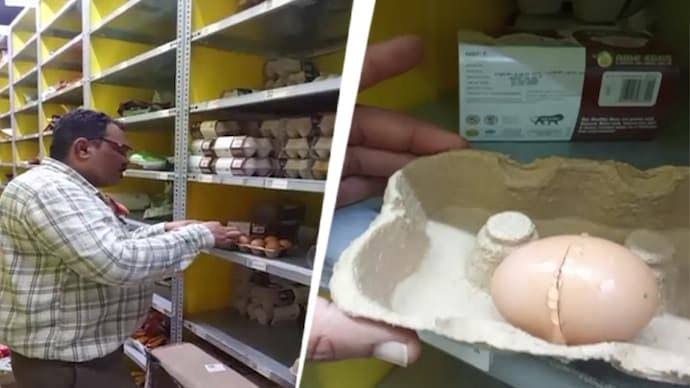
A routine grocery order has turned into a troubling food-safety complaint in Mangaluru, after a customer allegedly discovered maggots in eggs delivered through quick-commerce platform Blinkit.

What was expected to be a convenient doorstep delivery reportedly became a disturbing experience when the customer noticed what appeared to be maggots inside the eggs. The incident has since prompted a complaint against a Blinkit outlet in Mangaluru, raising questions about how eggs and other perishable food products are stored, handled and dispatched in the rapidly expanding quick-commerce ecosystem.
The allegation is particularly unsettling because eggs are a common household staple, purchased by consumers with the basic expectation that they are safe for consumption. While the exact cause of the contamination would need to be established through an appropriate inspection or food-safety investigation, the complaint puts the spotlight on a crucial link in the delivery chain: what happens between a product leaving a supplier and reaching a customer’s kitchen?
Quick-commerce companies have transformed the way urban consumers buy groceries. With promises of deliveries within minutes, customers increasingly rely on these platforms not only for packaged goods but also for fresh produce, dairy products, eggs and other perishables. Speed, however, cannot come at the expense of basic food-safety standards.
The Mangaluru complaint therefore goes beyond one disputed order. It raises a larger question about accountability. When a customer receives a potentially contaminated food item, who bears responsibility—the supplier, the warehouse, the delivery outlet or the platform facilitating the transaction?
Storage conditions can be critical for perishable foods. Temperature, hygiene, stock rotation, packaging and the condition of products at the time of dispatch can all influence food quality. Any lapse at one stage can potentially translate into a serious problem by the time the product reaches a consumer.
For the customer who raised the complaint, the issue is also about more than inconvenience. Discovering insects or larvae in a food product can understandably trigger concerns about health, hygiene and whether similar products from the same batch may have reached other households.
The complaint now puts the spotlight on the concerned Blinkit outlet and the response expected from the company. A transparent examination of the product, batch information, storage conditions and supply chain could help establish what actually happened.
For consumers, the episode serves as a reminder to inspect perishable products before use and retain bills, packaging and batch details when reporting a suspected food-safety issue. Such documentation can be crucial when authorities or companies investigate a complaint.
At the same time, allegations of contamination should be independently verified before responsibility is conclusively assigned. The real test will be whether the complaint receives a prompt and transparent investigation—and whether corrective action follows if any lapse is established.
As quick-commerce becomes an increasingly integral part of everyday life, convenience may be measured in minutes, but food safety cannot be.
The Mangaluru complaint has now raised an uncomfortable question for consumers and companies alike: when groceries arrive at the doorstep in minutes, are the safety checks keeping pace?

NewsHasghag operates a 24/7 news bureau that tracks the real-time, social media-driven stories from India and around the world, keeping you ahead of the day’s key talking points. Our digital-first approach transforms storytelling through the seamless integration of data, interactive charts, video, and audio into every narrative