




Sensex Plunges Over 1,100 Points: Why Is the Stock Market Falling Today?
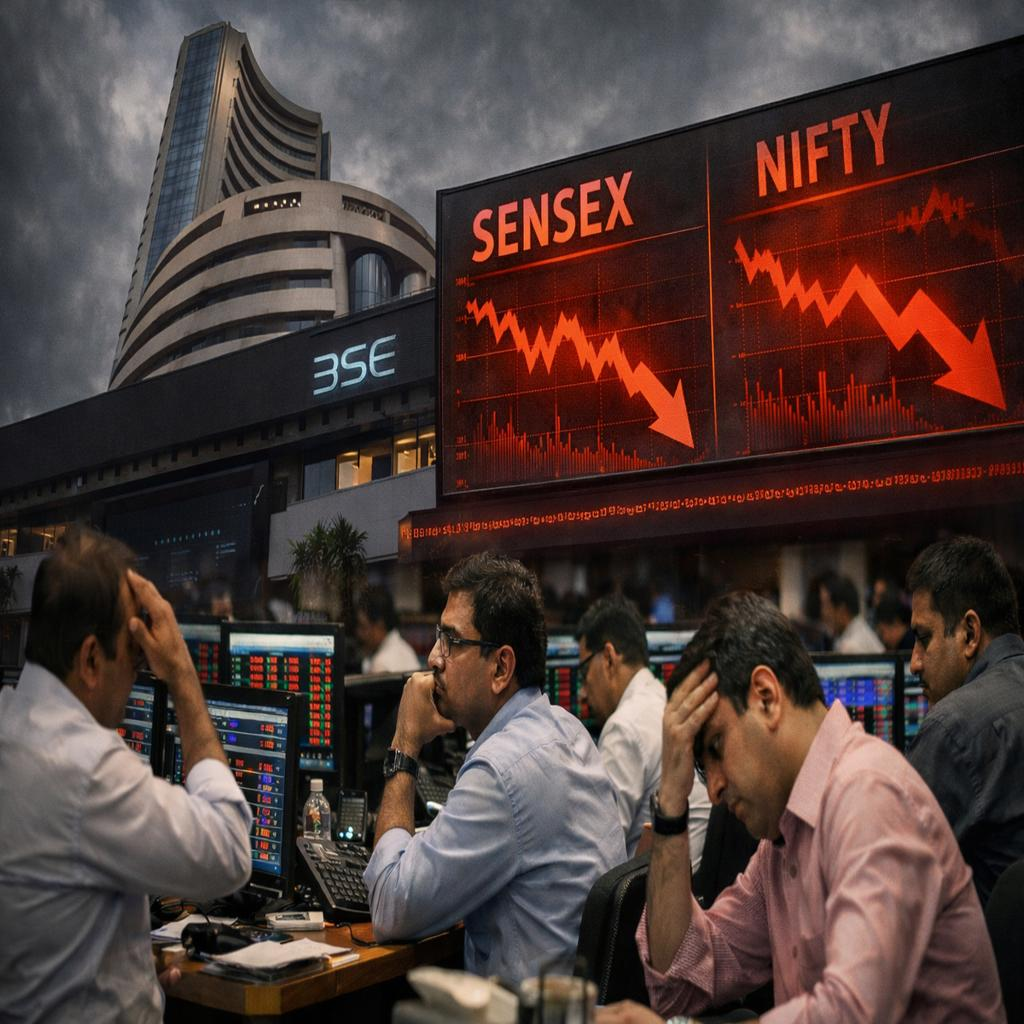
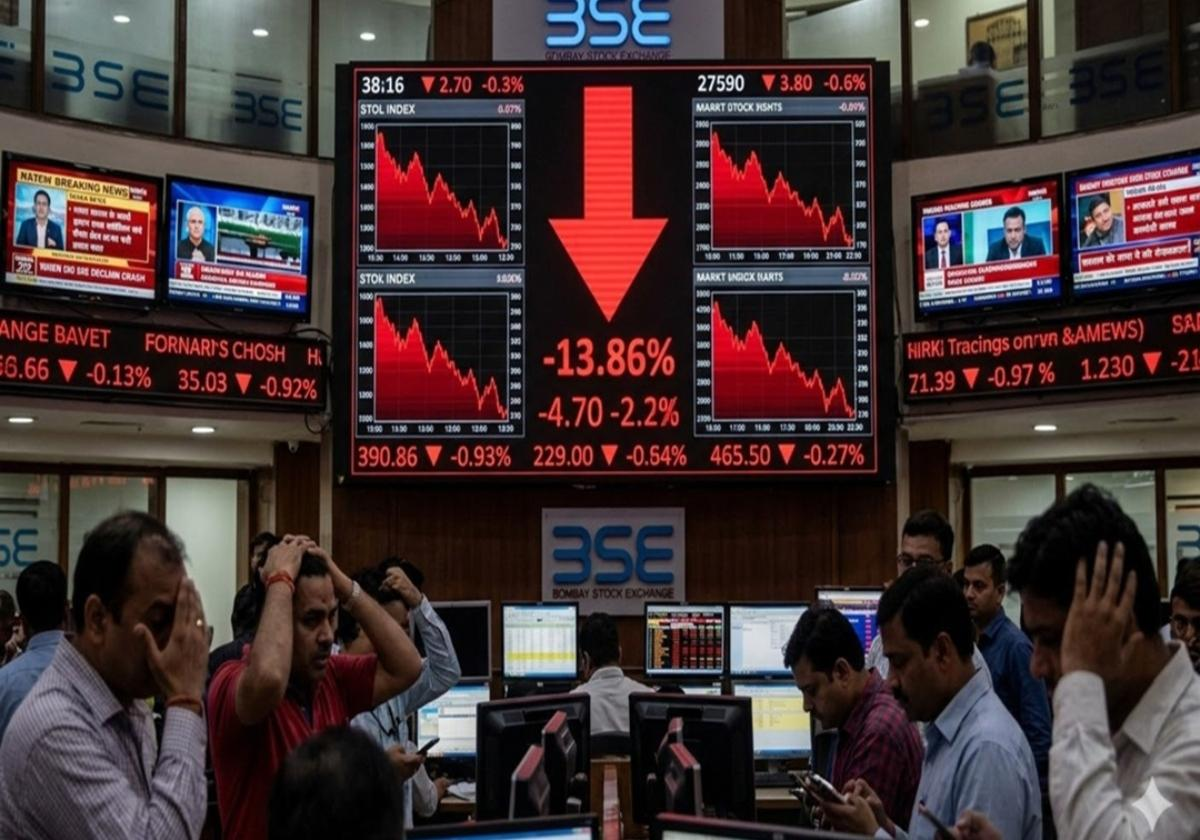
The Indian stock market came under intense selling pressure on Thursday, October 8, with the Sensex plunging more than 1,100 points and the Nifty falling sharply. The sell-off reflects a combination of domestic monetary tightening, rising crude oil prices, foreign fund outflows, a weaker rupee and growing concerns about global interest rates.
The Sensex slumped 1,168.08 points, or 1.61%, to 71,470.62, while the Nifty 50 fell 393.95 points, or 1.74%, to 22,209.10, according to the market levels cited in the report. The decline was broad-based, with metals, real estate and other rate-sensitive sectors among the major losers.
But why did the market react so sharply?
RBI’s hawkish turn changes the market equation
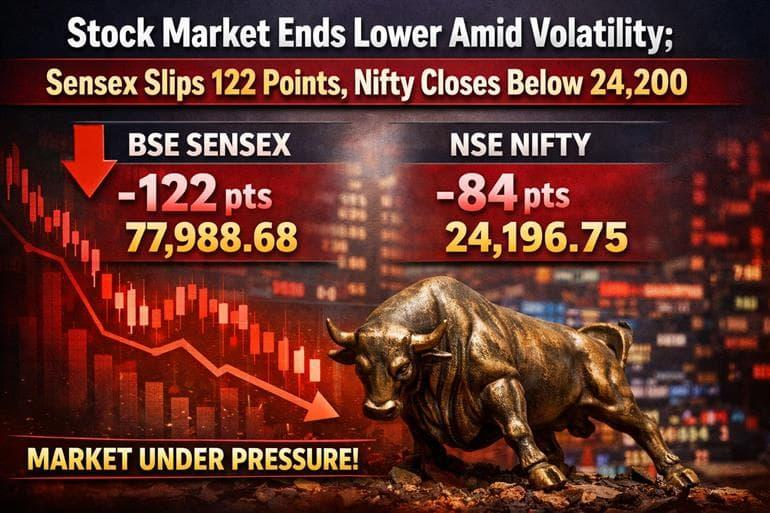
The most immediate domestic trigger is the Reserve Bank of India’s monetary-policy decision. The RBI raised its benchmark repo rate by 25 basis points to 5.50%—the first increase since February 2023—and shifted its policy stance from “neutral” to “calibrated tightening.”
That change matters because investors had been operating in an environment where monetary conditions were expected to remain relatively supportive. A higher repo rate increases the cost of funds for banks and, eventually, for borrowers. Higher lending rates can affect consumption, housing, corporate investment and interest-sensitive sectors.
More significant than the 25-basis-point increase itself is the signal contained in the phrase “calibrated tightening.” Markets interpret such language as an indication that the RBI is prepared to respond further if inflationary pressures persist.
The RBI has also raised its FY27 inflation forecast to 5.2% from 5%, while increasing its growth projection to 7.1% from 6.7%. This combination—stronger growth but higher inflation risk—leaves investors reassessing the path of interest rates.
Crude oil, rupee and foreign selling add pressure
The second major concern is crude oil. Brent prices have moved above $100 a barrel as geopolitical tensions and disruptions to shipping through the Gulf and Strait of Hormuz raise fears about global energy supplies. Reuters reported Brent at around $102.50 a barrel on Thursday, after a further rise in oil prices.
For India, expensive crude is particularly important because the country imports a large share of its oil requirement. Higher crude prices can increase the import bill, put pressure on the rupee and feed into inflation through transportation and production costs.
The rupee has already weakened, closing around ₹96.75 against the US dollar, adding another layer of pressure on the economy and markets.
Foreign institutional investor selling is another important factor. Investors had already been pulling money out of Indian equities, with FIIs selling ₹6,121 crore of shares on Wednesday alone. Recent selling has increased pressure on large-cap stocks and weakened overall market sentiment.
Global factors are also contributing. Higher US Treasury yields, a stronger dollar and concerns that global central banks may have to maintain tighter monetary policies are making emerging-market assets relatively less attractive. The result is a more cautious approach toward riskier equities.
The market’s technical structure has added to the pressure. Once major indices moved below important support levels, selling intensified as traders reduced positions and momentum weakened. Reports indicate that the Nifty slipped towards a fresh 52-week low during the session.
The important point is that Thursday’s decline is not being driven by one isolated event. It is the result of several pressures converging at the same time: higher domestic interest rates, expensive oil, currency weakness, foreign selling and uncertain global monetary conditions.
The sharp fall therefore represents more than a bad trading session. It is a reassessment of risk by investors. The market had to digest the RBI’s changed policy signal at precisely the moment when geopolitical tensions were pushing crude higher.
The next test will be whether oil prices stabilise, foreign investors return and corporate earnings provide enough positive news to counter the pressure from interest rates and inflation. Until those signals become clearer, volatility is likely to remain elevated.
For investors, Thursday’s sell-off is a reminder that stock-market valuations are influenced not only by company earnings but also by the broader cost of money, currency movements and global commodity shocks.
Dalal Street’s immediate question is therefore not simply when the Sensex will recover, but whether the combination of inflation, oil and tighter monetary policy has fundamentally changed the market’s near-term risk equation.

Prerna Varshney is a journalist and social commentator with over five years of experience in health, gender, and policy reporting. Her work reflects a deep commitment to truth and empathy, simplifying complex issues for everyday readers.