



Protest Against CEC: Electoral Trust Faces a New Test
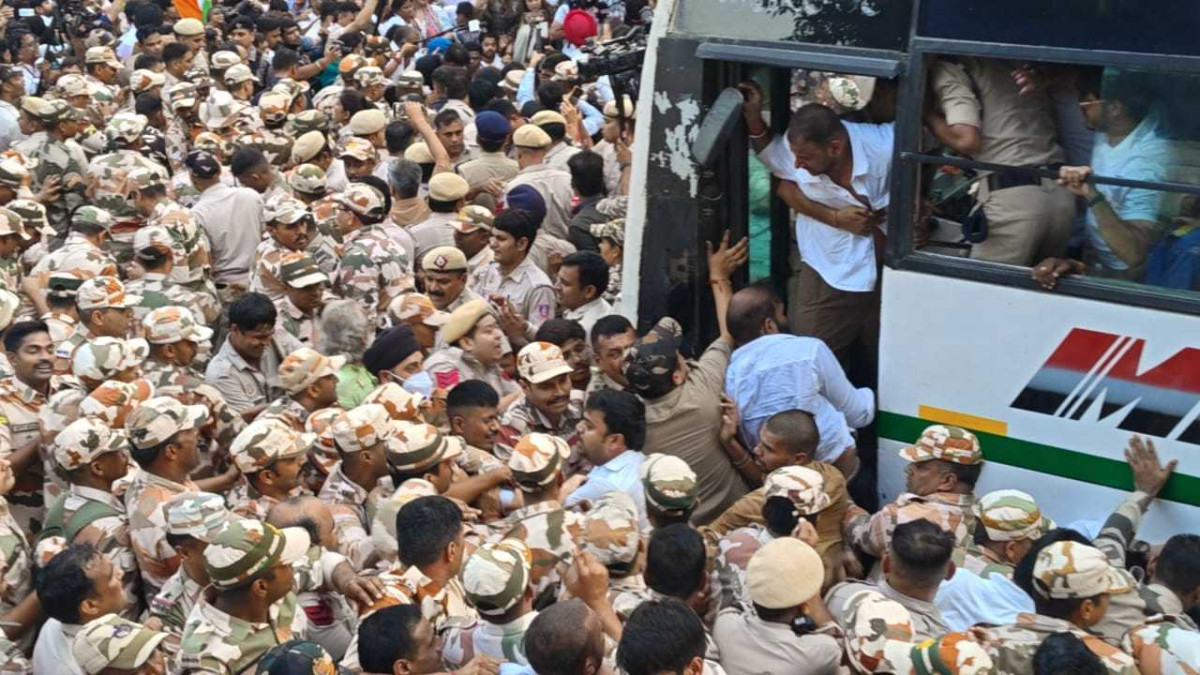
The confrontation between the Opposition and the Election Commission of India has entered a more intense phase, with opposition leaders returning to the streets in Delhi for a second consecutive day of protest against Chief Election Commissioner Gyanesh Kumar. Rahul Gandhi and several INDIA bloc MPs were stopped and detained as they attempted to reach Jantar Mantar, while dramatic scenes of leaders sitting or lying on the road underlined the growing political friction.
The immediate trigger is the Election Commission’s Special Intensive Revision (SIR) of electoral rolls. Opposition parties have alleged that changes to voter lists could disenfranchise legitimate voters and have demanded greater transparency from the poll panel. The Election Commission, meanwhile, has rejected allegations of political manipulation. The dispute has therefore moved beyond a technical argument over electoral rolls and become a larger battle over institutional credibility.
When an electoral dispute becomes a political confrontation
The detention of elected representatives creates an uncomfortable democratic paradox. Opposition MPs have the constitutional right to question institutions and organise political protests, while the police have the responsibility to regulate demonstrations and maintain public order. The difficult question is where legitimate regulation ends and unnecessary restriction begins.
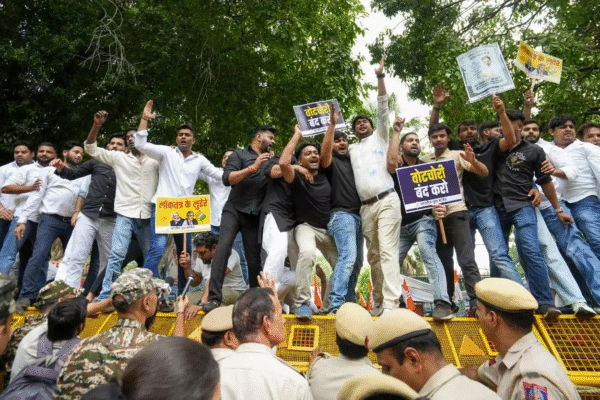
On October 6, opposition leaders had attempted to march towards the Election Commission headquarters and later staged a sit-in near Akashvani Bhavan. Rahul Gandhi, Priyanka Gandhi Vadra and other leaders were eventually detained. On October 7, the Opposition shifted its protest towards Jantar Mantar, but police again stopped the leaders before they could reach the designated site.
The repeated confrontations have ensured that the political optics now compete with the original electoral-roll issue. Images of MPs being detained, police barricades and leaders protesting on the road can deepen public perceptions that the disagreement is not being resolved through institutional dialogue.
That is potentially damaging for everyone involved. For the Opposition, dramatic protests can generate political visibility but can also allow critics to portray the campaign as confrontation without sufficient evidence. For the Election Commission and authorities, restricting elected representatives can create an impression of defensiveness even when restrictions are justified on administrative or security grounds.
The bigger issue is trust in the electoral process
At the heart of the dispute is not simply Rahul Gandhi’s protest or the demand for Gyanesh Kumar’s resignation. It is whether Indian voters believe that electoral institutions are transparent, accessible and sufficiently independent.
Electoral-roll revision is a legitimate and necessary democratic exercise. Voter lists inevitably require correction because people die, move, duplicate registrations or become otherwise ineligible. But the process must also protect genuine voters from wrongful deletion. The credibility of any revision therefore depends not only on the final list but also on the transparency of the process through which names are added, removed and restored.
The current confrontation makes this even more important. Instead of allowing the dispute to remain primarily political, the Election Commission has an opportunity to publish detailed explanations, data and procedures that can be independently examined. Opposition parties, for their part, need to present verifiable evidence of specific wrongful exclusions rather than relying only on broad allegations.
The demand for the CEC’s resignation may energise the Opposition, but it does not by itself resolve questions about individual voters’ names or the mechanics of SIR. Those questions require evidence, documentation and institutional scrutiny.
India’s electoral system ultimately depends on something more valuable than victory for one political camp: public confidence that every eligible citizen can vote and that every vote is counted fairly.
The scenes unfolding in Delhi show how quickly a technical electoral exercise can become a national political crisis when institutional trust weakens. The way forward cannot be permanent confrontation between the Election Commission, government and Opposition. It requires transparency from the poll panel, evidence-based scrutiny from political parties and space for peaceful democratic dissent.
The real test of this controversy will not be who wins the next round of protests. It will be whether Indian voters emerge with greater confidence—or deeper suspicion—about the system that determines who governs them.

NewsHasghag operates a 24/7 news bureau that tracks the real-time, social media-driven stories from India and around the world, keeping you ahead of the day’s key talking points. Our digital-first approach transforms storytelling through the seamless integration of data, interactive charts, video, and audio into every narrative