


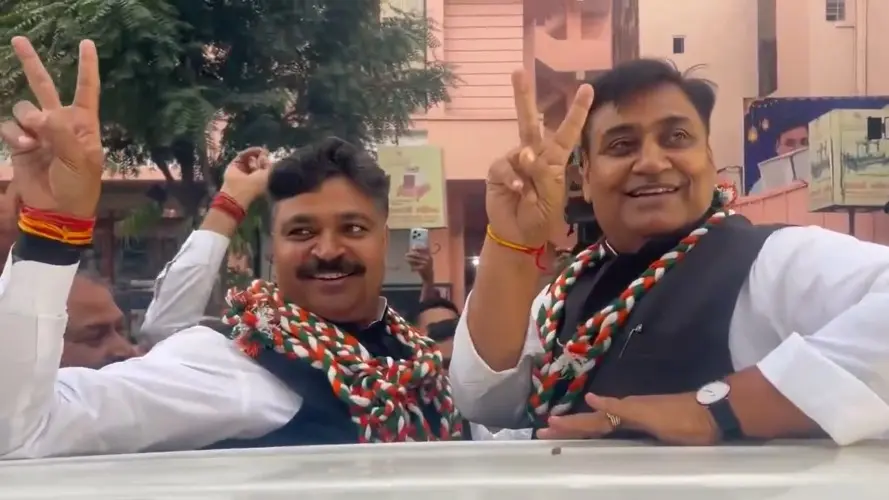
The Congress has delivered a significant electoral setback to the ruling Bharatiya Janata Party (BJP) in Rajasthan’s Panchayati Raj elections, registering a decisive lead in both Zila Parishad and Panchayat Samiti polls. The results, declared on November 20, 2026, have raised questions about the BJP government’s rural support base and presented the Congress with an opportunity to rebuild its political position ahead of the 2028 Assembly elections.
According to figures reported by the State Election Commission on Friday evening, the Congress won 3,701 Panchayat Samiti seats against the BJP’s 2,181. At the Zila Parishad level, the Congress secured 599 seats, considerably ahead of the BJP’s 301. The results available by Friday evening covered 37 of Rajasthan’s 41 districts, with counting for Kota, Baran, Karauli and Sri Ganganagar deferred to December 17.
The scale of the Congress victory is particularly significant because the BJP had returned to power in Rajasthan in December 2023, ending the Congress government’s tenure under Ashok Gehlot. Chief Minister Bhajan Lal Sharma, who was a relatively unexpected choice for the top post, is now facing a rural electoral verdict that raises questions about the government’s performance and its ability to maintain support beyond urban constituencies.
A strong Congress comeback in rural Rajasthan
The Congress performed strongly across several districts, winning more Panchayat Samiti seats than the BJP in 33 of the 37 districts where counting was held. The BJP finished ahead in only four districts, according to the reported results.
The party’s performance in eastern Rajasthan was particularly notable. In Bharatpur, the Congress won 21 of the 31 Zila Parishad seats, while the BJP secured nine and the Rashtriya Loktantrik Party (RLP) won one. The Congress also performed strongly in Sawai Madhopur and Tonk.
Jaipur, the state capital and a politically important district, proved difficult for the BJP. The Congress made substantial gains in the district’s rural local bodies, while several prominent candidates associated with the ruling party suffered defeats. The wife of Rajasthan Urban Development Minister Jhabar Singh Kharra was among those who lost.
The results also highlighted the growing importance of regional parties and independent candidates. The RLP and Bharat Adivasi Party (BAP), along with the CPI(M), BSP and independents, secured seats across different parts of the state. Their performance suggests that Rajasthan’s rural political landscape cannot be understood solely through the Congress-BJP contest.
What went wrong for the BJP?
The results raise questions about whether the BJP has been able to translate its 2023 Assembly victory into sustained rural support. Local elections are often shaped by factors that differ from state-level contests, including candidates’ personal influence, local development, access to government services, agricultural concerns and village-level political networks.
Rural voters may also be expressing dissatisfaction over issues such as employment, inflation, farmers’ concerns, infrastructure and the delivery of public welfare schemes. However, the results alone do not establish which particular issue determined voting behaviour. A detailed constituency-level assessment will be needed to understand the reasons behind the BJP’s losses.
For Chief Minister Bhajan Lal Sharma, the results are an important political warning. The government will need to examine whether its policies and administrative priorities are reaching rural communities effectively. The BJP’s challenge is not merely to explain the defeat but to identify the local grievances that may have contributed to it.
A boost for Congress ahead of 2028
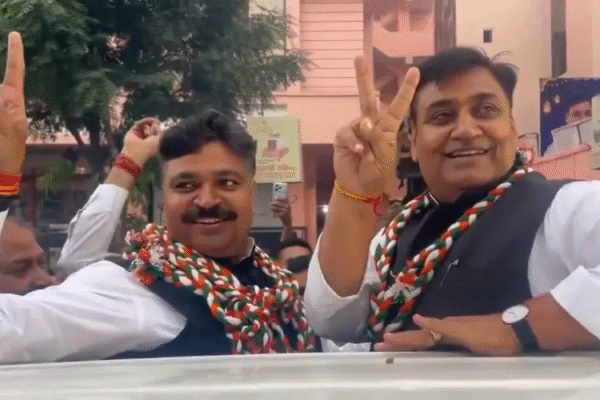
For the Congress, the victory provides a much-needed morale boost after losing the 2023 Assembly elections. State Congress president Govind Singh Dotasra and Leader of Opposition Tikaram Jully can use the results to strengthen the party organisation and project the outcome as evidence of growing public dissatisfaction with the BJP government.
Nevertheless, Panchayat elections should not automatically be treated as a forecast of the next Assembly election. Local candidates, alliances and village-level issues influence these contests in ways that may not be replicated in a statewide election.
The BJP still has time to address rural concerns, while the Congress must demonstrate that its electoral gains can translate into a credible political alternative.
With the next Assembly elections scheduled for 2028, the message from Rajasthan’s villages is significant: the ruling party cannot take rural support for granted. Whether this becomes a turning point in the state’s political equation will depend on how both parties respond in the months ahead.

NewsHasghag operates a 24/7 news bureau that tracks the real-time, social media-driven stories from India and around the world, keeping you ahead of the day’s key talking points. Our digital-first approach transforms storytelling through the seamless integration of data, interactive charts, video, and audio into every narrative