

Delhi’s Toxic Air Before Diwali: Vehicles, Industries, Stubble Burning and Dust Drive Pollution Crisis
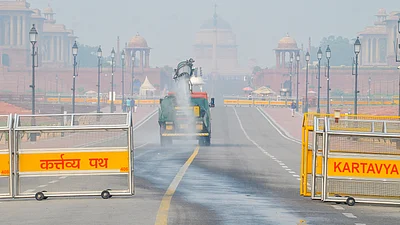
Delhi was ranked the world’s most polluted major city on November 7, 2026, by Swiss air-quality monitoring organisation IQAir, as the national capital’s air quality deteriorated on the eve of Diwali. The ranking has once again exposed a serious public-health crisis, but the causes extend far beyond festival fireworks. Vehicular emissions, industrial pollution, construction and road dust, biomass burning and unfavourable weather conditions combine to make Delhi’s air increasingly hazardous during winter.
According to IQAir’s live ranking, Delhi occupied the top position among major cities worldwide on Saturday morning. The development came as India’s Central Pollution Control Board (CPCB) recorded the city’s air quality in the very poor category. Authorities had already invoked Stage III of the Graded Response Action Plan (GRAP), introduced restrictions and advised schools to shift to online classes as pollution worsened.
Vehicles: A major source of everyday pollution
Vehicular emissions remain one of Delhi’s most persistent sources of air pollution. Millions of private vehicles, commercial transport vehicles, buses and two-wheelers release nitrogen oxides, carbon monoxide and particulate matter into the atmosphere.
Traffic congestion makes the problem worse. Vehicles spending long periods in slow-moving traffic continue to emit pollutants, while tyre and brake wear generate additional particles. The daily movement of vehicles between Delhi and neighbouring cities such as Gurugram, Noida, Ghaziabad and Faridabad adds to the regional pollution burden.
A February 2026 expert assessment considered by the Commission for Air Quality Management (CAQM) estimated transport’s contribution to winter PM2.5 pollution at around 23%. This underlines why cleaner public transport, stricter vehicle-emission enforcement and better traffic management must be central to any long-term solution.
Industrial emissions and invisible secondary pollutants
Factories, power plants, brick kilns and other industrial operations across the National Capital Region release pollutants that contribute to Delhi’s deteriorating air quality. These emissions include gases such as sulphur dioxide and nitrogen oxides, which can undergo chemical reactions in the atmosphere to form fine particulate matter.
These are known as secondary particulates. Unlike smoke or dust emitted directly into the air, they develop through atmospheric chemical processes and can travel across geographical boundaries.
The CAQM expert assessment identified secondary particulates as the largest estimated contributor to winter PM2.5 pollution, accounting for approximately 27%. Industrial emissions, including those from thermal power plants, were estimated to contribute around 9%. The figures demonstrate why pollution control cannot focus only on visible smoke or local sources.
Stubble burning: Seasonal, but not the only culprit
Crop-residue burning in Punjab, Haryana and parts of Uttar Pradesh is another contributor to Delhi’s post-monsoon pollution episodes. Farmers often burn leftover paddy straw to clear their fields quickly before the next agricultural cycle.
The smoke can travel towards the National Capital Region, adding particulate matter to an already polluted atmosphere. The CAQM assessment placed biomass burning, including agricultural and other forms of biomass combustion, at an estimated 20% of winter PM2.5 pollution.
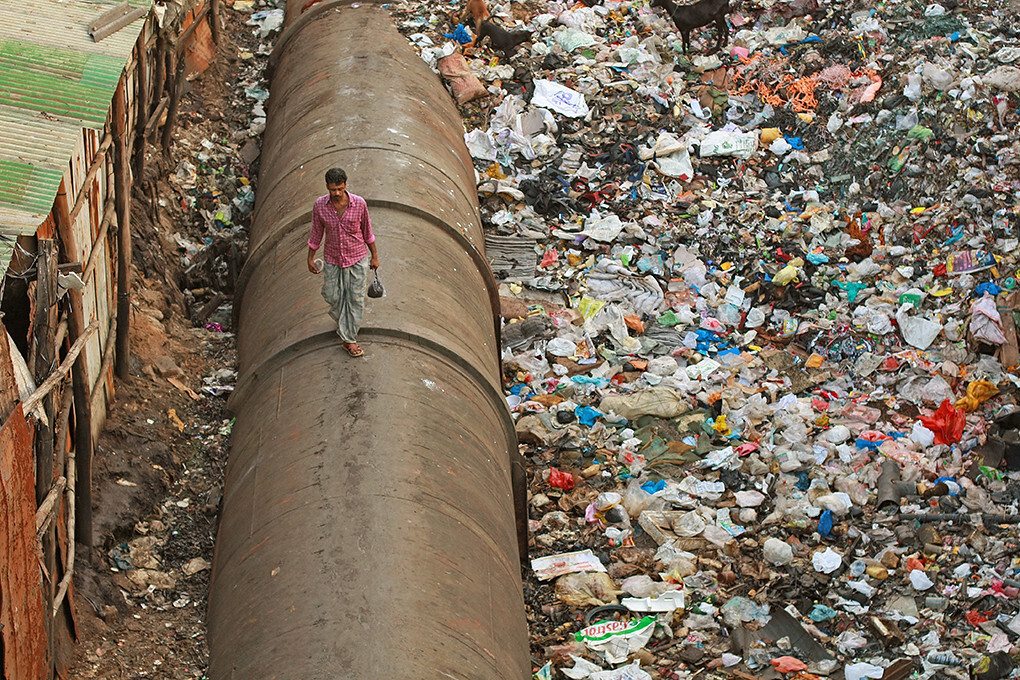
However, blaming farmers alone would be misleading. Crop burning is seasonal, while Delhi’s pollution persists throughout the year. Municipal waste burning, residential fuel use and other biomass combustion also contribute to the problem.
Construction dust and road pollution
Rapid urbanisation has brought extensive construction activity to Delhi and its neighbouring cities. Uncovered construction sites, poorly managed demolition waste, unpaved roads and dust raised by vehicles add substantial particulate pollution.
The CAQM assessment estimated dust’s contribution to winter PM2.5 at approximately 15%. During summer, when dry conditions and stronger winds increase dust movement, its contribution can become even higher.
This makes effective construction-site monitoring, covered transportation of building materials, mechanised road cleaning and regular maintenance of roads essential.
Weather turns emissions into a health emergency
Winter meteorology magnifies the impact of all these sources. Low wind speeds, falling temperatures and a shallow atmospheric boundary layer restrict the movement and dispersal of pollutants. The air effectively traps emissions close to the ground, allowing pollution levels to rise rapidly.
This explains why Delhi can experience severe smog even when there is no sudden increase in every individual emission source.
Diwali is an aggravating factor, not the root cause
Firecrackers can release a concentrated burst of particulate matter and harmful gases, worsening air quality during an already vulnerable period. But treating fireworks as the sole explanation for Delhi’s pollution crisis diverts attention from the much larger challenge of controlling everyday emissions.
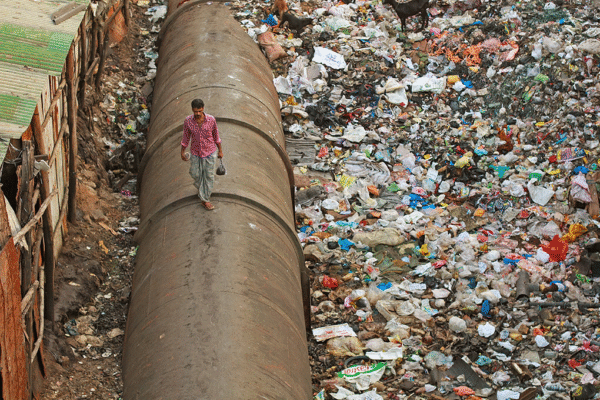
The CAQM’s findings point towards a multi-source problem requiring coordinated action across Delhi-NCR and neighbouring states. Cleaner transport, industrial compliance, alternatives to crop burning, dust control and better waste management must be pursued throughout the year.
Delhi’s ranking as the world’s most polluted major city is more than an alarming statistic. It is a warning that emergency restrictions cannot replace sustained environmental governance. The real measure of success will be whether residents can breathe clean air long after the Diwali celebrations are over.

NewsHasghag operates a 24/7 news bureau that tracks the real-time, social media-driven stories from India and around the world, keeping you ahead of the day’s key talking points. Our digital-first approach transforms storytelling through the seamless integration of data, interactive charts, video, and audio into every narrative