

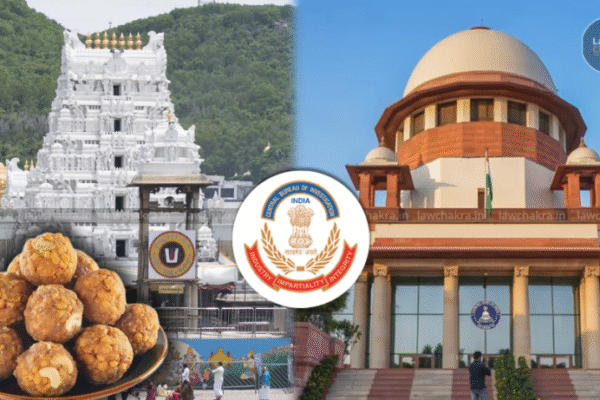

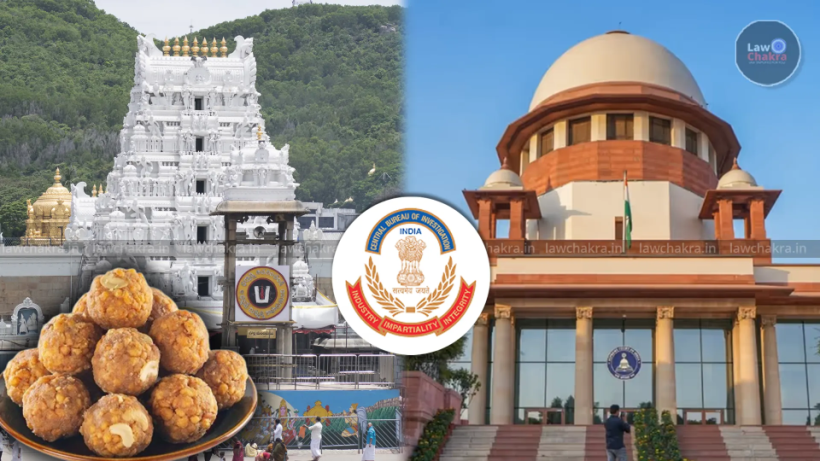
The investigation into the alleged adulteration of ghee supplied to the Tirumala Tirupati Devasthanams (TTD), which manages the famous Tirupati temple, was conducted by a Special Investigation Team (SIT) constituted by the Supreme Court and led by the Central Bureau of Investigation (CBI). The Enforcement Directorate (ED) separately examined the alleged financial irregularities and money trail. Their investigations brought to light a suspected ₹250-crore supply racket involving approximately 68 lakh kg of allegedly fake or synthetic ghee supplied to the temple between 2019 and 2024.
The case returned to the national spotlight on November 5, 2026, when the Supreme Court refused to transfer the trial from Andhra Pradesh to another state. The decision is significant because it keeps the proceedings in the state where the temple, several witnesses and much of the evidence are located, despite the defence’s concerns about the political atmosphere surrounding the controversy.
Why did the Supreme Court reject the transfer plea?
A bench comprising Chief Justice of India Surya Kant and Justice Joymalya Bagchi dismissed a petition filed by Machindra Shantaram Lanke, a Maharashtra-based dairy businessman and managing director of Malganga Milk and Agro Products Pvt Ltd, who is an accused in the case.
Appearing for Lanke, senior advocate Siddharth Dave argued that repeated public statements by Andhra Pradesh Chief Minister N Chandrababu Naidu and Deputy Chief Minister Pawan Kalyan had created a politically hostile environment. He contended that the atmosphere could prejudice his client’s right to a fair trial and requested that the proceedings be shifted to a neighbouring state.
The defence also cited language barriers, arguing that several accused were from North India and that a trial outside Andhra Pradesh would offer a more neutral environment.
The Supreme Court was not persuaded. The bench pointed out that several witnesses were from Andhra Pradesh and that transferring the proceedings could cause practical difficulties. It also noted that the investigation had been conducted by an independent SIT constituted under the court’s own directions.
Chief Justice Surya Kant observed that the court had already addressed concerns about political statements and indicated that the accused could approach it again if any prejudice arose. The plea was ultimately dismissed. Bar and Bench – Indian Legal news+2
How the investigation exposed the alleged racket
The controversy initially became prominent in September 2024 after Chief Minister Naidu alleged that adulterated ghee had been used in preparing Tirupati laddus during the previous YS Jagan Mohan Reddy-led government.
The allegation triggered a political confrontation and widespread concern among devotees. The Supreme Court subsequently intervened, replacing the state government’s investigation team with an independent five-member SIT on October 4, 2024. It included two CBI officers, two Andhra Pradesh Police officers and a senior official from the Food Safety and Standards Authority of India (FSSAI). The team was placed under the supervision of the CBI director.
Investigators examined the procurement chain, suppliers, dairy companies, laboratory findings and financial transactions. Reports emerging from the probe described the alleged use of palm-based oils, chemical additives and artificial flavouring to imitate the characteristics of genuine ghee.
The CBI-led investigation eventually resulted in a chargesheet naming 36 accused, with the alleged supply fraud estimated at approximately ₹250 crore. The ED’s investigation added another dimension by examining the financial transactions connected with the alleged racket. The Economic Times+2
A question of accountability beyond the courtroom
The controversy raises serious questions about procurement oversight, food safety and institutional accountability. How could such a large quantity of allegedly substandard material enter the supply chain of one of India’s most prominent religious institutions? Were quality checks adequate? Did procurement authorities sufficiently verify suppliers’ manufacturing capacity and credentials?
The allegations also underline the vulnerability of public and religious institutions to procurement fraud when price considerations, supplier verification and independent laboratory testing are not adequately integrated.
Importantly, allegations of adulteration should not be confused with a judicial finding of guilt. The defence has also relied on forensic findings that it says ruled out the presence of animal fat. The precise nature of the alleged adulteration and individual responsibility must be established through evidence and judicial proceedings.
The Supreme Court’s latest decision does not determine the guilt or innocence of any accused. It settles only the immediate question of where the trial should take place.
For millions of devotees, however, the larger issue remains one of trust. The sanctity of religious offerings cannot depend merely on institutional assurances. Transparent procurement, independent testing and strict accountability are essential to ensure that the food offered in places of worship meets the highest standards of safety and purity.

NewsHasghag operates a 24/7 news bureau that tracks the real-time, social media-driven stories from India and around the world, keeping you ahead of the day’s key talking points. Our digital-first approach transforms storytelling through the seamless integration of data, interactive charts, video, and audio into every narrative