

RSS at 100 — Part 5: Why Does Mohan Bhagwat Receive Z+ Security? Who Pays for It—and What Do We Know About the Cost?
Two-Line Summary
Mohan Bhagwat does not hold constitutional office, yet he receives Z+ security, one of India’s highest levels of government protection. What is the threat assessment behind that protection, who bears the cost, and what do public records actually reveal about the expenditure?
Why This Matters
Mohan Bhagwat is not the Prime Minister. He is not a Union minister or an elected Member of Parliament. He heads the Rashtriya Swayamsevak Sangh, a socio-cultural organisation that does not contest elections.
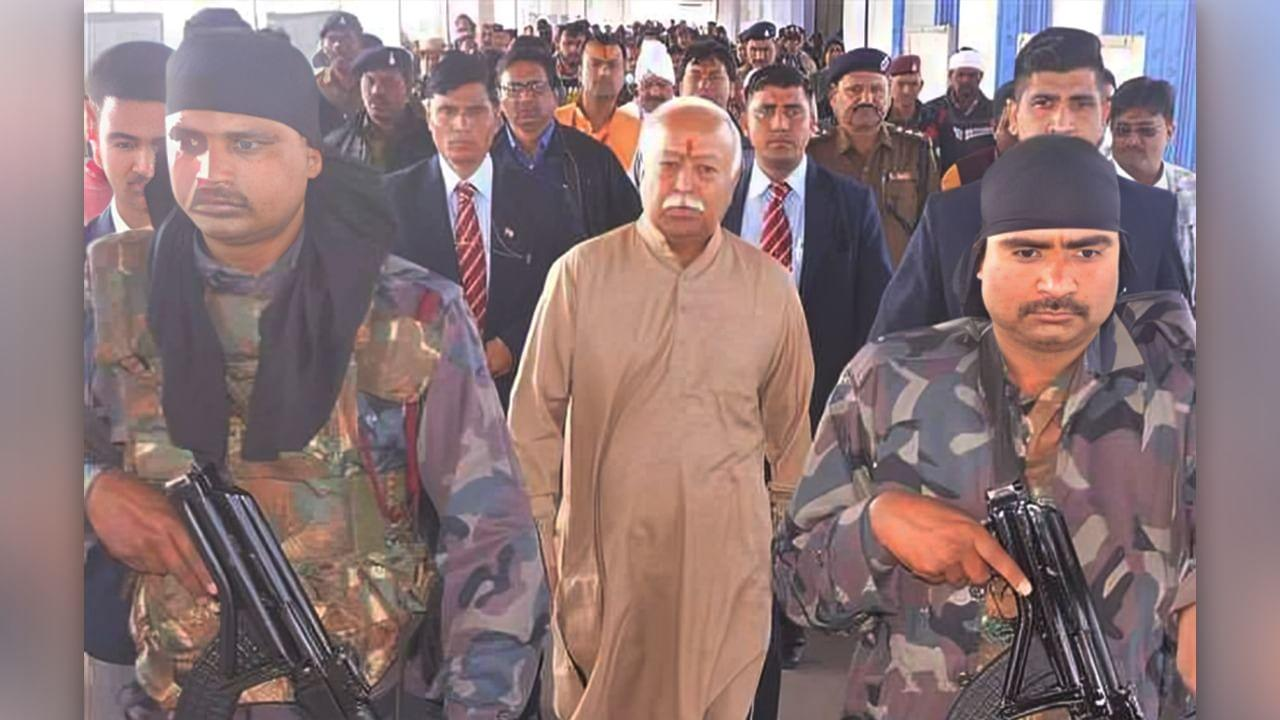
Yet the RSS chief receives Z+ security, one of the highest levels of security protection provided by the Indian state. This immediately raises a legitimate question: why does the government provide such high-level protection to the head of a non-government organisation?
The answer should not be based on political affiliation, social-media claims or assumptions. Security protection is officially based on threat perception. The real questions, therefore, are what threat assessment exists in Bhagwat’s case, who determines his security category and how much public money is spent on his protection.
The Short Answer
Mohan Bhagwat has been provided Z+ security on the basis of threat assessment. In 2015, the government upgraded his protection to Z+ and assigned CISF personnel to his security following a threat analysis, according to contemporary reports.
In August 2024, his security arrangements were strengthened further. An Advance Security Liaison (ASL) protocol was added following fresh threat inputs from intelligence agencies. The Indian Express reported that the arrangement brought his protection protocol in line with that used for certain other high-risk protectees.
The existence of high-level protection is therefore documented. The more difficult question is how much this protection actually costs the public exchequer. This is where claims circulating publicly need to be separated from verifiable government records.
What Does Z+ Security Mean?
India’s VIP security system includes different categories such as Z+, Z, Y+, Y and X. The Ministry of Home Affairs has stated that security is provided on the basis of threat assessment and that the category depends on the nature and gravity of the threat faced by an individual.
This is important because it means that a person does not necessarily receive security simply because he or she holds constitutional office. Security can also be provided to individuals whom government agencies consider to face a significant threat.
The government therefore does not need to establish that Bhagwat holds public office in order to justify his protection. The relevant question is whether security agencies have assessed a sufficiently serious threat.
Why Was Bhagwat’s Security Strengthened?
Bhagwat’s security has been a subject of government attention for years. In 2015, his protection was upgraded to Z+ following a threat analysis.
In 2024, the government strengthened the arrangement again. According to The Indian Express, fresh threat inputs from intelligence agencies led to the addition of the ASL protocol. The report said this was intended to strengthen his protection, particularly during travel and visits outside Maharashtra.
An ASL involves advance coordination and security planning before a protected person visits a location. It can involve coordination with local police and security agencies, route planning and advance security arrangements.
The Question of Public Money
This is where the investigation becomes more complicated. Security personnel are government personnel, and their deployment involves public resources. But calculating the cost of an individual’s security is not as simple as multiplying the number of personnel by their salaries.
There can be costs associated with personnel, transport, accommodation, equipment and logistics. Local police arrangements may also be required when a protected individual travels.
This makes it difficult to establish a precise annual figure without official expenditure records. A number circulating on social media should therefore not automatically be described as the actual cost of Bhagwat’s security.
What About the ₹20-Crore Figure?
A figure of ₹20 crore has circulated in public discussion regarding the cost of Bhagwat’s security. However, the available evidence examined for this investigation does not establish ₹20 crore as an official annual expenditure.
Reports surrounding a 2026 court case referred to a claim that Bhagwat’s security cost between ₹40 lakh and ₹45 lakh per month. That would amount to approximately ₹4.8–₹5.4 crore annually, rather than ₹20 crore.
Even this figure needs to be understood carefully. A figure cited in litigation or reported in the media is not necessarily the same as an officially audited annual expenditure.
The distinction is important because an investigative article should not convert an allegation or estimate into an established fact.
The 2026 Bombay High Court Case
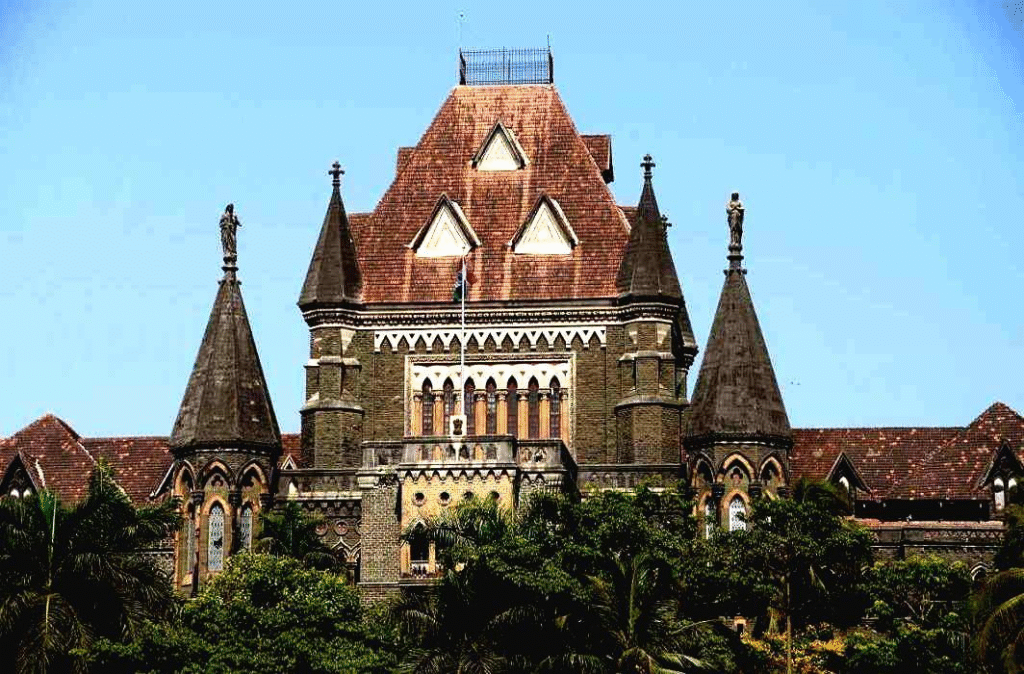
The question of Bhagwat’s publicly funded security reached the Bombay High Court in 2026. A PIL sought recovery of the cost incurred in providing Z+ security to Bhagwat and questioned the use of public funds for his protection.
The petition also raised the issue of the RSS’s organisational status. The Nagpur bench of the Bombay High Court dismissed the PIL in April 2026, questioning the manner and basis of the litigation.
The legal outcome needs to be understood precisely. The court’s dismissal did not establish that Bhagwat’s security costs ₹20 crore a year. Nor did it establish that the government cannot provide security to the head of an organisation that is not registered as a society.
The court dismissed the petition. The precise annual cost of Bhagwat’s security remains a separate factual question.
Does Being Unregistered Matter?
This connects directly with Part 2 of our investigation, which examined the legal status of the RSS.
The RSS does not operate as a conventional registered society. But that fact, by itself, does not mean that its chief cannot receive government security.
The government’s security framework is based primarily on threat perception rather than on whether the organisation headed by an individual is registered as a society.
The more relevant question is therefore whether the threat assessment justifies the deployment of public security resources.
Who Decides the Security Category?
The government has stated that threat assessment is carried out by security agencies and that the category is determined according to the nature and gravity of the threat.
Threat perception can change over time. Security categories can therefore also be revised.
Bhagwat’s case illustrates this process. His protection was upgraded in 2015 and strengthened further in 2024 following additional threat inputs.
The important point is that the precise details of an individual’s threat assessment may not be publicly disclosed for security reasons.
The Transparency Question
This creates a difficult balance.
The government may have legitimate reasons for keeping details of an individual’s threat assessment confidential. Revealing such information could potentially compromise security.
But there is a difference between keeping security-sensitive information confidential and keeping all information about public expenditure beyond meaningful scrutiny.
Citizens have a legitimate interest in knowing how public resources are being used. At the same time, the government has a legitimate interest in protecting information that could endanger a protected individual.
The challenge is to find a balance between the two.
What We Know
We know that Mohan Bhagwat receives Z+ security. We know that his protection was upgraded in 2015 following a threat analysis.
We know that his security arrangements were strengthened in 2024 through an ASL protocol following fresh threat inputs.
We also know that the Ministry of Home Affairs has stated that security categories are determined according to threat assessment and the nature and gravity of the threat.
We know that a 2026 PIL seeking recovery of security costs was dismissed by the Bombay High Court.
But we should be equally clear about what has not been established. The evidence examined here does not establish that Bhagwat’s security costs exactly ₹20 crore a year.
What the Government Could Clarify
A transparent system does not necessarily require the government to reveal the nature of an individual’s threat.
It could, however, provide broader information about the system: how security categories are assessed, how frequently they are reviewed, which agencies bear the costs and how expenditure on high-level security is calculated.
Where security-sensitive information cannot be disclosed, aggregate expenditure figures could potentially provide greater financial transparency without revealing operational details.
Such information would allow citizens to understand the broad financial implications of VIP security while protecting legitimate security concerns.
The Larger Question
The Bhagwat security debate is ultimately bigger than one individual.
India provides security protection to people from different backgrounds when agencies assess that they face credible threats. The principle should therefore be applied consistently.
The relevant question is not whether Mohan Bhagwat deserves security because he is the RSS chief. Nor should the question be whether he deserves security because of his political or ideological influence.
The proper question is: What is the assessed threat, who made that assessment, what level of protection does it require, and what does that protection cost the public exchequer?
Those are questions that can be asked without prejudging the answer.
Questions That Remain
What specific threat assessment led to Bhagwat’s Z+ security? How frequently is that assessment reviewed? What prompted the additional ASL protocol in 2024? Which agency bears the principal cost of his protection? What is the actual annual expenditure?
And why does the widely circulated ₹20-crore figure differ substantially from figures reported in connection with the 2026 court proceedings?
These questions remain relevant even after the Bombay High Court dismissed the PIL.
Mohan Bhagwat’s Z+ security is a documented fact. The government says security categories are determined by threat assessment, and his protection has been strengthened following intelligence inputs.
The recent Bombay High Court proceedings demonstrate that the question of public expenditure on his security has entered the legal and public domain. But the dismissal of the PIL should not be interpreted as confirmation of any particular security-cost figure.
For NewsHashtag, the evidence supports a careful conclusion: high-level public security is being provided to the RSS chief, but the precise annual expenditure has not been conclusively established in the material examined for this investigation.
That distinction matters.
Because investigative journalism is not about proving the claim with which a story begins.
It is about finding out what the evidence actually proves.
What Comes Next?
The RSS’s influence cannot be understood only through its relationship with the BJP or the security provided to its chief.
There is another question at the heart of the organisation’s extraordinary reach: How does an organisation built around volunteers, donations and ideological commitment sustain such a vast nationwide network?
Part 6 will examine who threatens Mohan Bhagwat? The government has not publicly disclosed the complete threat assessment. However, reports based on intelligence inputs have referred to possible threats from banned or extremist organisations, including alleged plots involving terrorist modules. The precise nature of the current threat remains classified.”

Prabha Gupta is a veteran journalist and civic thinker dedicated to the constitutional ideals of dignity and institutional ethics. With over thirty years of experience in public communication, her work serves as a bridge between India’s civil society and its democratic institutions. She is a prominent voice on the evolution of Indian citizenship, advocating for a national discourse rooted in integrity and the empowerment of the common citizen