


Does the Awami League Have a Future in Bangladesh?
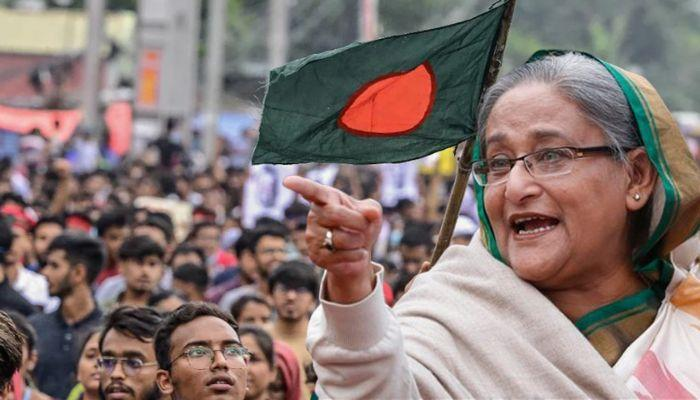
Bangladesh is approaching another uncertain chapter in its political history. Two years after Sheikh Hasina was driven from power and sought refuge in India, the former prime minister has announced that she intends to return to Bangladesh in December. Her declaration is politically significant because she is not merely a former prime minister in exile: she remains the central figure of the Awami League, a party that has been banned from political activities and pushed to the margins of public life.
Hasina has said she is prepared to return even if she faces arrest or death. In July, she told Reuters that she and senior Awami League figures planned to return and surrender to Bangladeshi authorities. On August 5, she reiterated her determination to return, while demanding that the ban on the Awami League be lifted.
But the question is bigger than Hasina herself: does the Awami League still have a political future in Bangladesh?
Why was Sheikh Hasina sentenced to death?
The answer to Hasina’s legal predicament lies in the bloody crackdown on the student-led uprising of July-August 2024. Bangladesh’s International Crimes Tribunal sentenced her to death in absentia in November 2025 after finding her guilty of crimes against humanity.
The tribunal’s case was not simply that protesters died during political unrest. Prosecutors argued that Hasina, as prime minister and head of government, bore superior command responsibility for systematic violence against protesters.
The charges included incitement, ordering killings, abetment, conspiracy and failure to prevent or punish atrocities. One of the most serious allegations concerned orders for the use of lethal weapons, helicopters and drones against demonstrators. The tribunal also dealt with specific killings, including the death of student protester Abu Sayed and the killing of protesters in Dhaka’s Chankharpul and Ashulia areas.
The prosecution presented telephone recordings, witness testimony and other evidence concerning alleged instructions to security forces. A forensic expert testified that a voice on one recording matched Hasina’s.
Hasina has rejected the allegations and described the proceedings as politically motivated. Her conviction therefore remains deeply contested politically, even though it is legally operative within Bangladesh.
Can the Awami League survive without power?
Historically, the answer may be yes. The Awami League is not a political organisation created around Hasina alone. Founded in 1949, it is deeply embedded in Bangladesh’s political history and played a decisive role in the country’s independence struggle.
But its current predicament is unprecedented. The party has been banned, many leaders have been arrested or have gone into hiding, and its organisational network has been severely disrupted. It was also excluded from the 2026 parliamentary election.
That does not necessarily mean its electorate has disappeared.
A substantial section of Bangladesh’s population may still identify with the Awami League, particularly because of its historical association with independence, secular nationalism and economic development. The political question is whether those voters can remain permanently excluded from electoral politics.
That could ultimately become the party’s strongest argument for political rehabilitation.
Hasina’s return could change everything
If Hasina actually returns in December, Bangladesh could face a dramatic confrontation between the government’s demand for accountability and the Awami League’s demand for political survival.
Her return could result in arrest and further legal proceedings. But politically, it could also transform her from an exiled former ruler into the centre of a renewed opposition movement.
The future of the Awami League may therefore depend on something larger than Sheikh Hasina. Can the party separate its institutional identity from the controversial legacy of her 15-year rule?
If it cannot, the Awami League risks becoming a historical party remembered more for its past than its future. If it can reinvent itself, distance itself from political violence and authoritarian practices, and accept internal leadership renewal, it could eventually re-enter Bangladesh’s democratic mainstream.
The fundamental issue for Bangladesh is therefore not simply whether Sheikh Hasina returns.
It is whether millions of citizens who once voted for the Awami League will continue to have a political home.
That question remains unresolved—and it could define Bangladesh’s next political era.

NewsHasghag operates a 24/7 news bureau that tracks the real-time, social media-driven stories from India and around the world, keeping you ahead of the day’s key talking points. Our digital-first approach transforms storytelling through the seamless integration of data, interactive charts, video, and audio into every narrative