



RSS at 100: History, Influence, Transparency and the Questions That Remain
NewsHashtag Investigative Series — Part 1
The Big Picture
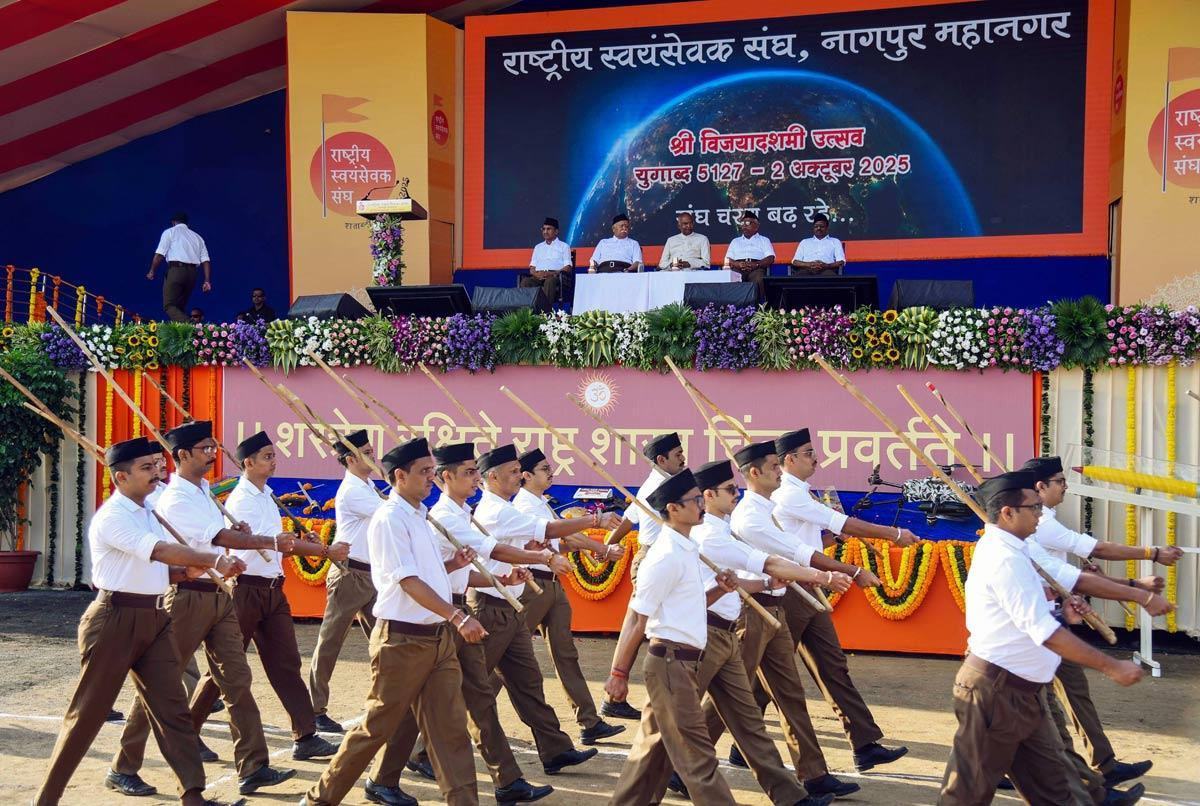
For a century, the Rashtriya Swayamsevak Sangh (RSS) has remained one of India’s most influential and closely debated organisations. Admired by millions, criticised by many, and operating through a distinctive volunteer-based structure, the RSS has grown from a small organisation founded in Nagpur in 1925 into a nationwide network with influence extending far beyond its daily shakhas. Its centenary in 2025 provides an opportunity to examine not only how the organisation grew, but also how it operates, how it relates to politics, and what questions about transparency and accountability continue to surround it.
Why This Investigation Matters
Few organisations in modern India evoke as much political debate as the Rashtriya Swayamsevak Sangh. To its supporters, the RSS is a disciplined volunteer movement devoted to national service, social cohesion and character-building. Critics, meanwhile, argue that its influence extends deeply into India’s political and institutional life without the kind of formal public accountability associated with registered political parties or conventional non-governmental organisations.
The central question is therefore not simply whether the RSS is influential. Its influence is widely acknowledged. The more important question is how an organisation that does not itself contest elections has built such a formidable presence in Indian public life.
That question cannot be answered through political slogans alone. It requires looking at the organisation’s origins, its organisational model, its expansion, its relationship with the wider Sangh network and the BJP, and eventually the legal and financial questions that have increasingly entered public debate.
This investigation attempts to examine that journey through historical records, official documents, legal material, public statements and the RSS’s own explanations of its functioning.
Genesis: India in 1925
To understand the RSS, one must first understand the India in which it was born.
The years following the First World War were marked by political unrest, social change and a growing anti-colonial movement. British rule remained firmly entrenched, while the Indian freedom movement was entering a period of mass mobilisation. At the same time, debates over community identity, social organisation and the future shape of Indian society were becoming increasingly important.
It was against this backdrop that Dr. Keshav Baliram Hedgewar, a physician from Nagpur and a figure associated with the freedom movement, founded the RSS on Vijayadashami, 27 September 1925. The organisation’s own historical account records that Hedgewar announced the beginning of the Sangh on that day at his home in Nagpur, with the initial emphasis on physical and intellectual training.
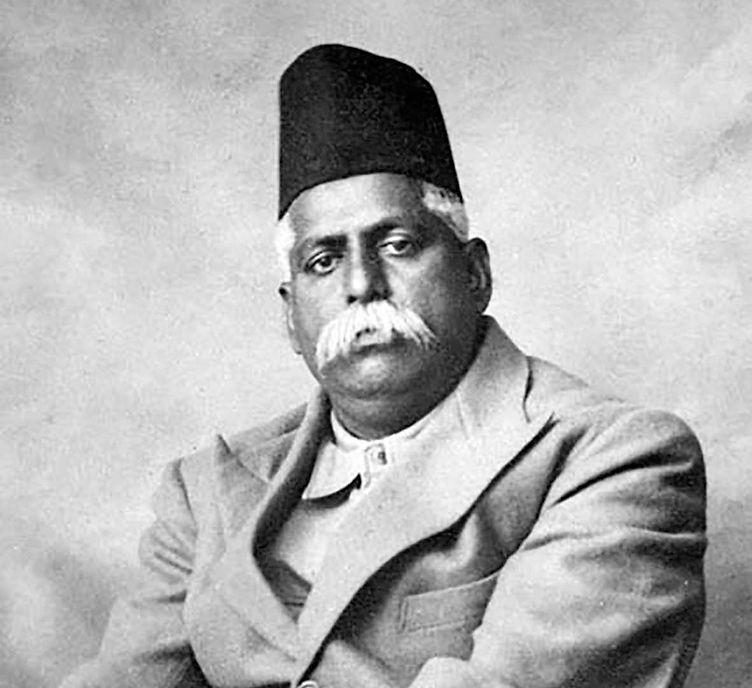
The RSS was conceived differently from a conventional political organisation. Its early emphasis was not on elections or parliamentary politics but on creating a disciplined network of volunteers. The idea was that social organisation and the development of individuals should precede broader national transformation.
The organisation’s name, Rashtriya Swayamsevak Sangh, roughly translates as the “National Volunteer Organisation”. Its early method was deliberately simple: bring people together regularly, train them physically and intellectually, and build a sense of collective discipline.
That model would eventually become the foundation for the RSS’s extraordinary expansion.
Who Was Dr. Keshav Baliram Hedgewar?
Hedgewar’s political journey preceded the RSS. He had been involved in the freedom movement and had links with the Indian National Congress during his earlier years. Over time, however, he increasingly focused on what he regarded as the need for long-term social organisation rather than political mobilisation alone.
The RSS’s own account describes Hedgewar as a freedom fighter who came to believe that national strength required disciplined social organisation. Independent historical accounts differ in their interpretation of his ideology and the political environment in which he founded the organisation, but there is little dispute over the central organisational strategy he adopted: build a cadre of committed volunteers through continuous local activity.
That strategy distinguished the RSS from political parties whose primary objective was electoral power.
Instead of seeking immediate political representation, Hedgewar concentrated on creating an organisation that could reproduce itself from one locality to another.
The instrument for doing this was the shakha.
The Shakha: The Core of the RSS
The shakha remains the most important organisational unit of the RSS.
The first shakha was established at Mohite Wada in Nagpur in 1926, and the organisation subsequently began establishing shakhas outside Nagpur as well. According to the RSS’s own historical account, the first shakha outside Nagpur was held in Wardha in 1926.
A typical shakha brings volunteers together for physical exercises, games, drills, discussions and other activities. The RSS describes the shakha as the place where volunteers develop discipline, social interaction and a sense of national commitment.
Its importance goes beyond the activities taking place during a particular meeting. The regularity of the shakha creates a system through which volunteers remain connected to the organisation over long periods.
This is one of the reasons the RSS’s organisational model has proved remarkably durable. It does not depend entirely on large offices, expensive campaigns or electoral cycles. Instead, its strength has historically come from thousands of local interactions repeated over decades.
The First Years: From Nagpur to a Wider Network
The RSS initially remained a relatively small organisation. Its early years were devoted primarily to developing the shakha system, recruiting volunteers and establishing an organisational culture.
According to the RSS’s own historical records, daily shakhas began in Nagpur in 1926, while the organisation’s training programmes expanded during the following years. The first Officers’ Training Camp was held in 1927, reflecting the organisation’s emphasis on discipline and systematic training.
The significance of this period lies less in the organisation’s numerical size than in the model it established.
A volunteer could participate in a local shakha, receive training, develop organisational responsibilities and eventually help establish another shakha elsewhere. In this way, organisational growth depended on people rather than infrastructure.
Over time, this created a network that could expand geographically without requiring the kind of centralised administrative machinery normally associated with a large institution.
Partition and a Turning Point
The Partition of India in 1947 marked one of the most traumatic moments in the country’s history. Millions were displaced, and communal violence claimed countless lives.
RSS volunteers participated in relief activities in some areas during the refugee crisis. The organisation’s supporters have long pointed to this work as evidence of its commitment to social service. Critics, however, place the RSS within the broader communal politics of the period and argue that its ideological position also contributed to the sharper Hindu-Muslim divide of the era.
For a serious investigation, both the historical record and these competing interpretations matter. The RSS’s role during Partition cannot be understood solely through the organisation’s own account, nor can it be reduced to the allegations of its opponents.
What is beyond dispute is that the period fundamentally altered India’s political environment—and the RSS’s subsequent history.
The Gandhi Assassination and the First Ban
On 30 January 1948, Mahatma Gandhi was assassinated by Nathuram Godse. Godse had been associated with Hindu nationalist organisations, and the question of his precise organisational relationship with the RSS has remained part of the historical and political debate.[Source: Government records / RSS historical records]
Following the assassination, the Government of India banned the RSS. The ban represented the most serious institutional crisis the organisation had faced since its creation.
The RSS was subsequently required to adopt a written constitution as part of the process that led to the lifting of the ban. The organisation’s own historical records state that its constitution was drafted in 1949 and that the government lifted the ban on 12 July 1949.
The episode left a lasting mark on the RSS.
It also established an important precedent: although the organisation had been banned by the government, it survived, reorganised and resumed its activities after the ban was lifted.
The experience would contribute to the RSS’s later emphasis on organisational discipline and legal continuity.
Building a Nationwide Organisation
After Independence, the RSS entered a prolonged period of expansion.
Its network gradually moved beyond Maharashtra into other parts of India. The organisation’s model remained largely unchanged: establish shakhas, train volunteers and create a local organisational base.
One of the most important figures in this expansion was the pracharak, a full-time RSS worker who dedicates himself to organisational responsibilities. Pracharaks have historically travelled between regions, helped establish shakhas, trained volunteers and built organisational networks.
The system gave the RSS something that many organisations struggle to maintain: a cadre of people whose primary commitment was organisational rather than electoral.
This cadre-building approach would later have an important consequence for Indian politics.
Several prominent political figures who eventually rose within the BJP had earlier worked as RSS pracharaks. Their careers created a visible institutional bridge between the volunteer organisation and the political arena, even though the RSS itself remained formally distinct from the BJP.
Growth Beyond the RSS
The expansion of the RSS did not remain confined to the shakha system.
Over the decades, a much larger network of organisations emerged around the broader Sangh movement, working in areas including education, labour, student affairs, tribal welfare, social service and other fields.
These organisations are not simply branches of the RSS in a formal legal sense. Many have their own structures, office-bearers and legal identities. Some are registered entities in their own right.
This distinction is important because the phrase “Sangh Parivar” is often used to describe this wider ecosystem, while the RSS itself is a specific organisation.
The relationship between these organisations is therefore one of the subjects that deserves closer examination rather than being treated as a single institutional structure.
The Pracharak Model and the Leadership Pipeline
The pracharak system also helps explain the RSS’s influence beyond its own membership.
A full-time worker can spend years travelling, organising local units, interacting with communities and learning how to build and manage a volunteer network. When some such workers later enter electoral politics, they carry with them organisational experience accumulated outside the political arena.
This has contributed to the RSS’s reputation as an institution that develops leadership.
The relationship is particularly visible in the history of the BJP, which emerged from the earlier Bharatiya Jana Sangh. Several BJP leaders have had RSS backgrounds, creating a relationship between the two organisations that has been both politically significant and frequently debated.
But the RSS and BJP should not simply be treated as identical organisations. One is a volunteer socio-cultural organisation; the other is a political party that contests elections and operates within India’s constitutional electoral system.
Understanding where their institutional boundaries lie—and where their ideological and personnel connections overlap—will be central to the next stage of this investigation.
What Makes the RSS Different?
A century after its foundation, the RSS remains unusual in India’s institutional landscape. It does not contest elections or function as a political party. Its organisational strength comes largely from volunteers and its extensive network of shakhas rather than from electoral campaigns. At the same time, its influence has extended far beyond the activities of a conventional social organisation. That combination—limited formal political participation but considerable political and social influence—is what makes the RSS particularly important to examine.
It also raises questions that cannot be answered merely by studying its history. How is the organisation legally constituted? Why has it remained outside conventional society-registration structures? How does it handle money collected from volunteers and supporters? What is its tax position? How transparent are its finances? What exactly is the institutional relationship between the RSS and the BJP? And when the government provides high-level security to its chief, who decides the level of protection and who bears the cost?
These are not merely political questions. They concern law, public accountability, institutional power and the functioning of India’s democracy. The answers require examining documents, legal records, government rules and the organisation’s own statements rather than relying on claims circulating on social media.
That is where the second part of this investigation begins.
From a Nagpur Shakha to a National Power Centre
The RSS began in 1925 with a small group of volunteers in Nagpur. A century later, it has become a nationwide organisation with an influence that extends well beyond the physical boundaries of its shakhas.
Its story is therefore not simply the story of an organisation. It is also the story of how an idea can be transformed into a durable organisational network—and how that network can eventually influence the political and social direction of a country without itself becoming a political party.
But history explains only part of the RSS story.
The more difficult questions concern the present: How is this vast organisation legally structured? How does it finance itself? What does Indian tax law say about its status? What level of financial disclosure is required? And how should the public understand its relationship with the BJP?
Those questions have become particularly relevant during the RSS’s centenary year and have generated renewed political and legal debate. Recent reporting has highlighted the fact that the RSS remains unregistered under conventional society-registration frameworks, while the organisation has argued that such registration is not legally mandatory and that its status as an association of individuals has been recognised by tax authorities and courts.
Coming Next: Part 2 — The RSS Under the Lens: Registration, Funding, Taxation and the BJP Connection
Part 2 will examine that legal and financial architecture—registration, taxation, funding, Guru Dakshina, financial transparency and the RSS-BJP relationship—separating what is established by law and public records from what is merely alleged.
Sources & Documents
This investigation draws on publicly available historical records, official documents, legal material and institutional sources, including:
- Rashtriya Swayamsevak Sangh (RSS) — official historical material on its founding, organisational development and institutional history.
- Government of India records — material relating to the 1948 ban on the RSS and its subsequent lifting.
- Constitutional and legal records — relevant laws and judicial decisions concerning associations, registration and taxation.
- Parliamentary records and government documents — where relevant to claims concerning the RSS, its activities or government decisions.
- Credible historical research and contemporary reporting — used to cross-check disputed or contested historical claims

Prabha Gupta is a veteran journalist and civic thinker dedicated to the constitutional ideals of dignity and institutional ethics. With over thirty years of experience in public communication, her work serves as a bridge between India’s civil society and its democratic institutions. She is a prominent voice on the evolution of Indian citizenship, advocating for a national discourse rooted in integrity and the empowerment of the common citizen