



Uttar Pradesh often projects itself as a state racing ahead on the highway of development. Expressways stretch across districts, airports are expanding, and infrastructure announcements dominate headlines. Yet beyond the celebratory narratives lies a quieter, more troubling reality. The condition of many state-run buses tells a different story — one of aging fleets, strained capacity, and delayed modernization. The question that naturally arises is whether this crisis stems from lack of funds or from lack of priority.
Fleet Beyond Service Life, Rising Safety Concerns
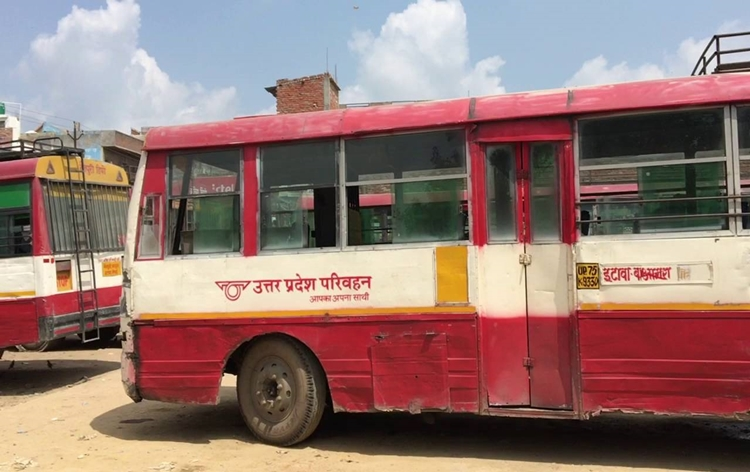
The Uttar Pradesh State Road Transport Corporation (UPSRTC), one of the largest road transport networks in India, operates roughly 11,000 to 12,000 buses including owned and contract vehicles. However, transport department data presented in recent years has indicated that a considerable portion of the corporation’s owned fleet has crossed the recommended service life of eight to ten years. In several depots, buses more than a decade old continue to ply on highways and rural routes.
For passengers, the signs of age are unmistakable. Torn seats, leaking roofs during monsoon, malfunctioning doors, rattling windows, weakened suspension systems, and frequent breakdowns mid-journey are common complaints across districts. UPSRTC has been battling recurring financial losses, reportedly exceeding ₹1,000 crore annually in recent years. Budgetary allocations from the state government do provide support, but much of that funding is absorbed by salaries, pension liabilities, fuel expenses, and accumulated maintenance dues rather than systematic fleet replacement.
Comprehensive renewal requires substantial capital investment. A new diesel bus costs approximately ₹30 to ₹40 lakh, while electric buses cost upwards of ₹1 crore depending on specifications and subsidy structure. Replacing even a few thousand outdated buses would require investment running into thousands of crores. Yet the state’s annual budget crosses ₹7 lakh crore, and infrastructure projects routinely secure multi-thousand-crore allocations. This disparity raises a critical question: is public transport modernization being sidelined in favor of more visible infrastructure expansion?
Older buses demand higher maintenance expenditure and are more prone to mechanical failure. When breakdowns occur on inter-district routes, particularly in rural belts, passengers are left stranded for hours. Beyond inconvenience lies a serious safety issue. Structural fatigue, corroded flooring, weakened body panels, and worn braking systems can significantly compromise crash resilience. In a state already grappling with high road accident numbers, vehicle condition cannot remain an afterthought.
Private Operators Filling the Gap, Policy Delays Persist
Limited availability and reliability of state-run buses have created space for private operators to dominate many routes. While private participation plays a role in maintaining connectivity, enforcement standards remain inconsistent. Reports from several districts indicate that some privately operated buses run in visibly poor condition, with damaged interiors, unstable footboards, and overcrowded compartments. Fitness certification processes are often criticized for focusing on documentation compliance rather than rigorous mechanical evaluation. When regulatory oversight becomes procedural rather than preventive, unsafe vehicles continue operating with official approval.
Complicating matters further is the transition toward electric mobility. Policymakers appear cautious about investing heavily in new diesel fleets while green transport plans are underway. However, large-scale electric bus procurement and charging infrastructure expansion remain gradual. This creates a policy gap. In the absence of rapid electrification, aging diesel buses continue to run beyond their optimal lifespan.
Development cannot be measured solely in kilometers of highways constructed. It must also reflect the safety and dignity of those who travel daily on those roads. If fleet modernization continues to lag behind infrastructure expansion, Uttar Pradesh risks turning mobility into an overlooked vulnerability rather than a pillar of progress.

Priya Thakur is an emerging journalist with a keen interest in public policy, infrastructure, and governance. She focuses on ground-level reporting that connects development narratives with everyday realities. Through data-driven analysis and citizen-centric storytelling, she aims to bring accountability and nuance to public discourse.