


Trump Signals Exit From Iran War Even as Hormuz Crisis Persists
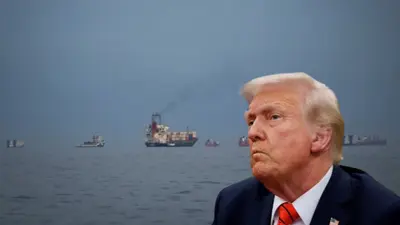
A new report indicating that Donald Trump is willing to end the ongoing Iran war without reopening the strategically critical Strait of Hormuz marks a significant shift in U.S. war aims. The development, first reported by The Wall Street Journal and cited by multiple outlets, suggests a recalibration of priorities amid mounting military, economic, and geopolitical pressures.
According to officials familiar with internal deliberations, the U.S. administration now views reopening the Strait of Hormuz as a secondary objective-one that could be addressed diplomatically or through allied intervention after active hostilities wind down.
Strategic Shift: From Control to Containment
The reported shift reflects a pragmatic reassessment of battlefield realities. Reopening the Strait of Hormuz—through which nearly 20% of global oil supply typically flows—would require a prolonged and complex military campaign, potentially extending beyond the administration’s preferred four-to-six-week war timeline.
Instead, U.S. strategy appears to have narrowed toward degrading Iran’s naval capabilities and missile infrastructure, thereby weakening its ability to threaten regional stability. Once these objectives are met, Washington may pivot toward de-escalation, even if the maritime chokepoint remains partially blocked.
This recalibration underscores a broader shift from territorial or operational control to strategic containment—aiming to limit Iran’s offensive capacity rather than fully restoring pre-war conditions.
Economic Pressures and Global Stakes
The decision carries profound economic implications. The continued disruption of shipping through the Strait of Hormuz has already triggered sharp volatility in global energy markets. Oil prices surged past $100 per barrel during the conflict, with analysts warning that prolonged closure could lead to severe supply shocks and inflationary pressures worldwide.
For major energy-importing nations—including India, China, and European economies—the stakes are particularly high. A sustained blockade threatens not only fuel prices but also broader economic stability, affecting transportation, agriculture, and manufacturing sectors.
By signaling a willingness to end the war without resolving the Hormuz issue, the U.S. risks transferring the burden of securing global energy flows to allies and international coalitions.
Diplomatic Calculus and Allied Burden-Sharing
Reports suggest that Washington may increasingly rely on diplomatic channels and allied cooperation to address the Strait crisis post-conflict. If direct U.S. military intervention to reopen the passage is deferred, Gulf nations and European partners could be expected to take a leading role.
However, this approach raises questions about alliance cohesion. Earlier in the conflict, several U.S. allies showed reluctance to engage militarily in the region, preferring diplomatic solutions. A post-war scenario where the Strait remains closed could intensify these divisions, especially if energy disruptions persist.
Risks of an Incomplete Resolution
Critics argue that ending the war without reopening Hormuz may result in an incomplete strategic outcome. While Iran’s military capabilities may be degraded, its control over the Strait—or its ability to disrupt it—could remain intact, preserving a key lever of geopolitical influence.
Moreover, such a move may signal a shift in U.S. doctrine—from decisive conflict resolution toward limited engagement and risk management. This could have long-term implications for deterrence, particularly in regions where strategic chokepoints play a critical role.
The reported willingness of President Trump to conclude the Iran war without securing the Strait of Hormuz highlights the complex trade-offs between military objectives, economic pressures, and geopolitical realities. While the move may shorten the duration of conflict and reduce immediate risks of escalation, it leaves unresolved one of the most critical strategic issues at the heart of the crisis.
As global markets react and diplomatic efforts intensify, the future of the Strait—and the stability of global energy supply—will remain central to the evolving post-war order.

Prabha Gupta is a veteran journalist and civic thinker dedicated to the constitutional ideals of dignity and institutional ethics. With over thirty years of experience in public communication, her work serves as a bridge between India’s civil society and its democratic institutions. She is a prominent voice on the evolution of Indian citizenship, advocating for a national discourse rooted in integrity and the empowerment of the common citizen