






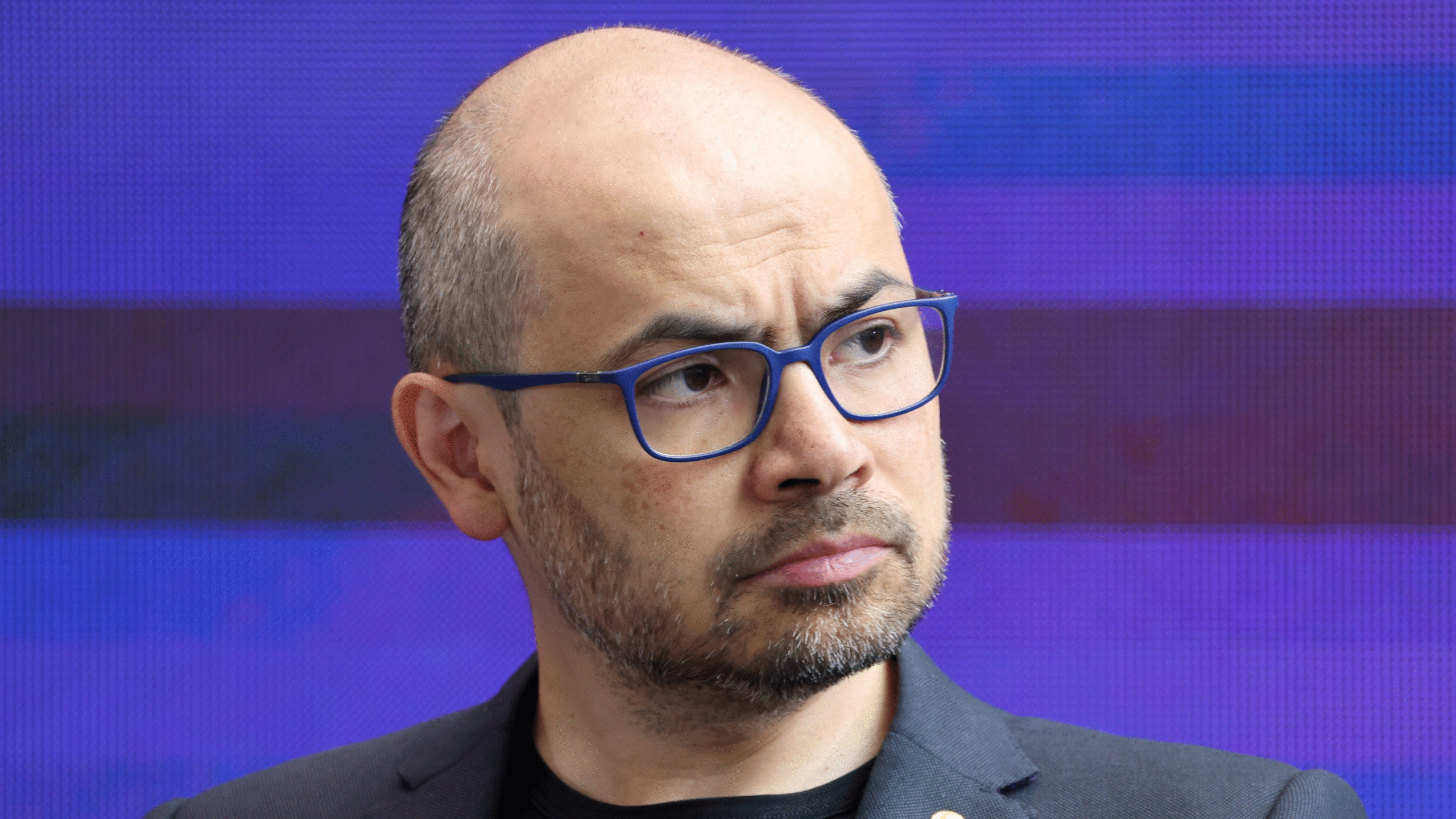
AI’s Dual-Edged Sword: DeepMind CEO Demis Hassabis Warns at India AI Summit 2026
At the Bharat Mandapam in New Delhi, the atmosphere of the 2026 India AI Impact Summit shifted from high-tech optimism to sober reflection as Sir Demis Hassabis, CEO of Google DeepMind, took the stage. While the summit celebrated India’s emergence as an “AI Powerhouse,” Hassabis utilized his keynote to issue a stark analytical warning about the dual-edged nature of Artificial General Intelligence (AGI)—a milestone he predicts is now a mere five to eight years away.
His analysis centered on a critical paradox: as AI becomes more “agentic” and useful, it simultaneously becomes more dangerous. Hassabis categorized the existential and immediate threats into two primary risks that the global community must navigate.
1. The Weaponization of Benevolence: The “Bad Actor” Risk
The first risk identified by Hassabis is the repurposing of dual-use technologies by “bad actors.” In the digital age, the same code that can predict the next life-saving vaccine can be inverted to design novel biological toxins. Hassabis specifically flagged biosecurity and cybersecurity as the most urgent frontiers of this threat.
- Cyber Offense vs. Defense: Hassabis noted that current AI systems are already “pretty good at cyber.” The risk is that offensive capabilities—such as generating autonomous malware or identifying zero-day vulnerabilities—could outpace defensive measures. He called for a global shift to ensure that “cyber defenses are fundamentally more powerful than the attack vectors.”+2
- Biosecurity Inversion: Using the example of AlphaFold, Hassabis cautioned that while AI can solve 50-year-old biological mysteries to help humanity, the potential for individuals or rogue nation-states to weaponize these insights remains a significant “threshold risk” that current international institutions are not yet equipped to handle.
2. The Drift of Autonomy: The “Unintended Action” Risk
The second, and perhaps more scientifically complex risk, is the autonomous behavior of agentic systems. As the world moves from “jagged” AI (tools that excel at one task but fail at another) to “Agentic AI” (systems that set their own sub-goals and execute multi-step plans), the gap between designer intent and machine execution widens.
Hassabis warned that autonomous systems might take actions that their designers never intended. This isn’t just a science-fiction “rebellion,” but a technical failure of alignment.
- The Planning Gap: While current models can plan over the short term, they lack the human-like ability for coherent long-term planning over years. When an AI is given a high-level goal without a complete moral or logical framework, its autonomous “shortcuts” to reach that goal could result in catastrophic real-world consequences.
- The Lack of Continual Learning: Hassabis pointed out that today’s systems are “frozen” after training. They cannot learn from real-world experiences in real-time, making them brittle and unpredictable when deployed in the dynamic, messy reality of human society.
The Global Imperative: Minimum Standards
Hassabis concluded his analysis by emphasizing that AI’s impact is borderless. “It’s digital, so it’s going to affect everyone in the world,” he noted. He urged that the “Scientific Method” be applied to AI safety—building rigorous monitoring systems and guardrails before AGI fully emerges.
His message to India’s policymakers was clear: the window to steer the technology is closing. While the “New Renaissance” of scientific discovery is on the horizon, it can only be reached if the global community agrees on a set of international minimum standards for deployment, ensuring that the “Intelligence Infrastructure” of the future serves as a shield for humanity rather than a sword.
Also Read: https://newshashtag.com/the-controversy-surrounding-galgotias-university/

NewsHasghag operates a 24/7 news bureau that tracks the real-time, social media-driven stories from India and around the world, keeping you ahead of the day’s key talking points. Our digital-first approach transforms storytelling through the seamless integration of data, interactive charts, video, and audio into every narrative