






From Airports to Aravallis: Why the Modi Government Faces Questions Over Big Business Influence
Aravalli Hills development has come under renewed scrutiny after recent policy shifts and the Supreme Court’s verdict
Summary of the article
- The Supreme Court’s August 2025 verdict redefined the Aravalli Hills using satellite data to ensure uniform environmental protection across states.
- The Centre supports the move, saying it brings regulatory clarity and enables planned development under existing environmental laws.
- Environmental experts warn weak enforcement could allow illegal mining and land mafias to exploit the redefinition.
- Damage to the Aravallis threatens groundwater recharge, air quality in NCR, and long-term climate resilience.
In a landmark ruling this year, the Supreme Court of India upheld a redefined map of the Aravalli Hills. The new definition extends legal protection beyond earlier boundaries claimed by Haryana, Rajasthan, and Delhi. The court cited ecological fragility and the need for uniform application of environmental laws.
The Centre has welcomed the decision as a step toward structured development. However, critics warn that the ruling could weaken ground-level environmental protection. The verdict has revived debate over how India balances economic growth with ecological sustainability in a sensitive region.
Redefining the Aravallis and the Supreme Court’s Role
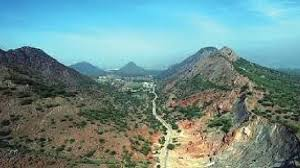
The Aravalli range is one of the world’s oldest fold mountain systems. It stretches across Haryana, Rajasthan, and Gujarat. The hills influence regional climate, groundwater recharge, and dust storm control.
For years, states used different geological and forest maps to define the Aravallis. These inconsistencies created legal grey zones. Mining and construction interests often exploited these gaps.
In its August 2025 verdict, the Supreme Court relied on satellite imagery, historical records, and expert testimony. The court established a single authoritative boundary. It said a unified definition is essential for enforcing the Environment Protection Act and Forest Conservation Act.
The court directed states to amend local laws within six months. It also stressed the need for consistent environmental oversight. The ruling did not ban development. Instead, it insisted on strict ecological compliance.
What the Centre Says
The Union Ministry of Environment, Forest and Climate Change welcomed the verdict. It called the ruling a push toward balanced development. Officials said a unified Aravalli map provides clarity for investors and local authorities.
The Centre argued that clear boundaries would reduce litigation. It also said the move allows planned infrastructure development. Officials highlighted eco-tourism, green industrial zones, and water harvesting projects as examples.
The ministry also cited enforcement measures. These include drone surveillance, real-time monitoring, and digital reporting systems. The aim is to curb illegal mining, tree felling, and land misuse.
Environmental groups remain cautious. They argue that maps alone cannot stop exploitation. They say community monitoring and local enforcement remain weak.
What the Supreme Court Says
The Supreme Court stressed the ecological importance of the Aravalli Hills. The judges noted that the range blocks dust storms affecting the NCR. The hills also support groundwater recharge for millions.
The court acknowledged repeated failures by enforcement agencies. Illegal mining and land encroachment continue across the region. The judgment called for joint task forces involving states, forest departments, and local authorities.
The court warned against fragmented governance. It urged states to treat the Aravallis as a single ecological unit. The ruling mandates quarterly compliance reports. A special bench will review progress.
The Ecological Costs
Scientists warn that damage to the Aravallis threatens water security. The hills act as natural aquifer recharge zones. Rainwater filters through forested slopes into underground reserves.
Unchecked extraction and land degradation disrupt this process. As a result, groundwater levels continue to fall. Cities then depend on expensive artificial recharge methods.
Air quality experts link rising dust pollution to degraded Aravalli terrain. Exposed soil from mining sites worsens dust storms. These storms raise PM2.5 and PM10 levels across the NCR.
Climate studies show intact forests reduce heat extremes. They also support biodiversity corridors. Fragmentation weakens these climate buffers. State reports admit that wildlife movement has declined sharply.
Environmentalists say enforcement remains the real test. Without strong on-ground action, legal boundaries offer limited protection. Satellite maps alone cannot save the Aravallis.

Gyaneshwar brings more than three decades of distinguished journalistic experience to the team. He has contributed significantly to both print and electronic media and directed several documentary films. For over 35 years, he has held key editorial roles in newspapers and TV channels, including The Pioneer and JAIN TV. Known for his balanced perspective and in-depth analysis, he brings leadership and expertise, and ensures accuracy, relevance, and clarity in every story.