






Darpan Ashram: Blending Spirituality and Service
Darpan Ashram stands as a living example of devotion, ecology, and discipline. Once a stretch of rocky, infertile land, it has now transformed into a lush green retreat
Nestled deep within the rocky hills of Krishnagiri district, Tamilnadu, Darpan Ashram in Urigam village near Bengaluru feels like a world untouched by noise and hurry. Spread across several acres of once-barren land, the ashram now breathes under the shade of nearly 3,000 trees—a result of two decades of steady efforts by Guru Nandkishor, his wife and his close disciples.
As I step into the Ashram, I am immediately absorbed by its serene atmosphere, the air rich with the fragrance of sandalwood and fresh soil lingering after the morning prayers. Birds circle the distant mountain ridge, and a gentle rhythm seems to flow through the entire space—simple living, mindful work, and deep learning woven together effortlessly. “This place was once nothing but stones and thorns,” a disciple tells me. “Guruji always says that nature mirrors the mind—when you nurture one, the other blossoms too.”
Sanatan Dharma Is a Way of Life, Not a Religion
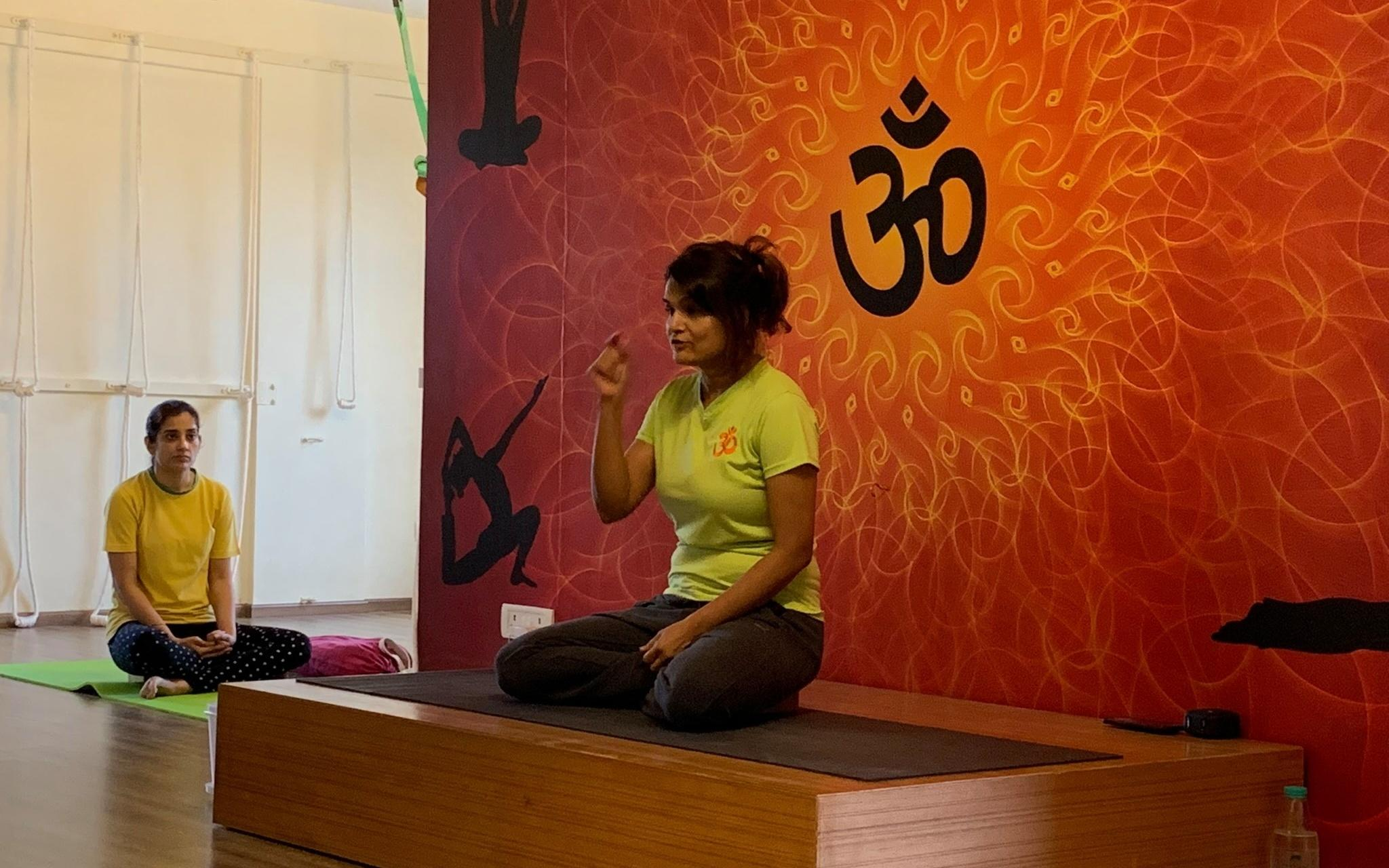
Sitting under the shade of a neem tree, Guru Nandkishore speaks with the calm authority of someone who has spent years observing human nature.
“Sanatan Dharma is not about religion,” he says, his voice soft but steady. “It’s about living with awareness — our sages researched deeply on how to live a meaningful, balanced life. Anyone can follow it, regardless of faith.”
He adds that many people today wrongly interpret Sanatan Dharma as synonymous with Hinduism. “That’s a misunderstanding,” he explains. “It is a science of living — how to live in harmony with nature, people, and one’s own mind.”
For Guru Nandkishoreji, spirituality begins with respect.
“If we respect women, peace follows naturally,” he says, quoting an ancient verse: ‘Yatra naryastu pujyante, tatra ramyante devatah’ — Where women are honored, there the gods dwell.
He also emphasises the importance of cow rearing, saying it sustains both agriculture and soil fertility. “Our ancestors knew that the cow connects human survival with the rhythm of the earth,” he explains.
Healing Generations Through the Guru–Shishya Parampara
As the evening begins, the sun sets behind the ashram’s tall trees, casting amber light across the prayer courtyard. This is when Guru Nandkishore turns reflective.
“Children today are anxious because their homes are full of ego and discord,” he says. “They grow up seeing parents who are not in harmony — how can such children know peace?”
He explains that the Guru–Shishya Parampara, or teacher–disciple tradition, was established to rebuild this lost harmony. “Only a guru can teach couples balance. Peaceful couples raise peaceful children. From them comes a strong family, a good society, and ultimately, a beautiful nation,” he says.
Extending Support to Rural Schools
Darpan Ashram also supports rural schools in Krishnagiri district. I visited a government primary school in Beeranapalli village of Krishnagiri district, Tamil Nadu — one of the schools supported by the Darpan Foundation. There, I met Raja M, a dedicated teacher appointed through the foundation’s initiative. Despite facing physical challenges, a visual impairment, and short stature, Raja holds a B.Tech degree and teaches with exceptional clarity and warmth. His presence alone is a lesson in courage and perseverance.

The children, too, are remarkably bright and speak about their dreams with striking confidence. Many aspire to become doctors, some hope to join the police or the military, while others dream of creative journeys as singers and dancers. Their enthusiasm reflects how the right guidance can spark ambition even in the most rural settings.
Together, Raja’s story and the children’s aspirations embody the foundation’s belief in ability over limitation and show how compassion, when guided by purpose, can transform even the remotest corners of rural India.

Prabha Gupta is a veteran journalist and civic thinker dedicated to the constitutional ideals of dignity and institutional ethics. With over thirty years of experience in public communication, her work serves as a bridge between India’s civil society and its democratic institutions. She is a prominent voice on the evolution of Indian citizenship, advocating for a national discourse rooted in integrity and the empowerment of the common citizen