






Hormuz Service Fee Explained: Will India Pay More For Oil If Iran Starts Charging Ships?
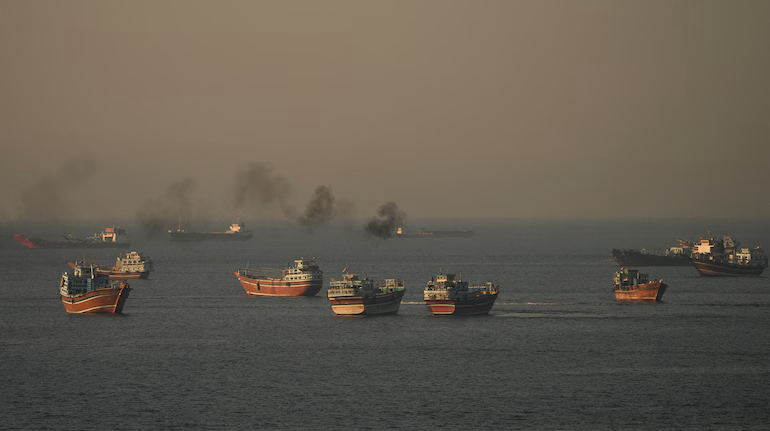
As geopolitical tensions in the Gulf continue to reshape global energy markets, a new proposal from Iran has raised fresh concerns for oil-importing nations such as India. Tehran is reportedly considering imposing a “Hormuz service fee” on commercial vessels transiting the Strait of Hormuz, one of the world’s busiest and most strategic maritime chokepoints.
While the proposal has not yet been implemented, analysts warn that even a modest transit fee could increase shipping and insurance costs, ultimately making imported crude oil more expensive for countries heavily dependent on Gulf supplies.
India, the world’s third-largest oil importer, could face additional costs if the measure becomes reality, although the extent of the impact would depend on the duration of the policy, international reactions, and global crude prices.
Why the Strait of Hormuz Matters
The Strait of Hormuz is a narrow waterway connecting the Persian Gulf with the Gulf of Oman and the Arabian Sea. Nearly 20% of the world’s daily oil supply and a significant share of global liquefied natural gas (LNG) exports pass through this corridor every day.
Major oil exporters including Saudi Arabia, Iraq, the United Arab Emirates, Kuwait, Qatar and Iran rely on the strait to ship crude to Asian markets.
For India, the waterway is particularly critical. More than half of India’s crude oil imports originate from Gulf countries, meaning any disruption or additional cost associated with Hormuz quickly affects Indian refiners.
The proposed service fee is being discussed as compensation for navigation, security and maritime services provided by Iran in waters it partially controls. However, international maritime experts argue that under the United Nations Convention on the Law of the Sea (UNCLOS), ships generally enjoy the right of transit passage through international straits, making unilateral charges legally contentious.
Even if legal disputes emerge, shipping companies may still have to account for higher operational expenses, especially if insurers classify the region as carrying elevated political risk.
What Could It Mean for India?
The direct fee itself may represent only a small portion of a ship’s total operating costs. However, economists say the broader consequences could prove more significant.
Shipping companies may pass additional expenses to charterers, while insurers often increase war-risk premiums whenever tensions rise in the Gulf. Longer voyage planning, security measures and possible rerouting could further increase transportation costs.
Indian refiners purchasing crude from Gulf producers would eventually absorb part of these expenses. Depending on market conditions, refiners could either bear the higher costs temporarily or pass them on to consumers through increased prices of petrol, diesel and aviation turbine fuel.
The impact, however, would not necessarily be immediate.
India has diversified its crude imports over the past few years, increasing purchases from countries such as Russia, the United States and Brazil. This diversification provides some cushion against disruptions in the Gulf.
Moreover, government pricing policies, refinery inventories and long-term supply contracts often delay the transmission of higher shipping costs to retail fuel prices.
Energy economists also note that the service fee alone is unlikely to trigger a sharp spike in oil prices. The larger concern is whether it signals prolonged instability in one of the world’s most important energy corridors.
If regional tensions escalate further, global benchmark crude prices could rise alongside freight and insurance costs, creating a cumulative burden for importing economies.
Indian policymakers are expected to closely monitor developments while maintaining strategic petroleum reserves and expanding supply diversification. Shipping companies are also likely to reassess risk exposure and negotiate revised insurance arrangements if the proposal advances.
For consumers, the immediate effect may be limited. But if higher shipping costs persist alongside elevated global oil prices, India’s fuel import bill could rise, adding pressure on inflation and increasing costs for transportation, manufacturing and household energy.
Ultimately, the proposed Hormuz service fee serves as another reminder of how geopolitical developments thousands of kilometres away can directly influence the prices paid by Indian businesses and consumers. Even without a physical disruption to oil flows, uncertainty in the Strait of Hormuz remains capable of rippling through global energy markets and affecting economies that rely heavily on imported crude.

NewsHasghag operates a 24/7 news bureau that tracks the real-time, social media-driven stories from India and around the world, keeping you ahead of the day’s key talking points. Our digital-first approach transforms storytelling through the seamless integration of data, interactive charts, video, and audio into every narrative