







Pilot Stabbed, Blood in Cockpit: How Did a Knife Get on a Flydubai Flight?
A routine Flydubai flight from Dubai to Tel Aviv turned into a terrifying mid-air emergency on Wednesday after violence erupted inside the cockpit, leaving one pilot stabbed, blood visible in the cockpit and passengers fearing the aircraft could crash. The incident has also raised a critical aviation-security question: if knives are prohibited from being carried into the passenger cabin, how did a knife become available inside the aircraft?
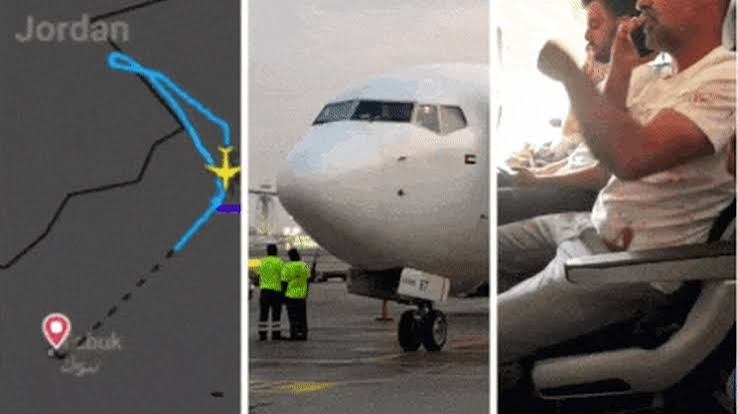
Flydubai flight FZ1073, carrying 172 people, was travelling from Dubai to Tel Aviv when an altercation took place on the flight deck. According to Israeli officials cited by Reuters, the co-pilot stabbed the pilot and then allegedly attempted to interfere with the aircraft’s control. Passengers intervened, and other crew members eventually brought the aircraft safely to the ground at Tabuk in Saudi Arabia. The co-pilot was arrested by Saudi authorities. The exact motive remains unclear, and Flydubai has cautioned against premature speculation.
Passenger accounts described screams coming from the cockpit and blood visible after the cockpit door was opened. Flight-tracking data indicated a dramatic loss of altitude, with the aircraft descending by more than 14,000 feet in less than 30 seconds. The aircraft subsequently diverted to Saudi Arabia and landed safely.
But the knife is perhaps the most intriguing part of the security puzzle.
Was the knife carried through airport security?
At this stage, there is no verified evidence that the attacker smuggled a knife through the passenger security checkpoint.
That distinction matters because cockpit crew are not necessarily subjected to precisely the same security arrangements as ordinary passengers. Aviation-security systems have separate procedures for flight crew, airport workers and other authorised personnel, although pilots are also subject to security screening and vetting.
Reuters reported that two pilots working in the region, but not for Flydubai, said pilots normally undergo security screening and should not be able to bring weapons such as knives or guns onto an aircraft. At the same time, aviation-security experts pointed out that the weapon used in this incident has not yet been identified. A knife could potentially have been associated with aircraft meal service, while cockpit emergency equipment can also include sharp-edged tools. Reuters specifically reported that investigators had not established which object was used.
That means the central question is not simply, “How did someone get a knife past security?” It is also, “What objects are already accessible inside a secured aircraft cockpit, and who is authorised to access them?”
The cockpit security question
Commercial aircraft are designed around the assumption that the cockpit must remain protected from unauthorised access. But security does not mean that every potentially sharp object is physically removed from an aircraft.
Aviation security operates through layers: passenger screening, crew screening, restricted-access areas, cockpit-door procedures, background checks, operational controls and emergency protocols.
The Flydubai incident exposes a different vulnerability—a threat originating from someone who was already authorised to occupy the cockpit.
That is fundamentally different from a passenger concealing a knife in hand baggage.
For Indian passengers, the rules illustrate how seriously sharp objects are treated. The Airports Authority of India lists knives, box cutters, ice picks and several other sharp objects among prohibited items for carriage on the person or in cabin baggage.
Yet the same security framework cannot simply assume that every threat comes from a passenger carrying a prohibited object through screening.
A new aviation-security question
The Flydubai episode will therefore raise questions well beyond airport checkpoints.
Were the pilots screened before entering the aircraft? What objects were accessible inside the cockpit? Was the weapon an aircraft item, a personal item or something else? Were cockpit access procedures followed? And could additional safeguards prevent an authorised crew member from using an available object as a weapon?
These questions cannot be answered conclusively until the investigation establishes what weapon was used and where it came from.
What is already clear is that modern aviation security cannot focus exclusively on what passengers carry through airport checkpoints. The Flydubai incident demonstrates that insider threats and authorised access can present a fundamentally different security challenge.
The aircraft landed safely, but the blood in the cockpit has left aviation authorities with a difficult question: when the person posing the threat is already inside the most secure part of the aircraft, what does “security” actually mean?

NewsHasghag operates a 24/7 news bureau that tracks the real-time, social media-driven stories from India and around the world, keeping you ahead of the day’s key talking points. Our digital-first approach transforms storytelling through the seamless integration of data, interactive charts, video, and audio into every narrative