




Can India’s AI Ambitions Truly Compete with Global Titans?
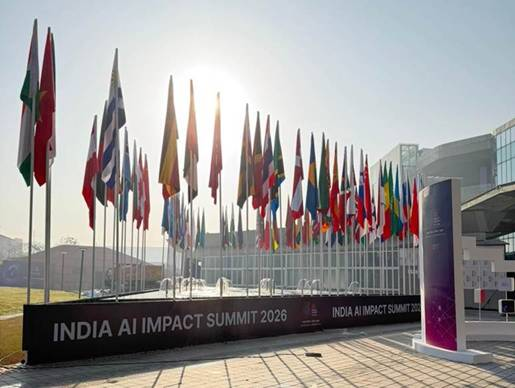
The Sovereignty of Silicon in NEW DELHI — As Prime Minister Narendra Modi inaugurated the India AI Impact Summit 2026 at Bharat Mandapam, a singular question loomed over the glittering halls of the expo: Can India actually “cope” with the overwhelming dominance of Western and Chinese AI models? While the summit serves as a victory lap for the India AI Mission, a critical analysis reveals a nation at a crossroads between genuine innovation and dependency on foreign digital infrastructure.
The Prime Minister’s vision of Viksit Bharat rests heavily on Sovereign AI—the idea that India must own its data and the models that process it. However, the reality of the global AI arms race is one of sheer, brutal scale. While India has successfully commissioned over 38,000 GPUs to bolster its national compute capacity, this remains a drop in the ocean compared to the massive “compute clusters” owned by Silicon Valley giants, who are now operating with individual budgets that rival the GDP of medium-sized nations.
The Model Gap: Innovation vs. Adaptation
The central challenge for India is whether we are building original foundational models or merely “wrapping” existing ones like GPT-5 or Llama 4 in Indian languages. To truly cope with global models, India requires its own Large Language Models (LLMs) that understand the cultural, linguistic, and socio-economic nuances of 1.4 billion people.
While the launch of Bharat-VISTAAR at the summit is a step in the right direction, most Indian startups still rely on the APIs of foreign companies. This creates a “technological debt.” If a foreign provider changes its pricing or restricts access, India’s AI-driven public services could face a systemic shutdown. The summit highlighted that to compete, India must pivot from being a “service provider” to a “product creator,” a transition that requires a level of R&D investment that is currently lagging behind the private sectors of the US and China.
The “Layman” Factor: Affordability and the Energy Crisis
For the common man, the “competition” between models is irrelevant if the cost of access remains high. High-end AI models are incredibly “thirsty”—they require massive amounts of electricity and water for cooling. As India scales its AI infrastructure to cope with global standards, the cost of this energy will inevitably be passed down to the consumer.
Critics at the summit have pointed out that while we aim to match the complexity of global models, we might be ignoring “Frugal AI.” A layman in rural Bihar doesn’t need a model that can write Shakespeare; they need a lightweight, offline-capable tool for crop pest detection. If India focuses too much on chasing the “intelligence” levels of OpenAI or Google, it may miss the opportunity to lead the world in Efficiency-First AI, which is far more suited for the Global South.
Navigating the “Side Effects” of the Race
In the rush to keep pace with the West, India also faces the “side effect” of regulatory lag. The world is moving toward stringent AI governance, and if India’s models do not meet international safety and ethical standards, they will be shut out of global markets. The Prime Minister’s call for “Safe and Trusted AI” is a necessary defensive move, but implementing it without stifling the very startups meant to compete is a delicate balancing act.
Ultimately, India’s ability to cope with other AI models will not be judged by whether we create a “better” chatbot than the US, but by whether we can create a more useful one for the billions who have been left behind by the first wave of the digital revolution.
Also Read: https://newshashtag.com/revolutionizing-healthcare/

Prabha Gupta is a veteran journalist and civic thinker dedicated to the constitutional ideals of dignity and institutional ethics. With over thirty years of experience in public communication, her work serves as a bridge between India’s civil society and its democratic institutions. She is a prominent voice on the evolution of Indian citizenship, advocating for a national discourse rooted in integrity and the empowerment of the common citizen