



Who Is the U.S. to Grant India a Waiver to Buy Russian Oil?
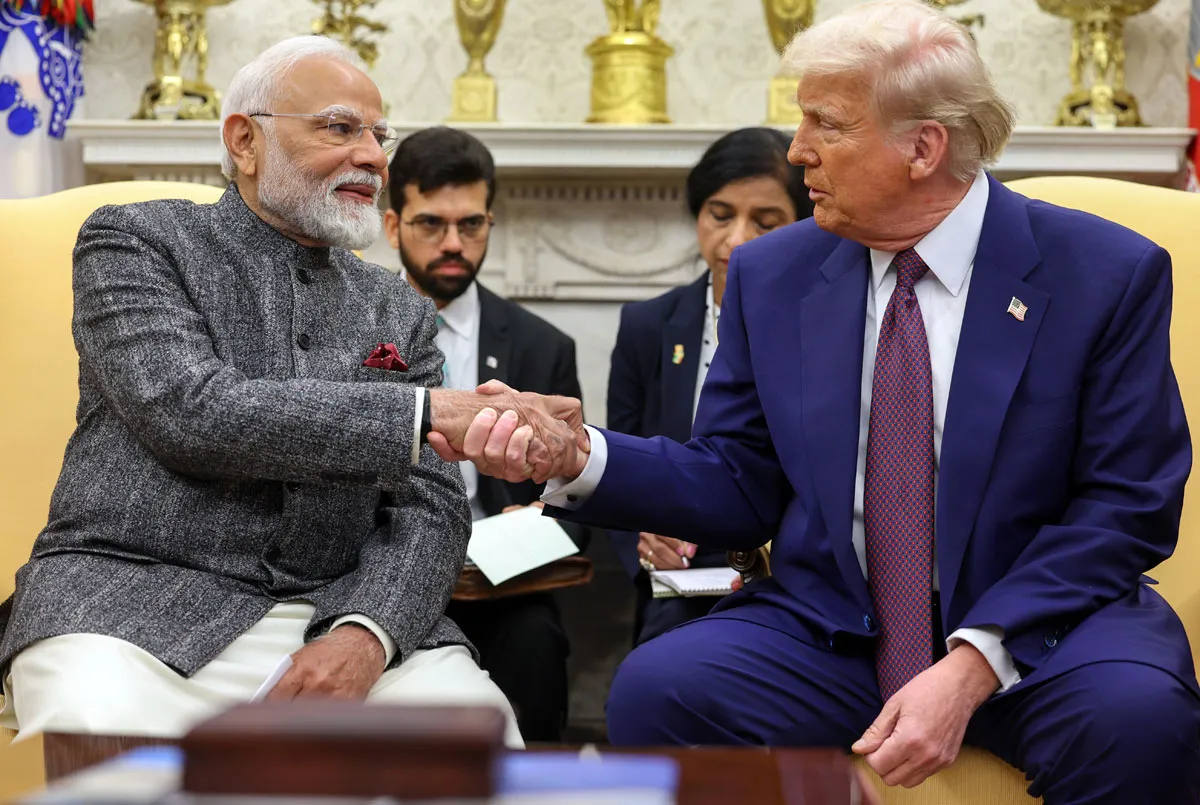
In recent years, a curious phrase has repeatedly appeared in global policy discussions: the United States “granting” or “considering” a waiver for India to purchase oil from Russia. The language itself raises an uncomfortable but important question for many observers in India and across the Global South: why should any sovereign nation require permission from another country to decide where it buys its energy?
The debate gained prominence after Russia’s invasion of Ukraine in 2022, when Western countries led by the United States imposed sweeping sanctions on Moscow. These sanctions targeted Russian banks, energy companies, shipping networks, and financial transactions. The objective was to weaken Russia’s economic capacity and pressure it to alter its military strategy. However, the ripple effects of these sanctions extended far beyond Europe’s geopolitical battlefield. Energy markets were immediately disrupted, pushing oil prices to volatile levels and forcing many countries to reconsider their supply strategies.
India, one of the world’s largest oil importers, suddenly found itself under international scrutiny for increasing purchases of discounted Russian crude. From New Delhi’s perspective, the decision was straightforward. India imports nearly 85 percent of its crude oil requirements, making energy affordability a matter of economic stability and national interest. When Russian oil became available at significantly reduced prices due to Western sanctions, Indian refiners naturally turned toward that supply.
Yet in many Western policy debates and media narratives, India’s decision was framed as something that required “tolerance” or “flexibility” from Washington. U.S. officials often described their approach as pragmatic, suggesting that India’s purchases were understandable given its development needs. At times, statements from Washington indicated that the United States was willing to allow India some leeway in continuing limited Russian imports.
This framing raises a deeper geopolitical issue. The concept of the United States granting waivers implies that Washington possesses the authority to regulate the economic choices of other sovereign nations. In reality, American sanctions technically apply only to entities that operate within the U.S. financial system or engage with American institutions. Because global trade is heavily intertwined with the U.S. dollar and American banking channels, these sanctions often gain indirect global influence. Countries and corporations fear secondary sanctions that could restrict access to American markets, technology, or financial networks.
However, critics argue that this dynamic effectively transforms domestic U.S. legislation into a tool of global economic governance. When nations feel compelled to adjust their trade policies to avoid American penalties, the line between national sanctions and international coercion becomes blurred.
For India, the situation has been particularly delicate. On one hand, it maintains a strategic partnership with the United States across defense, technology, and Indo-Pacific security cooperation. On the other hand, India has historically pursued what it calls “strategic autonomy” in foreign policy. This doctrine emphasizes the right to make independent decisions based on national interests rather than bloc politics.
Indian officials have repeatedly defended the country’s energy choices by pointing out that European nations themselves continued purchasing significant volumes of Russian gas long after the Ukraine conflict began. The argument from New Delhi has been consistent: if advanced economies prioritize their own energy security, developing nations cannot be expected to sacrifice theirs.
The broader debate therefore extends beyond Russian oil alone. It reflects a larger tension in the evolving international order. As emerging economies gain economic weight, they increasingly question the legitimacy of unilateral sanctions regimes that affect global trade patterns. Countries in Asia, Africa, and Latin America are gradually exploring alternative payment mechanisms, diversified supply chains, and currency arrangements to reduce vulnerability to external pressure.
Ultimately, the question is not merely about oil shipments from Russia to India. It is about the structure of global economic power. When one nation’s domestic laws begin shaping the trade decisions of others, concerns about sovereignty and fairness inevitably arise. The controversy surrounding U.S. “waivers” for India highlights a growing reality: in a multipolar world, many countries are no longer comfortable accepting that critical economic decisions require approval from Washington.
Also Read: https://newshashtag.com/why-india-has-built-strong-strategic-ties-with-israe

Prabha Gupta is a veteran journalist and civic thinker dedicated to the constitutional ideals of dignity and institutional ethics. With over thirty years of experience in public communication, her work serves as a bridge between India’s civil society and its democratic institutions. She is a prominent voice on the evolution of Indian citizenship, advocating for a national discourse rooted in integrity and the empowerment of the common citizen