





Why Did the Market Crash Today?
Why Did the Market Crash Today-Global financial markets witnessed a sharp sell-off today, wiping out billions in investor wealth and triggering widespread concern among retail and institutional participants alike. While market declines are not unusual, the intensity and speed of today’s fall point toward a convergence of multiple risk factors rather than a single trigger. Understanding why markets crash requires going beyond headlines and examining the structural and psychological forces at play.
Global Uncertainty and Geopolitical Tensions
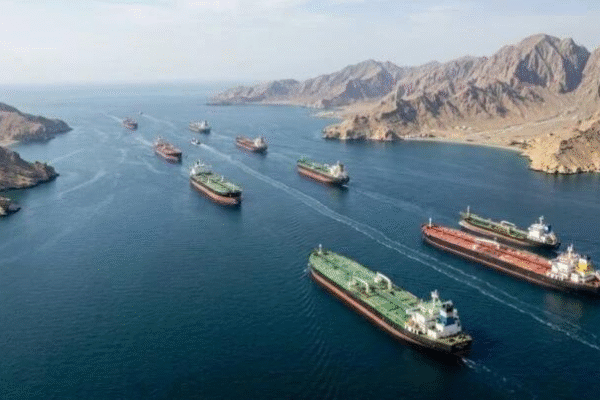
One of the most immediate catalysts behind today’s market crash is heightened geopolitical instability. The ongoing tensions in West Asia, particularly involving Iran, Israel, and the United States, have injected fresh uncertainty into global markets. Investors tend to react quickly to such risks, especially when critical energy routes like the Strait of Hormuz are involved. Any threat to oil supply chains pushes crude prices higher, raising fears of inflation and slowing economic growth.
Rising oil prices act as a double-edged sword. On one hand, they increase costs for industries dependent on fuel, such as aviation, logistics, and manufacturing. On the other, they reduce consumer spending power, which in turn impacts corporate earnings. This cascading effect often leads investors to reassess valuations and reduce exposure to equities.
Interest Rate Concerns and Liquidity Pressure
Another key factor behind today’s downturn is the fear of prolonged high interest rates. Central banks across major economies have been maintaining tight monetary policies to control inflation. When interest rates remain elevated, borrowing becomes expensive for businesses and consumers alike. This slows down economic activity and reduces corporate profitability.
Higher interest rates also make fixed-income investments like bonds more attractive compared to equities. As a result, institutional investors often shift funds away from stock markets, leading to sharp corrections. In emerging markets like India, such global shifts can trigger foreign institutional investor (FII) outflows, putting additional pressure on indices.
Profit Booking After Extended Rally
Markets had been on a strong upward trajectory in recent months, driven by optimism around economic recovery, infrastructure growth, and corporate earnings. However, prolonged rallies often lead to overvaluation in certain sectors. When valuations stretch beyond fundamentals, even a small negative trigger can lead to aggressive profit booking.
Today’s crash reflects this behavior. Investors who had accumulated significant gains chose to exit positions to lock in profits. Once selling begins at scale, it creates a chain reaction. Stop-loss triggers get activated, margin calls are initiated, and panic selling amplifies the fall.
Weak Global Cues and Tech Sector Pressure
Global markets, particularly in the United States, have shown signs of weakness in recent sessions. Technology stocks, which often lead market momentum, have come under pressure due to concerns over slowing growth and high valuations. Since Indian markets are closely linked to global trends, negative cues from overseas markets tend to impact domestic sentiment significantly.
The interconnected nature of financial markets means that risk in one region quickly transmits to others. Today’s fall is partly a reflection of this global contagion effect.
Retail Panic and Market Psychology
Beyond economic indicators, market crashes are also driven by human behavior. Fear spreads faster than logic in financial markets. Retail investors, who have entered markets in large numbers in recent years, often react emotionally to sudden declines. Panic selling by this segment can accelerate downward movement.
At the same time, algorithmic trading and high-frequency systems amplify volatility. These systems are programmed to react to price movements and news triggers, which can intensify selling pressure within minutes.
Is This a Structural Crash or Temporary Correction?
The key question now is whether this fall signals a deeper structural problem or is merely a short-term correction. At present, most indicators suggest that the crash is driven by external uncertainties and profit booking rather than a fundamental breakdown of the economy.
India’s macroeconomic indicators, such as GDP growth, infrastructure spending, and corporate balance sheets—remain relatively stable. However, sustained geopolitical tensions or prolonged high interest rates could deepen the impact.
Today’s market crash is not the result of a single event but a combination of geopolitical risks, monetary tightening, valuation concerns, and investor psychology. While such corrections can be unsettling, they are also a natural part of market cycles.
For investors, the focus should shift from short-term volatility to long-term fundamentals. Markets may fall in a day, but they recover over time—provided the underlying economic story remains intact.

NewsHasghag operates a 24/7 news bureau that tracks the real-time, social media-driven stories from India and around the world, keeping you ahead of the day’s key talking points. Our digital-first approach transforms storytelling through the seamless integration of data, interactive charts, video, and audio into every narrative