


Twisha Sharma’s Death and India’s Unfinished Battle Against Dowry
The death of 33-year-old Twisha Sharma in Bhopal has once again shaken the conscience of the nation and reopened painful questions about dowry, domestic abuse, and the failure of institutions to protect women within marriage. Twisha, a former model and actor from Noida, was found dead at her matrimonial home in Bhopal’s Katara Hills area on May 12, barely months after her marriage. What initially appeared to be a case of suicide has now snowballed into a national debate involving allegations of dowry harassment, mental torture, procedural lapses, and institutional influence.
According to media reports, Twisha had married Samarth Singh in December 2025 after the couple reportedly met through a dating app in 2024. Her family alleges that soon after marriage she faced continuous emotional and mental harassment linked to dowry expectations. Disturbing messages allegedly sent by Twisha before her death have further intensified public outrage. In one message, she reportedly wrote, “I am trapped bro. Bas tu mat phasna,” suggesting severe emotional distress.
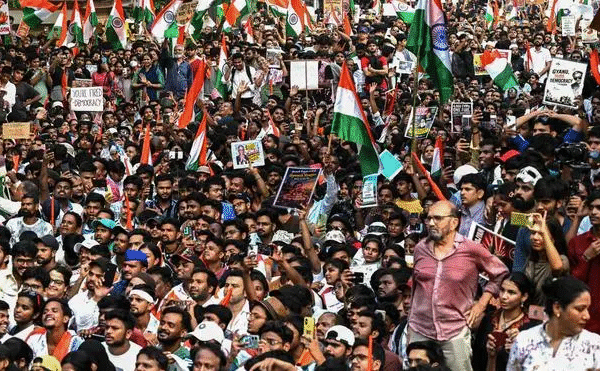
The case has taken several dramatic turns. Twisha’s family refused to perform her last rites for days, demanding a second postmortem and alleging that the original investigation was compromised. They claimed there were injuries on her body that required deeper examination and accused influential members of the in-laws’ family of attempting to weaken the probe.
The controversy deepened because Twisha’s mother-in-law is a retired judicial officer, leading to allegations of institutional bias. Public pressure mounted rapidly, forcing the formation of a Special Investigation Team (SIT). The Madhya Pradesh High Court later permitted a second autopsy, an unusual but significant development that reflected growing concerns over transparency in the investigation.
Meanwhile, the narratives emerging from both sides remain sharply conflicting. Twisha’s family has consistently maintained that she was subjected to dowry-related abuse and emotional torture. On the other hand, the accused family has reportedly claimed that she suffered from mental health issues and substance use problems — allegations her parents have dismissed as “character assassination.”
Police investigations and forensic reports have further complicated the case. One autopsy report reportedly concluded that Twisha died due to “antemortem hanging by ligature,” indicating suicide by hanging, while toxicology reports allegedly found no drugs in her body. Yet questions remain unanswered regarding the circumstances leading to her death, the injuries reported earlier, and whether sustained psychological abuse may have driven her to the edge.
The Supreme Court has now taken suo motu cognisance of the matter, a rare step that underscores the seriousness and public sensitivity surrounding the case. A bench led by Chief Justice Surya Kant is expected to hear the matter, signaling that the judiciary itself recognizes broader concerns about procedural fairness and the handling of crimes against women.
But beyond courtroom drama and media headlines lies a darker social truth. Twisha Sharma’s death is not an isolated tragedy. According to NCRB data cited in reports, India recorded over 5,700 dowry deaths in a single year — nearly 15 women dying every day because marriage in many households still operates as a financial transaction rather than a partnership.
The Twisha Sharma case exposes how educated families, urban settings, and professional backgrounds do not necessarily eliminate patriarchal control or dowry-linked abuse. It also highlights the silent suffering many women endure after marriage, often hiding their trauma to avoid burdening parents or facing social stigma.
As the investigation unfolds, the country waits not only for justice for Twisha Sharma but also for a deeper reckoning with a society where dowry may be illegal on paper, yet continues to survive in culture, expectations, and silence.
Prabha Gupta is a veteran journalist and civic thinker dedicated to the constitutional ideals of dignity and institutional ethics. With over thirty years of experience in public communication, her work serves as a bridge between India’s civil society and its democratic institutions. She is a prominent voice on the evolution of Indian citizenship, advocating for a national discourse rooted in integrity and the empowerment of the common citizen