




Why India Won’t Ban the Firecracker Industry?
Each year, air pollution in India spikes during Diwali. Cities like Delhi, Lucknow, and Patna often report “severe” air quality within hours of the festival. Although experts call for a total firecracker ban, the Indian government faces serious roadblocks. The firecracker industry in India is tied to livelihoods, cultural traditions, and political concerns.
Firecracker Industry India: A Livelihood for Thousands
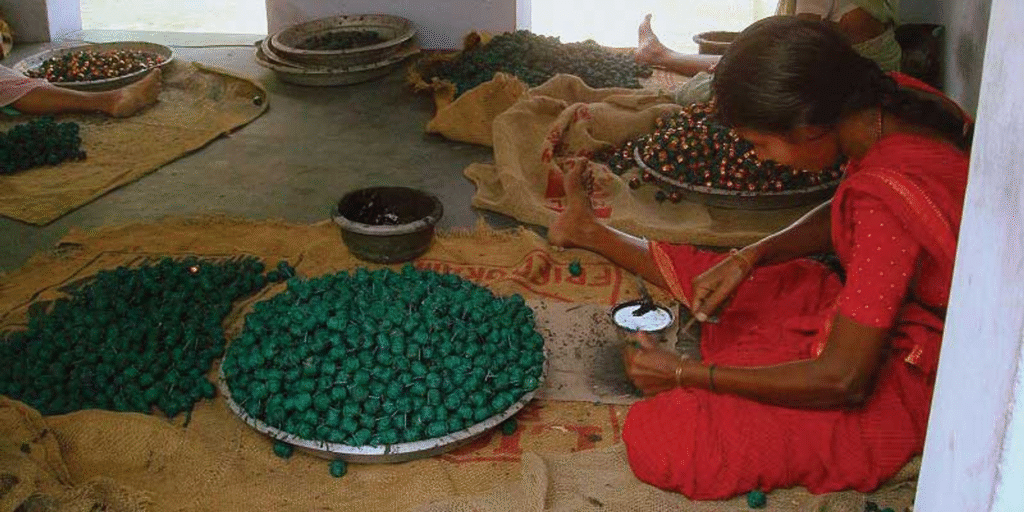
The firecracker industry in India is worth more than ₹6,000 crore. It employs over 500,000 people, many of whom live in small towns or rural areas. Sivakasi, a town in Tamil Nadu, produces over 80% of the nation’s firecrackers. For thousands of families, this work is their only source of income.
Shutting down the industry would lead to widespread job losses. It would affect workers directly and harm industries that supply packaging, chemicals, and transport services. Many of these jobs are seasonal but essential for survival. In a country already struggling with unemployment, this kind of disruption could spark public unrest.
The government, especially during election seasons, avoids actions that might upset large communities. Leaders often prefer short-term control measures over major reforms.
Culture and Politics Make Bans Difficult to Enforce
For millions of Indians, firecrackers are part of Diwali tradition. They represent joy, celebration, and religious heritage. Any strict ban can appear as an attack on culture, particularly Hindu customs. As a result, political leaders often hesitate to take a firm stand.
While courts have issued partial bans and allowed only “green crackers,” implementation remains weak. Illegal sales continue in many areas. Local enforcement teams lack resources or face pressure to ignore violations. In 2023, several states saw widespread non-compliance despite clear legal orders.
Even “green crackers,” promoted as a cleaner option, fail to solve the problem. They still pollute the air and offer little benefit when used in large numbers.
Pollution during Diwali also comes from other sources. Stubble burning in Punjab and Haryana adds thick smoke to the atmosphere. Cold winter air traps pollutants closer to the ground. Construction dust, vehicle emissions, and power generators make things worse.
So, while banning crackers might reduce one cause of pollution, it cannot fix the larger issue on its own.
India must go beyond bans if it wants cleaner air during Diwali. The government can encourage alternatives like laser shows and drone displays. At the same time, it should offer skill training to help firecracker workers find new jobs. Public awareness campaigns can also help reduce demand by educating people about health risks.
To protect public health and livelihoods, India needs long-term solutions. These should include better pollution control throughout the year, not just during festivals.
A complete ban on the firecracker industry remains unlikely right now. The government understands the environmental damage but cannot risk the economic and social fallout that would follow an abrupt shutdown.

Prabha Gupta is a veteran journalist and civic thinker dedicated to the constitutional ideals of dignity and institutional ethics. With over thirty years of experience in public communication, her work serves as a bridge between India’s civil society and its democratic institutions. She is a prominent voice on the evolution of Indian citizenship, advocating for a national discourse rooted in integrity and the empowerment of the common citizen