




Is India Really Shining Under Modi?
The India economic growth World Bank report says India will continue to grow strongly even as the world slows down. PM Narendra Modi echoed this tone at HTLS 2025, saying that India is shining in a time of global uncertainty. But many critics argue that job distress, privatisation of public assets, and data transparency issues raise questions about how far this “shine” reaches ordinary citizens.
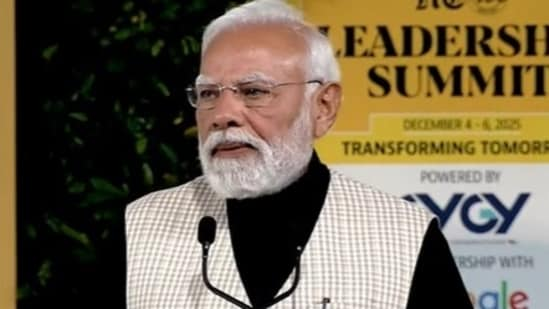
Prime Minister Narendra Modi told the HTLS 2025 gathering that “India is shining in a world full of uncertainties.” His claim reflects confidence in India’s economic position. World Bank figures support part of this optimism. India’s GDP grew 8.2% in FY 2023–24, which made it the world’s fastest-growing major economy. For FY 2024–25, the World Bank raised its projection to 7.0%, citing strong public infrastructure spending and rising household investment. It expects growth to moderate to 6.3% in FY 2025–26, but still remain higher than most large economies.
These numbers show India’s resilience at a time when many countries are slowing down. Yet the political and social atmosphere tells a different story. Critics argue that the shine Modi talks about does not reflect the lived experience of millions of Indians.
The Shadow Behind the Shine
A major source of criticism is the government’s aggressive push toward privatization. Several key airports have shifted to private control in recent years. Many people believe this benefits a few corporate houses rather than the public. They say that public assets built over decades are being handed over too quickly and without long-term safeguards.
At the same time, unemployment remains a serious concern. Youth unemployment is high, and many young workers struggle to find stable work. Even as GDP rises, job creation has not kept pace. This gap creates frustration and weakens public confidence in official growth numbers.
There is also a growing debate about transparency. Critics accuse the government of withholding or delaying data on unemployment and poverty. They argue that important datasets appear only when they suit the political narrative. Allegations of “vote-chori” during elections in states like Bihar further deepen distrust. When people question both data and democracy, the claim of national “shine” begins to look incomplete.
For many Indians, the current growth story feels distant. They see rising prices, slow job creation, and a political climate that feels tense. As a result, the official message of progress clashes with the daily struggles of ordinary citizens.
So, Is India Truly Shining or Only Appearing Bright?
World Bank projections show strong economic momentum. This supports the government’s claim that India stands out in a slowing global economy. But economic shine is not the same as social shine. Growth numbers alone cannot define the health of a nation. Citizens also look for secure jobs, reliable data, fair elections, and confidence in institutions.
India may be shining on paper, but the shine is uneven. It highlights the top of the economy while leaving shadows elsewhere. The challenge ahead is to turn headline growth into lived progress. Only then can India shine in a way that includes everyone.
Also Read: “India’s Economy to Remain Strong Despite Subdued Global Growth” (India Development Update, September 2024) — World Bank press release / report. https://www.worldbank.org/en/news/press-release/2024/09/03/india-s-economy-to-remain-strong-despite-subdued-global-growth?

Prerna Varshney is a journalist and social commentator with over five years of experience in health, gender, and policy reporting. Her work reflects a deep commitment to truth and empathy, simplifying complex issues for everyday readers.