




MGNREGA Under Threat? Chidambaram Targets Centre Over VB-GRAM G Bill
The Modi government’s plan to replace MGNREGA with the VB-GRAM G Bill has sparked fresh political controversy. Congress leader P. Chidambaram has accused the Centre of erasing a landmark welfare guarantee. The debate now centres on whether the move is reform or rollback
Article Summary
- MGNREGA, launched in 2005, provides a legal guarantee of 100 days of rural employment.
- P. Chidambaram has termed its proposed replacement the “second killing of Mahatma Gandhi.”
- The Modi government says VB-GRAM G is a reform focused on productivity, not just a name change.
- Critics warn the move removes legal safeguards and weakens rural income security.
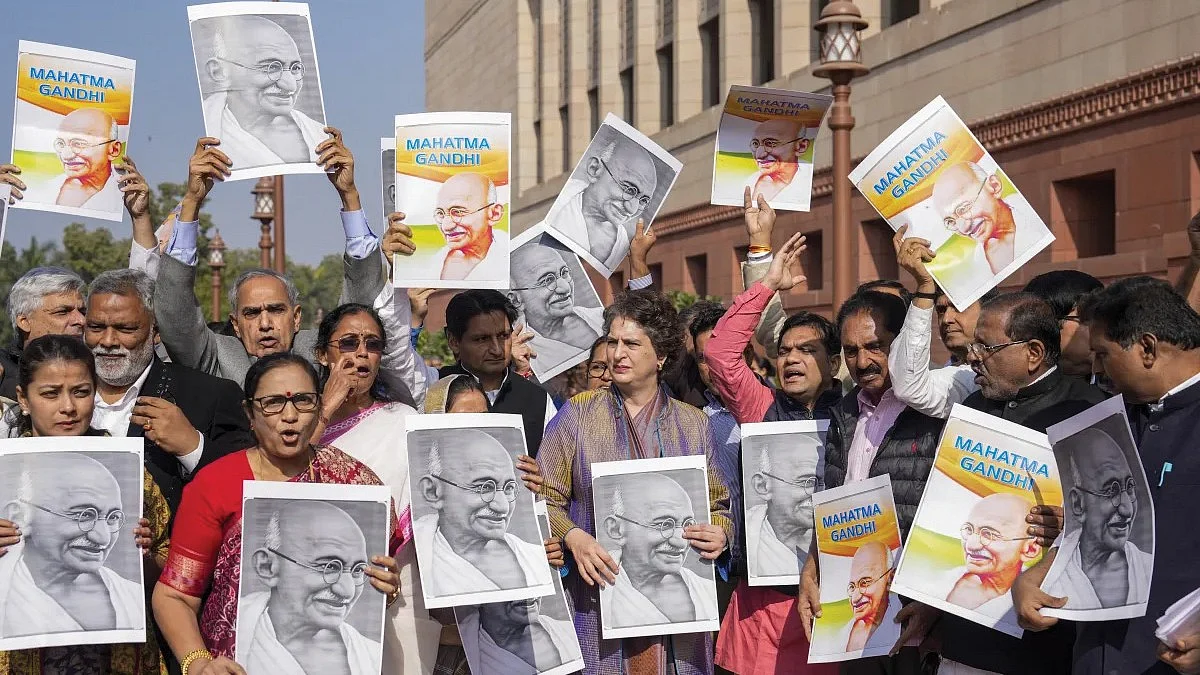
NEW DELHI: Congress MP and former Union minister P. Chidambaram has mounted a strong political offensive against the Modi government’s proposal to replace the Mahatma Gandhi National Rural Employment Guarantee Act (MGNREGA) with the VB-GRAM G Bill, calling it the “second killing of Mahatma Gandhi.” His remarks have reignited a broader debate over whether the Centre is merely changing the name of a flagship welfare scheme or fundamentally altering its core promise to rural India.
The controversy goes beyond symbolism. At stake is the future of India’s most expansive rural employment programme and the larger question of whether welfare rights are being replaced by discretionary development models.
MGNREGA: When It Began and Why It Became a Rural Lifeline
MGNREGA was enacted in 2005 during the UPA government as a rights-based law guaranteeing 100 days of wage employment to every rural household willing to undertake unskilled manual work. Unlike earlier employment schemes, MGNREGA was backed by a legal guarantee, making employment a right rather than a government favour.
Over the years, the scheme proved crucial during periods of agrarian distress, drought, and economic slowdown. It helped stabilise rural incomes, slowed distress migration, and created durable assets such as water harvesting structures, roads, and irrigation facilities. During the COVID-19 pandemic, demand under MGNREGA surged, reinforcing its role as a safety net when the formal economy faltered.
For many villagers, the scheme was not just a source of income but a tool of dignity, transparency, and local accountability through social audits and mandated wage payments.
What the Modi Government Says: Reform, Not Just Renaming
The Modi government argues that the proposed VB-GRAM G Bill represents a structural reform, not a cosmetic change. Officials say MGNREGA has outlived its original purpose and remains focused on short-term wage relief rather than long-term rural productivity.
According to the Centre, the new framework seeks to move away from what it describes as repetitive and low-value work. Instead, it aims to integrate skill development, durable asset creation, and convergence with other rural schemes related to housing, irrigation, and infrastructure. The government insists this approach will help transform villages into self-sustaining economic units rather than perpetually dependent on wage employment.
On the politically sensitive issue of removing Mahatma Gandhi’s name, the government has maintained that outcomes matter more than nomenclature. Supporters argue that welfare schemes must evolve with economic realities and that reform should not be constrained by symbolism.
However, critics note that the proposed framework appears to remove the statutory guarantee of employment, converting a legal right into an administrative programme. They argue this marks a fundamental shift, allowing future governments greater discretion over funding, eligibility, and implementation.
Opposition Pushback and Rural Concerns
Chidambaram and other opposition leaders argue that the Centre’s approach reflects a broader retreat from welfare commitments. They warn that without a legal guarantee, rural workers will lose bargaining power and income security, especially during economic shocks.
Rural activists and economists point to recent years of delayed wage payments and reduced allocations as warning signs. They fear that replacing MGNREGA with a non-statutory framework could further weaken protections for vulnerable communities, particularly women, marginal farmers, and landless labourers.
The political fallout is significant. As employment generation remains a key electoral issue, the debate has sharpened the contrast between a rights-based welfare model and a productivity-driven development narrative.
A Larger Battle Over Welfare and Governance
At its core, the controversy reflects a deeper ideological divide. The Modi government presents VB-GRAM G as a modernisation effort aimed at efficiency and growth. The opposition sees it as a dilution of constitutional responsibility toward rural citizens.
Whether the move turns out to be a genuine reform or a rollback will depend on the final contours of the bill. For now, the proposal has reopened questions about the role of the state, the meaning of welfare, and the future of rural employment in India.

Prerna Varshney is a journalist and social commentator with over five years of experience in health, gender, and policy reporting. Her work reflects a deep commitment to truth and empathy, simplifying complex issues for everyday readers.