


After Khamenei: Iran Bids Farewell to Its Supreme Leader as New Leadership Signals Continuity Amid Uncertainty
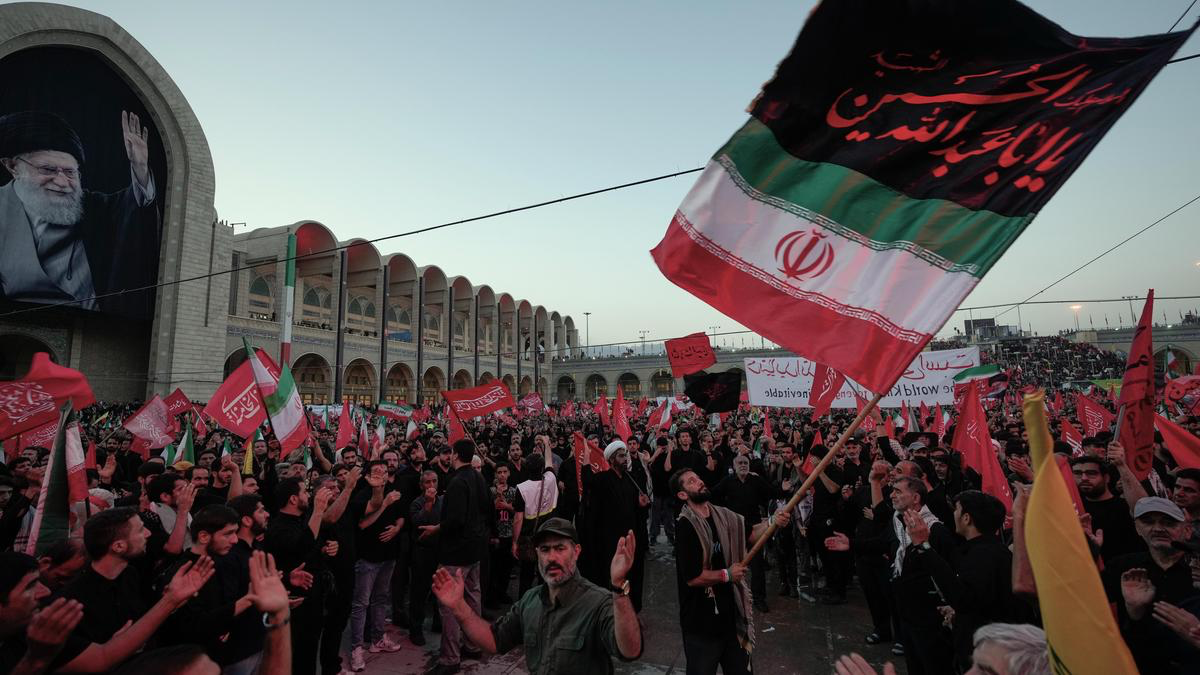
Tehran: Tens of thousands of mourners packed Tehran’s Grand Mosalla mosque on Sunday to bid farewell to Iran’s Supreme Leader, Ayatollah Ali Khamenei, whose death marks the end of one of the most consequential eras in the Islamic Republic’s history. Khamenei and four members of his family were reportedly killed on February 28 in Israeli airstrikes allegedly carried out using U.S.-supplied intelligence, triggering one of the most sensitive political transitions Iran has experienced since the 1979 Islamic Revolution.
The funeral procession, attended by senior military commanders, clerics and foreign delegations, was not merely a religious ceremony. It also served as a carefully orchestrated display of national unity at a time when Iran faces mounting regional tensions, economic pressure and international scrutiny.
A Carefully Managed Transition
Although the death of a Supreme Leader could potentially create political uncertainty, Iran’s constitutional framework was designed to ensure continuity. Soon after Khamenei’s death, the country’s powerful Assembly of Experts confirmed his successor, who has moved swiftly to reassure both domestic and international audiences that Iran’s political and ideological course will remain unchanged.
In his first public appearances, the new Supreme Leader has emphasized national resilience, resistance against external pressure, and unwavering support for the principles of the Islamic Revolution. His speeches have echoed many of Khamenei’s recurring themes: self-reliance, strategic patience, and opposition to what Tehran describes as Western interference.
Political analysts note that the new leader has deliberately avoided announcing dramatic policy changes. Instead, he has focused on projecting stability, reinforcing the authority of Iran’s institutions, and maintaining close coordination with the government, the armed forces, and the Islamic Revolutionary Guard Corps (IRGC).
Following Khamenei’s Governing Style
Early indications suggest that Iran’s new Supreme Leader is governing in much the same manner as Ayatollah Khamenei did.
Like his predecessor, he has positioned himself above day-to-day politics while exercising decisive influence over major strategic issues including foreign policy, national security, defence and the country’s nuclear programme. Rather than replacing existing institutions, he appears to be strengthening them through continuity.
Observers point to several similarities:
- Maintaining centralized authority through constitutional institutions.
- Continuing support for Iran’s regional allies and strategic deterrence policies.
- Preserving the “Resistance Economy” model aimed at reducing dependence on Western economies.
- Stressing Islamic values and revolutionary ideology in public messaging.
- Allowing the elected government to manage routine administration while retaining ultimate authority over strategic decisions.
This leadership style mirrors Khamenei’s long-standing approach, where gradual decision-making and institutional consensus often took precedence over sudden policy shifts.
Domestic Challenges Remain
While political continuity may reassure the ruling establishment, the new Supreme Leader inherits significant domestic challenges.
Iran continues to grapple with inflation, unemployment, sanctions, declining purchasing power and growing demands from younger generations seeking greater economic opportunities and social freedoms.
Public expectations will likely extend beyond ideological continuity. Many Iranians hope the new leadership can improve economic conditions without compromising national sovereignty.
Whether the new Supreme Leader chooses to introduce administrative reforms while preserving the Islamic Republic’s political structure remains an important question for observers.
Foreign Policy: Stability Over Surprise
Internationally, Tehran is expected to maintain its existing strategic posture.
Relations with the United States remain strained, while tensions with Israel have intensified following the conflict that culminated in Khamenei’s death. Iran is also expected to continue strengthening ties with Russia, China and regional partners as part of its broader effort to counter Western pressure.
Analysts believe that any significant shift in Iran’s nuclear negotiations or regional security policies is unlikely in the immediate future. Instead, the leadership transition appears designed to reassure allies and adversaries alike that the state’s long-term strategic objectives remain intact.
A Symbolic Farewell, A Practical Beginning
The massive funeral procession through Tehran reflected both public mourning and political messaging. By demonstrating orderly succession and institutional stability, Iran sought to convey that the Islamic Republic’s leadership remains firmly in control despite the unprecedented loss of its longest-serving Supreme Leader.
As the new Supreme Leader begins his tenure, his greatest challenge may not be preserving Khamenei’s legacy—but adapting it to a rapidly changing Middle East and an increasingly restless domestic population.
For now, however, every indication suggests that Iran’s highest office is being led with the same cautious, centralized and ideologically consistent approach that defined Ayatollah Khamenei’s more than three decades in power. Whether continuity ultimately proves sufficient in the face of mounting economic and geopolitical pressures will shape Iran’s next chapter.
Prabha Gupta is a veteran journalist and civic thinker dedicated to the constitutional ideals of dignity and institutional ethics. With over thirty years of experience in public communication, her work serves as a bridge between India’s civil society and its democratic institutions. She is a prominent voice on the evolution of Indian citizenship, advocating for a national discourse rooted in integrity and the empowerment of the common citizen