


Omar Abdullah’s Second Marriage to Nidhi Razdan: What Indian Law Says About Divorce
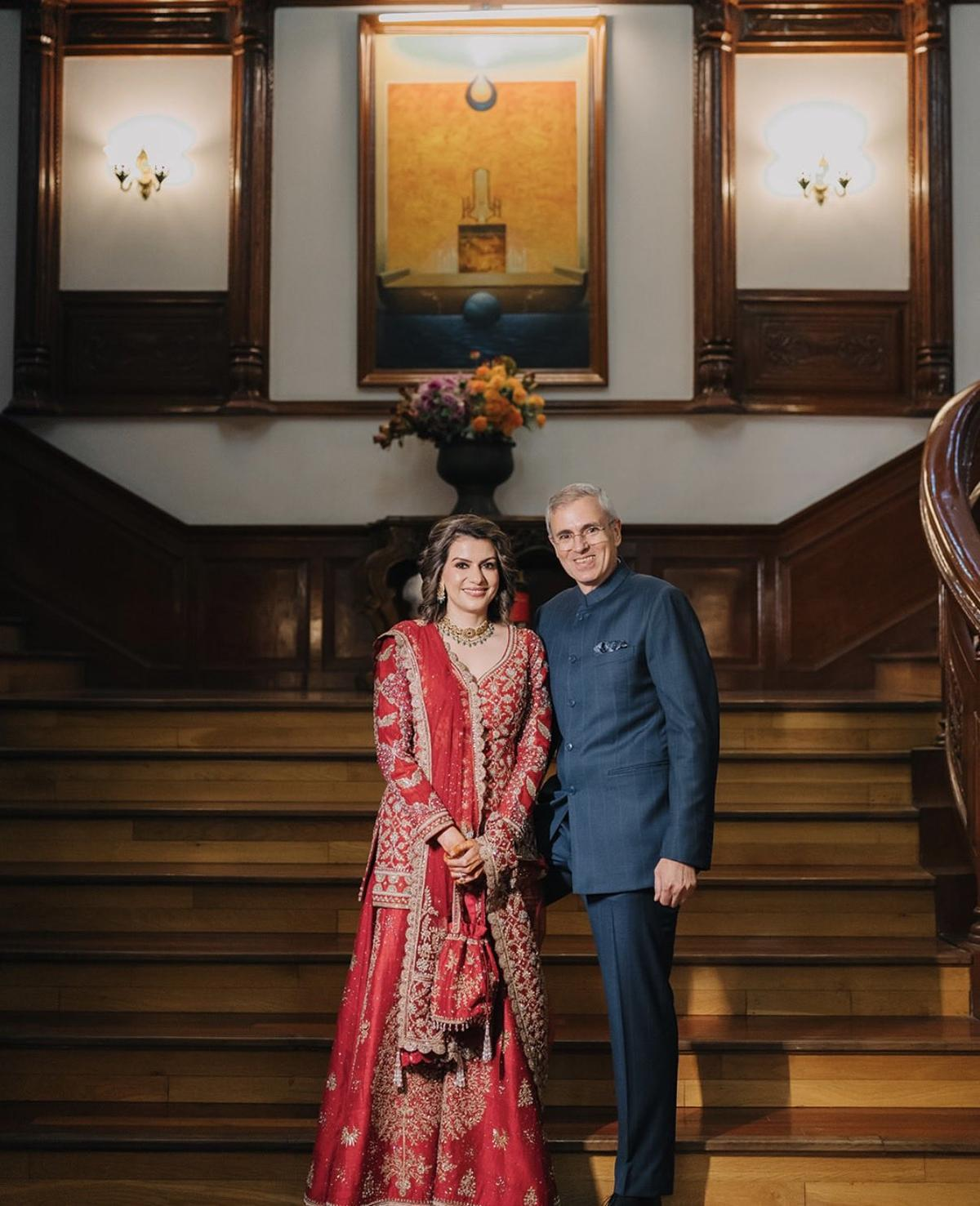
Jammu and Kashmir Chief Minister Omar Abdullah’s marriage to journalist Nidhi Razdan, announced on October 31, 2026, has brought renewed attention to the legal battle that preceded it. His first marriage to Payal Abdullah ended through a Supreme Court decree in July 2026, after years of separation and unsuccessful divorce proceedings. The case offers important lessons about the legal grounds, conditions and procedures for ending a marriage in India.
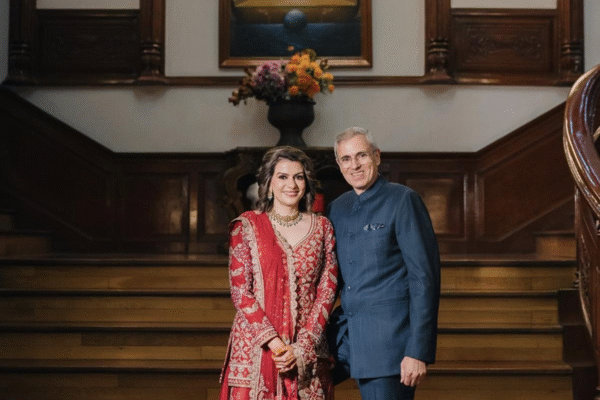
The marriage of Jammu and Kashmir Chief Minister Omar Abdullah to journalist Nidhi Razdan has attracted attention not only because of their public profiles but also because of the legal history preceding their union. The wedding, reportedly solemnised under the Special Marriage Act, took place three months after the Supreme Court dissolved Omar’s marriage to Payal Abdullah.
Omar and Payal married on September 1, 1994, under civil law in England. They have two sons. Their relationship subsequently deteriorated, and they began living separately. Omar’s divorce petition alleged that they had been living apart since 2009 and had not maintained a conjugal relationship since 2007. However, the legal process demonstrated that years of separation do not automatically establish a ground for divorce.
Why 16 years of separation did not automatically end the marriage
Omar initially approached the Family Court seeking divorce on grounds of cruelty and desertion. The court dismissed his petition on August 30, 2016, holding that he had failed to establish the allegations.
The Delhi High Court upheld that decision on December 12, 2023. It observed that the allegations of cruelty were vague and that the evidence did not establish conduct sufficient to constitute cruelty. On desertion, the courts considered evidence that the couple had continued to meet, travel together and attend family functions after beginning to live separately. Their separate residences had also been part of an arrangement connected with their children’s education and convenience.
This distinction is central to Indian matrimonial law: living separately is a fact, but desertion is a legal ground that must be proved.
What are the legal grounds for divorce in India?
The applicable law depends on how a marriage was solemnised and the personal law governing the parties. Two important statutes are the Hindu Marriage Act, 1955, and the Special Marriage Act, 1954.
Under Section 13 of the Hindu Marriage Act and Section 27 of the Special Marriage Act, a spouse can seek divorce on specified grounds. These include adultery, cruelty, desertion for at least two continuous years immediately before filing the petition, conversion to another religion in cases covered by the statute, certain forms of mental disorder, renunciation of the world and presumed death.
The exact provisions and conditions differ according to the statute and the circumstances of the marriage.
Cruelty: Physical violence is not the only form of cruelty. Serious mental cruelty can also constitute grounds for divorce. However, ordinary disagreements, differences of opinion or routine marital friction do not automatically qualify. Courts examine the nature, seriousness and cumulative effect of the conduct and the evidence presented.
Desertion: Under the Hindu Marriage Act and the Special Marriage Act, desertion must generally continue for at least two years immediately before the divorce petition. It involves both the fact of separation and an intention to bring cohabitation permanently to an end. The separation must also be without the consent of the petitioner or against the petitioner’s wishes, and without reasonable cause.
Therefore, a wife who moves out of the matrimonial home for employment, children’s education, safety or another reasonable reason cannot automatically be accused of desertion. Equally, a husband living separately may face the same legal test. The person alleging desertion must establish the statutory conditions.
Can a couple divorce by mutual consent?
Yes. Section 13B of the Hindu Marriage Act and Section 28 of the Special Marriage Act provide for divorce by mutual consent.
The principal conditions under these provisions are that the couple must have lived separately for at least one year, must have been unable to live together and must mutually agree that the marriage should be dissolved.
The process ordinarily involves a joint petition, followed by a second motion. The statute provides a six-month interval before the second motion, subject to a maximum period of 18 months from the presentation of the petition. The Supreme Court has clarified that the six-month waiting period can be waived in appropriate cases, depending on the circumstances.
Mutual consent must remain genuine. Neither spouse can ordinarily be forced to agree to a divorce merely because the other wants to end the marriage.
What happens when one spouse refuses divorce?
If mutual consent is unavailable, the other spouse must establish one or more legally recognised grounds before the competent court. Long separation alone is not an independent statutory ground for divorce under the Hindu Marriage Act or the Special Marriage Act.
The Supreme Court, however, has a special constitutional power under Article 142 to dissolve marriages that have irretrievably broken down, in appropriate cases where doing so is necessary to deliver complete justice. This is an extraordinary discretionary power, not an automatic right available to every separated couple.
In Shilpa Sailesh v. Varun Sreenivasan (2023), a Constitution Bench explained the circumstances in which the Supreme Court may exercise this power, including the length of separation, the possibility of reconciliation, the history of litigation, children’s welfare and financial arrangements.
How Omar Abdullah’s marriage was finally dissolved
After the Delhi High Court rejected his appeal, Omar approached the Supreme Court. The matter was referred to mediation, and the couple eventually reached a settlement.
On July 31, 2026, the Supreme Court dissolved their marriage by mutual consent, exercising its powers under Article 142. The joint settlement recorded that the parties had been living separately since 2011, while the earlier divorce proceedings had referred to separation since 2009. It also provided for the withdrawal of pending litigation and stated that no further claims, including maintenance or entitlement, remained outstanding between them.
The Supreme Court concluded that this was an appropriate case for exercising its extraordinary constitutional power.
The larger lesson for separated couples
Omar Abdullah’s case illustrates that a marriage does not legally end merely because spouses stop living together. Even a separation lasting more than a decade may not be sufficient to establish desertion or cruelty if the required legal conditions are not proved.
For couples seeking divorce, the available routes include mutual consent or a contested petition based on recognised statutory grounds. The Supreme Court’s power under Article 142 provides an exceptional route in appropriate cases, but it is not a substitute for the ordinary divorce process.

Prerna Varshney is a journalist and social commentator with over five years of experience in health, gender, and policy reporting. Her work reflects a deep commitment to truth and empathy, simplifying complex issues for everyday readers.