






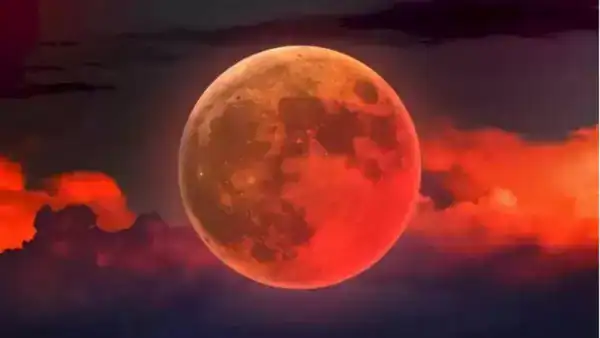
On March 3, 2026, the night sky will host one of the most dramatic celestial displays: a Total Lunar Eclipse. Known popularly as a “Blood Moon,” this event occurs when the Moon passes entirely into the Earth’s dark inner shadow (the umbra), causing the lunar surface to turn a deep, coppery red.
This particular eclipse is especially notable as it is the final total lunar eclipse the world will witness until New Year’s Eve 2028. While the event will be visible to billions across the globe, certain locations offer a front-row seat to the full 58-minute totality.
The Science of the “Blood Moon”
A total lunar eclipse happens when the Sun, Earth, and Moon align perfectly. The reddish hue is a result of Rayleigh scattering—the same phenomenon that makes our sunsets red. As sunlight passes through Earth’s atmosphere, shorter blue wavelengths are scattered away, while longer red wavelengths are refracted toward the Moon.
Top 5 Places to Witness the Blood Moon
For those seeking the clearest skies and most immersive environments, these five locations are the premier destinations for observing the March 3rd eclipse.
1. Grand Canyon National Park, USA
The American West is arguably the best region for this eclipse. At the Grand Canyon, observers can watch the Moon turn red over one of the world’s most spectacular landscapes. Totality will begin at approximately 4:04 AM MST, with the Moon hanging high enough in the sky to provide a clear, unobstructed view from the South Rim.
2. Arkaroola Wilderness Sanctuary, Australia
Located in the rugged northern Flinders Ranges of South Australia, Arkaroola is a legendary “Dark Sky” destination. With an average cloud cover of just 24% for early March, it offers nearly guaranteed visibility. Australian observers will see the event in the late evening, with totality starting at 9:34 PM ACDT.
3. Warrumbungle Dark Sky Park, Australia
As Australia’s first officially recognized Dark Sky Park, this location near Siding Spring Observatory is designed for stargazers. Its high altitude and inland position help to “filter” the atmosphere, potentially making the red hue appear even more vivid. Totality here is expected between 10:04 PM and 11:02 PM AEDT.
4. Wairarapa Dark Sky Reserve, New Zealand
New Zealand will be among the few places to see the eclipse at its highest point in the sky. In the Wairarapa region, totality occurs shortly after midnight (March 4 local time). The lack of light pollution here ensures that the “Blood Moon” will stand out against a dense backdrop of stars and the Milky Way.
5. Saguaro National Park, USA
Situated in the Sonoran Desert, this park is famous for its clear, dry desert air. The low humidity significantly reduces atmospheric “blur,” allowing for crisp photography of the lunar surface during the 58 minutes of totality.
Viewing from India
While the “path of totality” favors the Pacific and the Americas, India will witness the concluding stages of the event. In cities like New Delhi, Mumbai, and Kolkata, the Moon will rise on the evening of March 3rd already partially eclipsed.
The maximum visible phase in India will occur shortly after moonrise, around 6:27 PM IST. Because the Moon will be low on the eastern horizon during this time, observers are encouraged to find a high vantage point—such as a rooftop or a hill—to catch the final glimpse of the shadow before it recedes.
Unlike a solar eclipse, a lunar eclipse is 100% safe to view with the naked eye. No special filters or glasses are required, making it a perfect opportunity for families and amateur astronomers to enjoy the cosmos together.

NewsHasghag operates a 24/7 news bureau that tracks the real-time, social media-driven stories from India and around the world, keeping you ahead of the day’s key talking points. Our digital-first approach transforms storytelling through the seamless integration of data, interactive charts, video, and audio into every narrative