

Why Trump Wants Its Own Choice of Leader in Iran, Not Mojtaba Khamenei
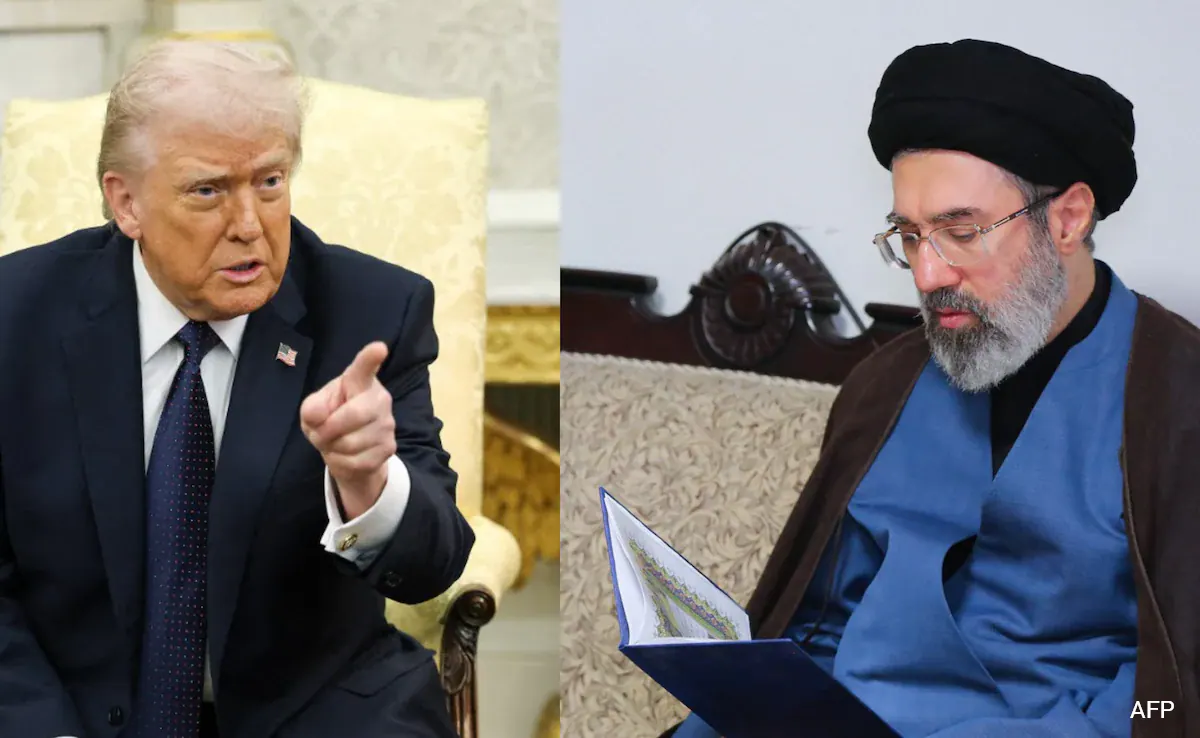
The succession in Iran fhas triggered a new geopolitical controversy. U.S. President Donald Trump has openly declared that Washington should have a role in choosing Iran’s next leader and has rejected the rise of Mojtaba Khamenei, the late leader’s son. His remarks have drawn global attention because they suggest an extraordinary level of American involvement in another country’s political transition.
Trump’s criticism reflects broader strategic concerns about Iran’s political future, regional influence and its long-running conflict with the United States.
Opposition to Continuity of the Current Regime
One of the main reasons Trump has opposed Mojtaba Khamenei is that his leadership would represent continuity of the current Iranian system. Mojtaba is widely seen as a hard-line cleric with close ties to Iran’s powerful Islamic Revolutionary Guard Corps (IRGC), which plays a major role in Iran’s military and political structure.
Analysts believe Mojtaba would likely continue the same strategic policies pursued by his father, including resistance to U.S. influence and support for Iran’s regional allies. For Washington, this means the geopolitical confrontation between the two countries could remain unchanged for years. Trump has argued that installing another leader from the same ideological circle would only prolong tensions and possibly lead to renewed conflict in the future.
Desire for a More Cooperative Leadership
Trump has repeatedly said he would prefer a leader who could bring “harmony and peace” to Iran and improve relations with the United States.
From the perspective of the U.S. administration, a more moderate or pragmatic Iranian leadership could potentially negotiate on issues such as nuclear development, regional security and sanctions. Mojtaba Khamenei, however, is widely perceived as part of Iran’s entrenched conservative establishment, making major diplomatic breakthroughs unlikely.
In interviews, Trump even described Mojtaba as an “unacceptable” choice and a “lightweight,” reflecting his strong opposition to the succession plan emerging in Tehran.
Strategic Goal of Influencing Iran’s Political Future
Trump’s statements also indicate a broader strategic objective: influencing Iran’s political direction after years of confrontation. He has suggested that the United States should help shape the outcome of Iran’s leadership transition, a position that critics say resembles regime-change strategies previously used by Washington in other countries.
According to reports, Trump even compared the situation to political changes in Venezuela, where U.S. pressure contributed to a shift in leadership that later became more cooperative with Washington.
For the Trump administration, installing a leader more open to negotiation could weaken Iran’s current ideological stance and reduce its confrontation with Western powers.
The elevation of Mojtaba Khamenei is also being interpreted as a symbolic act of defiance by Iran’s political establishment. Choosing the son of the late Supreme Leader sends a message that Tehran intends to maintain its existing political and strategic course despite military pressure from the United States and its allies.
From Washington’s perspective, this signals that Iran is unwilling to change its policies or leadership structure in response to international pressure.
Another issue raised by critics is the appearance of dynastic succession within the Islamic Republic. Although Iran’s political system is based on revolutionary ideology rather than monarchy, the rise of a son succeeding his father has sparked debate both inside and outside the country.
For the United States, the move suggests that Iran’s leadership transition is being controlled by the same inner circle that has governed the country for decades.
Trump’s remarks underline the deeper geopolitical contest shaping the Middle East. The question of who leads Iran is not merely a domestic political issue but one that affects regional security, nuclear negotiations and global energy markets.
Whether or not Washington can influence Iran’s leadership remains uncertain. Iran’s Supreme Leader is chosen by the Assembly of Experts, a clerical body within the country’s political system, and external involvement would face strong resistance from Tehran.
Prabha Gupta is a veteran journalist and civic thinker dedicated to the constitutional ideals of dignity and institutional ethics. With over thirty years of experience in public communication, her work serves as a bridge between India’s civil society and its democratic institutions. She is a prominent voice on the evolution of Indian citizenship, advocating for a national discourse rooted in integrity and the empowerment of the common citizen