




Women’s Representation Stuck Between Promise and Politics
The real conflict is not over intent, but over timing, trust, and political design
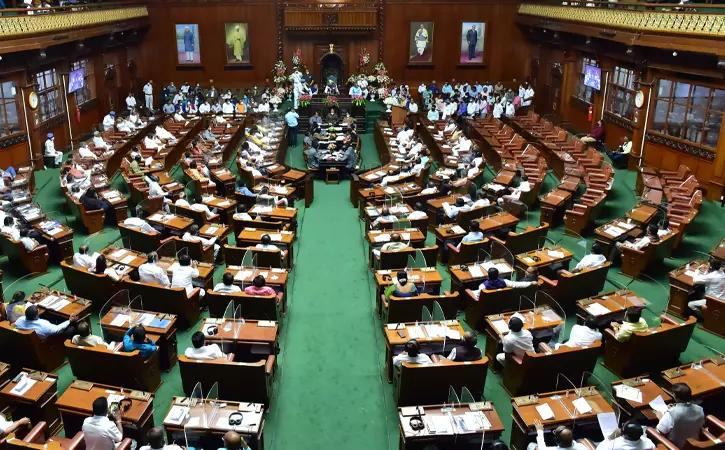
The debate over women’s reservation in India has re-emerged—not as a question of principle, but of process. While there is broad political consensus on the need to increase women’s representation in legislatures, disagreement persists over how and when this should be implemented.
The Constitution (106th Amendment) Act, passed in 2023, mandates 33% reservation for women in the Lok Sabha and state assemblies. However, its implementation is linked to a future delimitation exercise—redrawing constituency boundaries based on updated population data. This linkage has now become the central point of contention between the government and the opposition.
At its core, the debate reflects two competing approaches: immediate implementation versus structural sequencing.
The Government’s Case: Reform Through Structural Alignment
The ruling alliance maintains that reservation should follow delimitation to ensure fairness and consistency in representation. Since population distribution has changed significantly over decades, applying quotas on outdated constituency boundaries could lead to distortions. A fresh delimitation exercise, expected after the next Census, would recalibrate seat distribution and provide a more accurate base for implementing reservation.
From this perspective, sequencing matters. The government argues that introducing reservation after restructuring the electoral map would avoid the need for repeated adjustments later. It frames this approach as a long-term solution designed to ensure both equity and stability.
The Opposition’s Argument: Urgency Over Uncertainty
Opposition parties, while supporting the principle of reservation, question the decision to tie its implementation to delimitation. Their primary concern is the timeline. Delimitation is a complex administrative and political exercise that depends on Census data, legislative approval, and institutional processes. Historically, such exercises have faced delays.
Linking reservation to this process, critics argue, risks postponing implementation indefinitely. They contend that women’s representation is a matter of democratic rights and should not be conditional on future structural changes. From their standpoint, reservation can be applied within existing constituencies, ensuring immediate impact without waiting for systemic restructuring.
Delimitation: The Underlying Political Variable
The sensitivity around delimitation extends beyond administrative considerations. It carries significant political implications, particularly in the context of regional balance.
States with higher population growth are likely to gain more parliamentary seats after delimitation, while others may see their relative influence decline. This raises concerns about shifts in political power between regions, especially between northern and southern states. For some opposition parties, this adds another layer of caution to the process, reinforcing their preference to separate reservation from delimitation.
A Question of Trust and Execution
The disagreement ultimately reflects a deeper issue: trust in institutional timelines and political intent.
The government’s approach assumes that delimitation will be conducted within a reasonable timeframe, allowing reservation to follow without undue delay. The opposition, however, views this assumption with skepticism, pointing to the lack of a clear schedule and the potential for political considerations to influence the process.
This divergence highlights a recurring challenge in policymaking—balancing long-term structural reform with immediate social objectives.
The current debate is not about whether women should have greater representation in India’s legislatures. That consensus already exists across the political spectrum.
The real question is whether this representation should be implemented immediately within the existing framework or after a comprehensive restructuring of electoral boundaries.
Until this difference is resolved, the policy risks remaining in a state of suspension—acknowledged in principle, but delayed in practice. In that sense, the issue is less about disagreement on goals and more about the pathway to achieving them.
In a system where both timing and structure shape outcomes, the challenge lies in ensuring that one does not come at the cost of the other.
The debate ultimately comes down to a choice between certainty and immediacy. While the government’s argument for structural alignment is valid in principle, the absence of a clear and time-bound roadmap makes delay a serious risk. In a democracy where representation defines participation, postponing inclusion carries its own cost.
A balanced approach offers the most credible path forward: initiate women’s reservation within the existing framework, while committing to recalibration after delimitation. This ensures that representation begins now, without compromising long-term structural fairness.
Because when reform is both necessary and possible, waiting indefinitely is not neutrality.

Prabha Gupta is a veteran journalist and civic thinker dedicated to the constitutional ideals of dignity and institutional ethics. With over thirty years of experience in public communication, her work serves as a bridge between India’s civil society and its democratic institutions. She is a prominent voice on the evolution of Indian citizenship, advocating for a national discourse rooted in integrity and the empowerment of the common citizen