


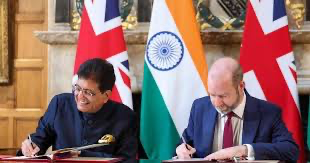
India and the United Kingdom have entered a new chapter in their economic relationship with the India–UK Free Trade Agreement (FTA) officially coming into force. The landmark pact, negotiated over several years, is expected to lower tariffs on thousands of products, expand market access for businesses, boost bilateral investment and create fresh opportunities in services, manufacturing and technology.
For both countries, the agreement represents more than just a trade pact. It is a strategic partnership between the world’s fifth and sixth largest economies, designed to deepen economic integration at a time when global supply chains are being reshaped by geopolitical tensions, protectionism and shifting trade alliances.
A Long Road to Consensus
Negotiations for the India–UK FTA began in January 2022 but progressed slowly due to disagreements over tariffs, market access and regulatory issues. Several rounds of talks were required before both sides reached a mutually acceptable framework.
The agreement comes at a crucial time for Britain, which has been seeking new trade partnerships after Brexit. For India, the deal aligns with its broader strategy of expanding global trade while positioning itself as a manufacturing and investment destination.
Government officials from both countries have described the agreement as one of the most comprehensive bilateral trade deals signed in recent years.
What Changes Under the Agreement?
The FTA significantly reduces or eliminates tariffs on a wide range of goods traded between the two countries.
Indian exporters are expected to benefit from easier access to the UK market in sectors such as:
- Textiles and garments
- Leather products
- Gems and jewellery
- Engineering goods
- Marine products
- Processed food
- Pharmaceuticals
- Auto components
On the other hand, British exporters are likely to gain improved access for products including Scotch whisky, premium automobiles, medical devices and other manufactured goods through phased tariff reductions.
Industry experts believe that lower tariffs will make products more competitive, benefiting both producers and consumers.
Opportunities Beyond Merchandise Trade
Perhaps the biggest significance of the agreement lies not only in merchandise exports but also in services.
India has a competitive advantage in information technology, financial services, consulting, legal services and digital innovation. Easier mobility provisions for professionals and greater cooperation in education and research could strengthen India’s already dominant position in the UK services market.
The agreement is also expected to encourage greater collaboration in fintech, artificial intelligence, clean energy, pharmaceuticals and advanced manufacturing.
Can the FTA Create Jobs?
One of the biggest questions surrounding the agreement is whether it will generate employment.
Trade agreements generally stimulate demand by increasing exports, attracting foreign investment and expanding manufacturing capacity. If Indian industries succeed in capturing a larger share of the UK market, sectors such as textiles, engineering goods, food processing and pharmaceuticals could witness increased production and hiring.
This assumes greater significance as India continues to grapple with a complex employment landscape. Although official data show that the overall unemployment rate has fallen to 3.1 percent in 2025, unemployment among people aged 15–29 remains close to 10 percent, highlighting the need for sustained job creation, particularly in export-oriented industries.
Economists argue that the true success of the FTA will be measured not merely by higher trade volumes but by its ability to create productive, formal-sector employment.
Strategic Significance
Beyond economics, the FTA strengthens strategic ties between India and the United Kingdom.
As global companies diversify supply chains away from excessive dependence on single markets, India is positioning itself as an alternative manufacturing destination. The agreement enhances India’s attractiveness as an investment hub while allowing British businesses greater participation in one of the world’s fastest-growing major economies.
The pact also complements India’s broader trade strategy, following agreements with countries such as the United Arab Emirates and Australia, while negotiations continue with the European Union and other partners.
Challenges Ahead
While the agreement opens significant opportunities, implementation will determine its success.
Indian exporters will need to comply with stringent UK quality standards, sustainability requirements and regulatory norms. Small and medium enterprises (MSMEs), which account for a substantial share of India’s exports, may require policy support to fully benefit from the new market access.
There are also concerns among some domestic industries that increased competition from British imports could affect certain sectors unless adequate safeguards and productivity improvements are ensured.
Trade experts therefore caution that tariff reductions alone cannot guarantee success. Improvements in logistics, infrastructure, ease of doing business and manufacturing competitiveness will be equally important.
Looking Ahead
The India–UK Free Trade Agreement marks one of the most significant milestones in bilateral economic relations in decades. It reflects India’s growing confidence as a global trading nation and Britain’s determination to forge stronger partnerships beyond Europe.
If effectively implemented, the agreement has the potential to increase bilateral trade, stimulate investment, strengthen supply chains and create new employment opportunities across multiple sectors.
However, its long-term impact will depend not merely on the signing of the agreement but on how successfully businesses, policymakers and investors translate the new market access into sustained economic growth. For India, the real test will be whether the FTA helps convert export opportunities into quality jobs, especially for its young workforce, while reinforcing the country’s ambition of becoming a leading global manufacturing and services powerhouse.

NewsHasghag operates a 24/7 news bureau that tracks the real-time, social media-driven stories from India and around the world, keeping you ahead of the day’s key talking points. Our digital-first approach transforms storytelling through the seamless integration of data, interactive charts, video, and audio into every narrative